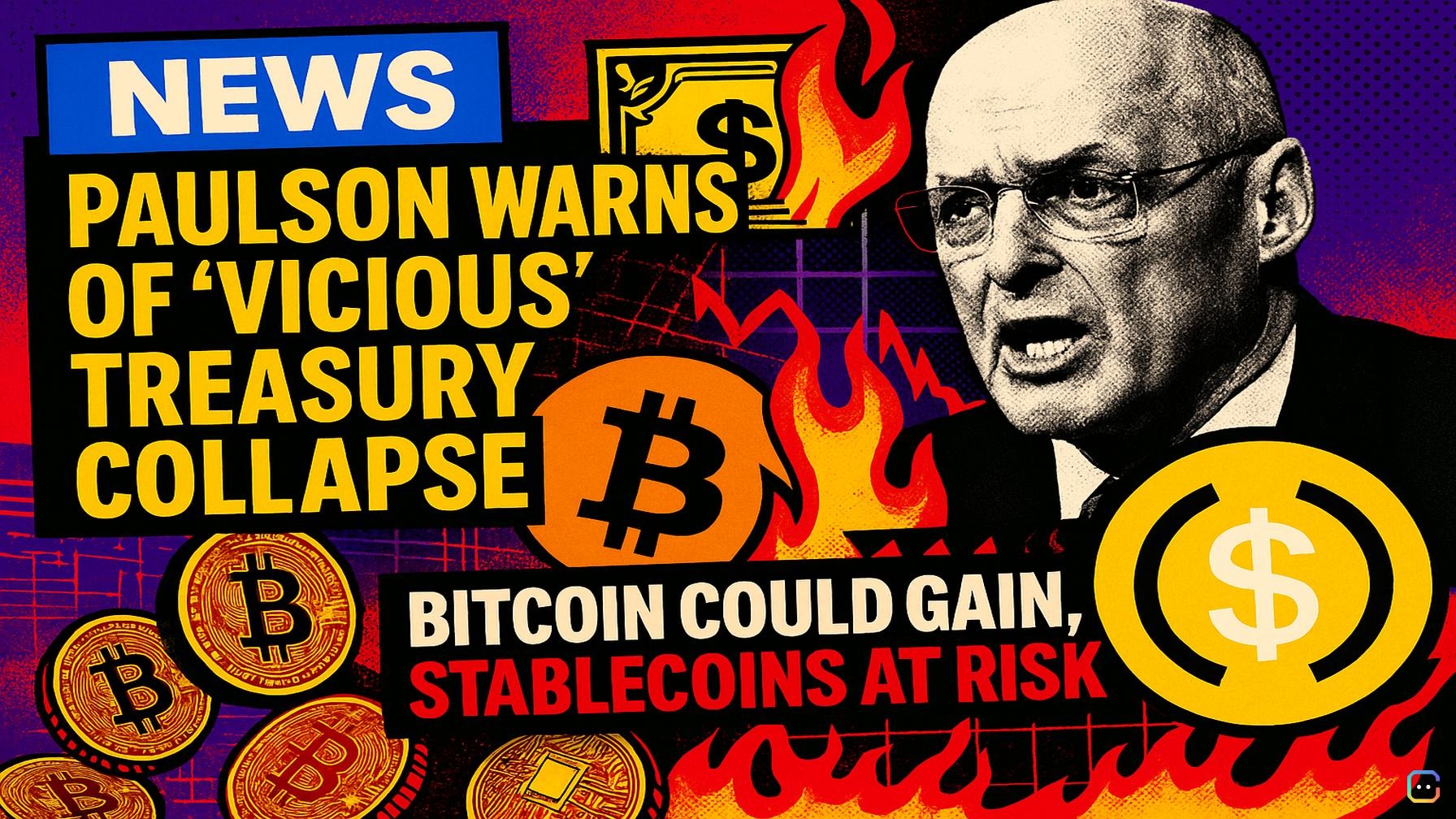
Former Treasury Secretary Henry Paulson has sounded the alarm: U.S. policymakers should have an “emergency break-the-glass” plan ready in case demand for Treasurys suddenly collapses — because if it does, “it will be vicious.”
Why it matters
- U.S. government debt has surpassed $39 trillion, stoking concerns about long-term demand for Treasurys. Those securities aren’t just government IOUs — they are the backbone of global finance and the pricing reference for corporate bonds, mortgages and equities. Any stress in the Treasury market can ripple across the entire financial system.
- Economists warn of a dangerous feedback loop: rising debt forces investors to demand higher yields, which raises borrowing costs and widens deficits, further eroding demand. In a severe sell-off the Federal Reserve could be forced to act as a buyer of last resort, absorbing supply to stabilize markets.
Paulson’s ask
In a Bloomberg interview, Paulson urged authorities to have a targeted, short-term “break-the-glass” framework on standby — a predefined, temporary intervention to deploy only in moments of extreme stress.
What this means for crypto
- Upside: A loss of confidence in U.S. debt or renewed monetary expansion could push capital toward alternative stores of value. Bitcoin and gold may benefit as investors seek non-sovereign hedges against inflation and dollar weakness.
- Downside: Crypto isn’t isolated. Stablecoins create a direct connection between digital assets and U.S. government debt. Tether — the largest stablecoin issuer — keeps a significant portion of its reserves in Treasurys, including Treasury bills and overnight reverse repurchase agreements. Stress in the Treasury market could therefore transmit to stablecoin liquidity and broader crypto market functioning.
Policy response in motion
U.S. Treasury officials have already taken steps to improve market functioning. On Thursday they executed a large-scale debt buyback, accepting $15 billion of older securities maturing 2026–2028 — the largest such operation to date. The aim: retire less-liquid bonds, inject cash, and give investors more flexibility to reallocate capital. Liquidity measures like this are intended to ease immediate strain, but long-term demand concerns remain central to policy debates.
Bottom line for crypto users and traders
Treasury-market stress would be a macro event with both risk and opportunity for crypto. While safe-haven flows could lift Bitcoin, contagion through stablecoins and liquidity channels could amplify downside in volatile markets. Investors and platforms should watch policy moves, reserve compositions (especially of major stablecoins), and liquidity conditions in both traditional and crypto markets.
Read more AI-generated news on: undefined/news