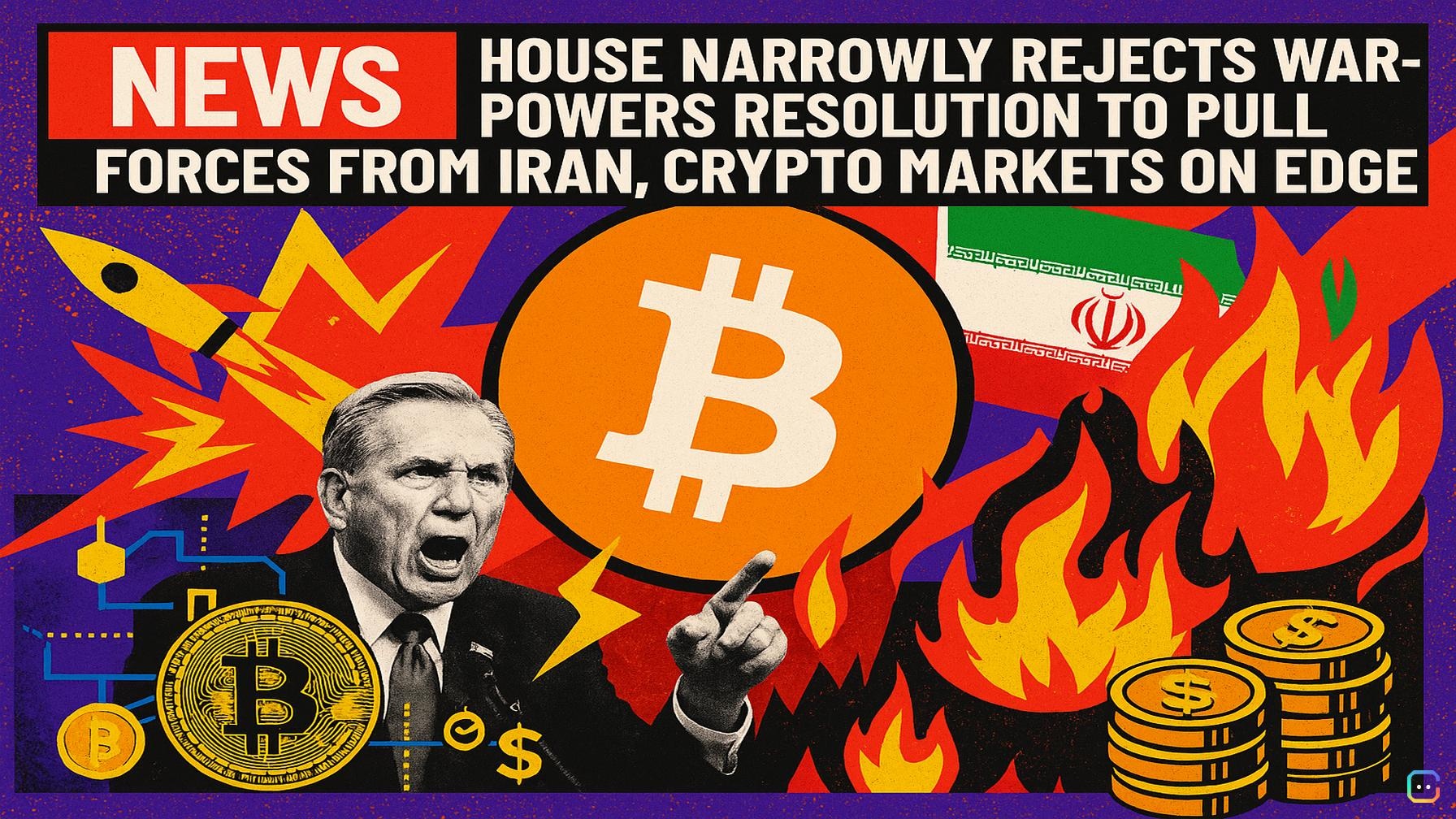
The House on Thursday narrowly rejected a war-powers resolution that would have ordered President Trump to withdraw U.S. forces from hostilities with Iran, voting 213–214 along almost entirely partisan lines. The outcome mirrored the Senate’s 52–47 rejection of a similar measure the day before and leaves no clear congressional off-ramp for the conflict.
What happened
- Rep. Gregory Meeks (D‑N.Y.) sponsored the resolution and argued on the House floor that “Donald Trump has dragged the American people into a war of choice, launched without congressional authorization.”
- The vote split almost perfectly by party: Rep. Thomas Massie (R‑Ky.) was the lone Republican to back the resolution; Rep. Jared Golden (D‑Maine) was the only Democrat to vote against it. Rep. Warren Davidson (R‑Ohio) voted “present,” and three Republicans did not cast votes—absences that tightened the margin and turned what could have been a three‑vote failure into a one‑vote miss.
- Democrats framed these war‑powers measures largely as political pressure tactics to force Republicans to record their stance on the Iran conflict; Republicans have repeatedly defended the president’s military authority in these procedural votes.
Constitutional and political context
- Under the Constitution, Congress has the power to declare war, while presidents retain limited unilateral authority for immediate self‑defense. Legal experts argue, however, that prolonged offensive operations generally require congressional authorization. Democrats have repeatedly invoked the 1973 War Powers Resolution to trigger these votes.
- The issue is politically fraught heading into the 2026 midterms: rising gas, diesel and fertilizer costs tied to the conflict and the Strait of Hormuz disruptions have fueled economic anxiety in key districts, becoming a liability for Republicans and weighing on presidential approval ratings.
Market implications for crypto and broader markets
- Financial markets have priced the Iran war as the dominant geopolitical risk for 2026. Oil, equities and crypto are reacting not only to battlefield and diplomatic developments but also to congressional signals on U.S. involvement.
- The failed House resolution removes one potential near‑term political catalyst for de‑escalation. That said, a separate announcement of an Israel‑Lebanon ceasefire provided a larger market‑moving signal on Thursday.
- Crypto’s sensitivity to geopolitical news is evident: Bitcoin rallied roughly 5% to about $74,400 after an earlier Iran peace signal, and traders continue to treat ceasefire or escalation headlines as major macro drivers. With no legislative route to end U.S. involvement, market participants will be watching diplomatic tracks—including a U.S.‑Iran ceasefire framework and possible resumed talks in Islamabad—for signs of easing risk.
Bottom line
The House vote keeps the status quo: Congress has not constrained U.S. military action in Iran, and markets — from oil to Bitcoin — are pricing in the ongoing geopolitical uncertainty. For crypto traders and investors, that means heightened sensitivity to diplomatic developments and any congressional movement that could meaningfully change the risk landscape.
Read more AI-generated news on: undefined/news