Headline: Beyond “digital gold”: Iran conflict forces fresh thinking about bitcoin’s role
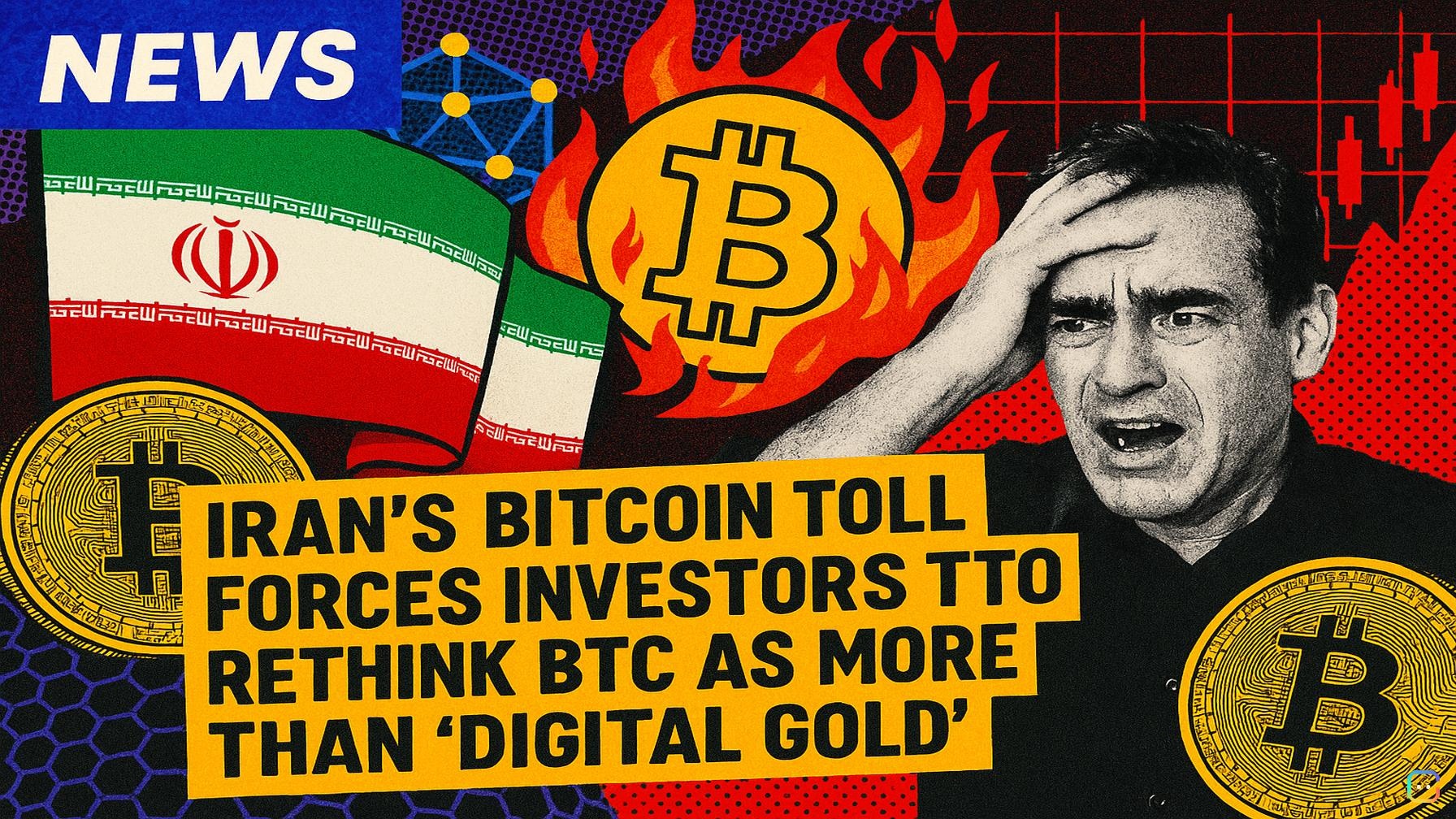
Bitcoin’s recent performance during the Iran conflict has pushed investors to rethink what the asset actually is. Trading around $74,754.39, bitcoin has rallied roughly 12% since U.S. and Israeli airstrikes began on Feb. 28 — while the S&P 500 slipped about 1% and gold dropped roughly 10% — a divergence that doesn’t fit the usual “risk-off” script.
Bitwise CIO Matt Hougan framed the shift on X by describing bitcoin as two simultaneous bets. The first is the familiar “digital gold” thesis: bitcoin competing for a slice of a roughly $38 trillion store-of-value market. The second, less-discussed idea treats bitcoin as an out‑of‑the‑money call option on becoming a functioning currency — a low‑probability, high‑upside scenario most investors have largely ignored.
The Iran episode makes that second bet more tangible. Tehran said it would levy a $1-per-barrel toll in bitcoin on ships transiting the Strait of Hormuz — about $20 million per day — one of the clearest examples yet of a sovereign state using bitcoin as a settlement mechanism for real-world commerce. Even if driven by necessity and sanctions evasion, the move raises two key variables that matter in an options framework: it increases the probability that bitcoin could be used as a medium of exchange, and it heightens volatility in the global monetary order. Both factors can materially boost the value of that “option.”
If Hougan’s logic holds, bitcoin’s price could be more sensitive to geopolitical conflicts going forward — especially in scenarios involving countries caught between U.S. and Chinese financial systems — and its total addressable market may be meaningfully larger than the gold-market comparison implies.
There are important caveats. Iran’s bitcoin toll is being implemented by a sanctioned state and may reflect necessity rather than preference; it arguably highlights limits in dollar-based enforcement more than it proves bitcoin is ready to serve as a neutral global settlement layer. Practical infrastructure — stablecoin-based settlement rails, cross-border payment systems, and broad sovereign wallet adoption — remains early-stage.
Still, the market is clearly pricing bitcoin differently in this conflict than in past geopolitical shocks. That suggests “digital gold” alone no longer explains bitcoin’s behavior, and that optionality as a potential currency is now part of the conversation.
Read more AI-generated news on: undefined/news