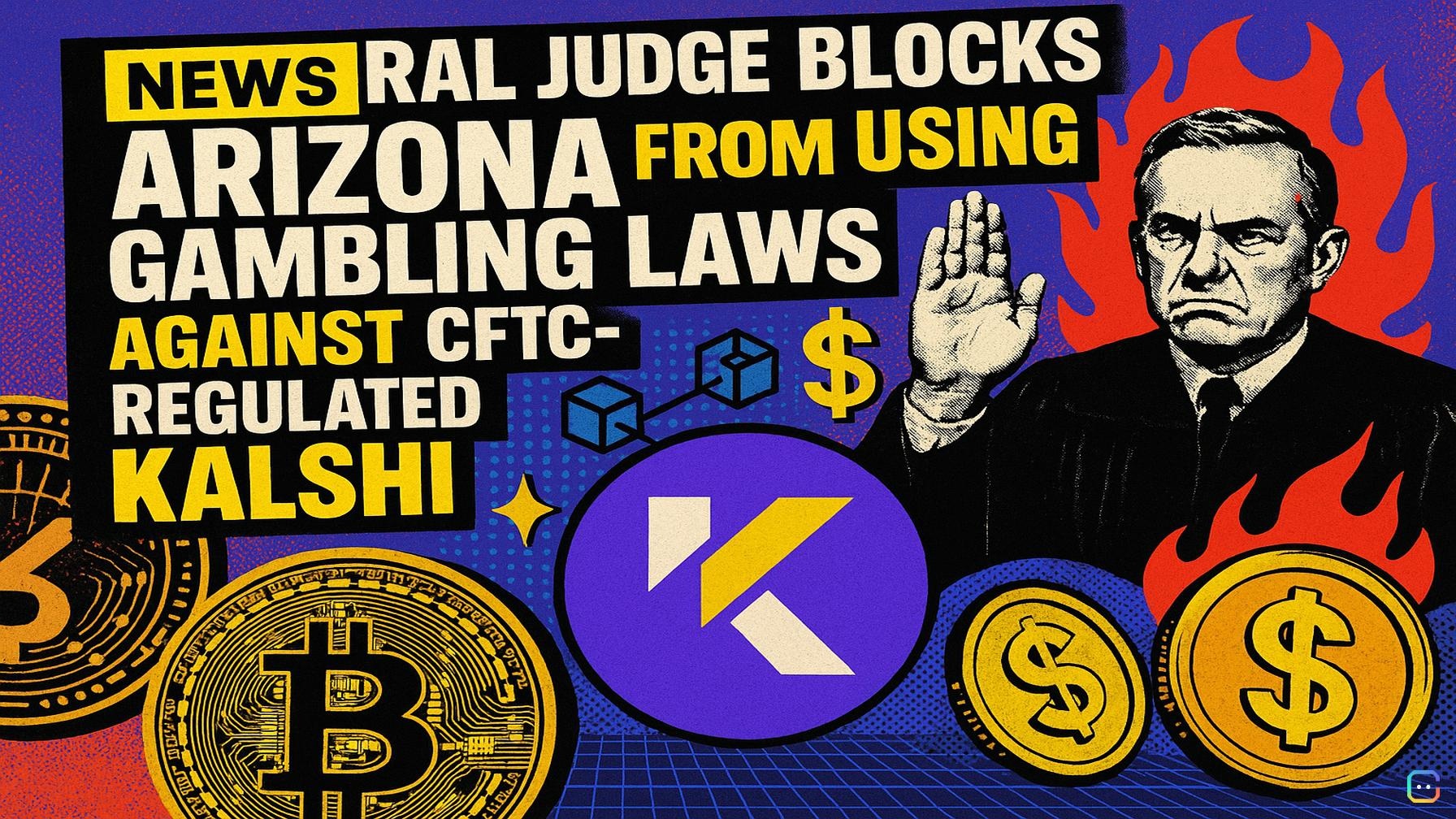
A federal judge in Arizona has temporarily blocked state officials from using gambling laws against Kalshi, the CFTC-regulated prediction market that lets users trade contracts tied to real-world events. The injunction, issued by U.S. District Judge Michael Liburdi, follows a request from the Commodity Futures Trading Commission and the U.S. government to pause Arizona’s enforcement while the larger legal fight plays out. The restraining order remains in effect through April 24.
At issue are Kalshi’s event contracts—short-term instruments that pay out based on the outcome of things like elections, sports, or other real-world events. The CFTC contends those contracts are “swaps” under the Commodity Exchange Act, putting them under federal oversight rather than state gambling statutes. Judge Liburdi agreed that the federal government is likely to prevail on that central legal question, and on that basis stopped Arizona from initiating or continuing civil or criminal proceedings tied to contracts listed on markets regulated by the CFTC. The decision also put Arizona’s criminal case against Kalshi on hold and led to a scheduled arraignment being called off.
Arizona prosecutors had accused Kalshi of offering unlawful betting products—citing contracts tied to political events and sports outcomes—under the state’s gambling laws. With the federal court’s temporary injunction, those enforcement efforts must pause during the current restraining period.
The Arizona case is just one battleground in a broader, national dispute over how event-based prediction markets should be treated. On April 6, a federal appeals court held that New Jersey could not restrict Kalshi’s sports-related contracts, finding the CFTC has exclusive jurisdiction over those products. But other states have pushed back: a Nevada judge recently extended a ban on Kalshi’s event contracts, reasoning the products are close enough to sports betting to fall under state gaming law, and Utah lawmakers have targeted proposition-style event markets.
The split rulings underscore that the legal status of event contracts—and similar products offered by crypto and DeFi prediction platforms—remains unsettled. While the Arizona order gives Kalshi short-term relief, it does not resolve the core question: are these platforms regulated financial exchanges under federal law, or are they betting operations subject to state gambling rules? The outcome will likely shape regulatory approaches not only for Kalshi but for a growing number of event-based and crypto-native prediction markets.
Read more AI-generated news on: undefined/news