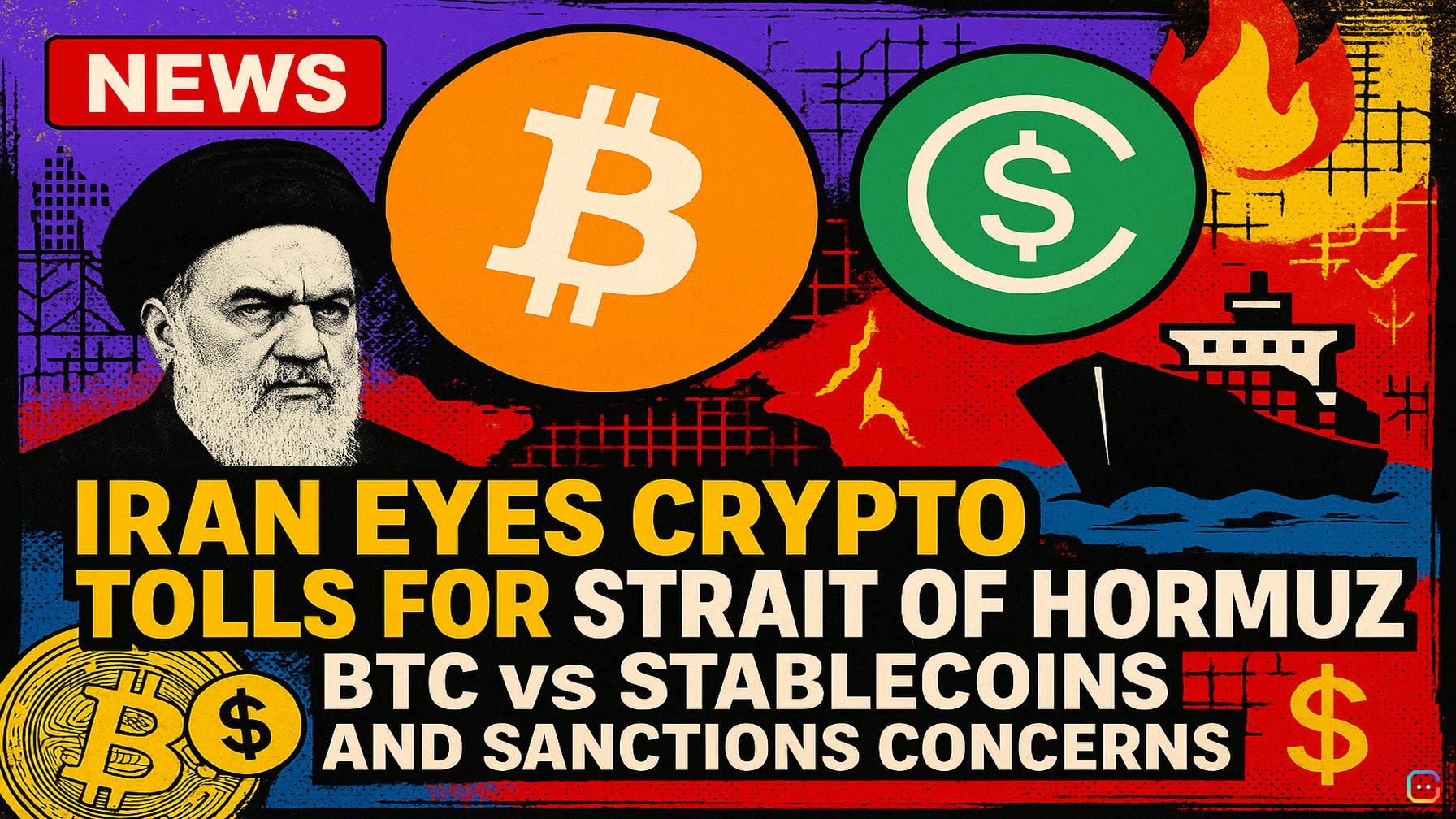
A Financial Times report that Iran may accept cryptocurrency to pay tolls for ships passing through the Strait of Hormuz has ignited a broad debate across crypto markets — and beyond. The waterway is one of the world’s busiest energy routes, so any move to switch tolls into digital assets would have implications well outside crypto circles. Observers say the idea appears linked to Tehran’s efforts to reduce exposure to US sanctions, but key details remain unsettled.
Market attention has centered on whether Bitcoin would actually be used. Early headlines suggested BTC, but follow-up reporting — and commentary from industry researchers — cast doubt on that claim. Alex Thorn, head of firmwide research at Galaxy, noted that later accounts did not fully back the original Bitcoin claim and pointed instead to stablecoins or even the Chinese yuan as other possible payment options. In short: the payment method is still unclear.
That ambiguity has driven much of the reaction. With no public, detailed plan from Iranian authorities, traders and analysts are treating the story as a developing one rather than an announced policy. As a result, the crypto market is responding more to speculative reports and expert commentary than to any confirmed mechanism.
Proponents of Bitcoin argue the asset would be harder for third parties to freeze or block. Justin Bechler highlighted a common critique of major stablecoins, saying that “USDT and USDC include built-in blacklist functions at the smart contract level,” meaning issuers can freeze funds once addresses are flagged. By contrast, he noted, “Bitcoin has no issuer, no compliance officer to pressure, and no freeze function,” framing BTC as a potentially more resilient option under sanctions pressure.
But that argument hasn’t closed the debate. Stablecoins are widely used in global crypto commerce precisely because they reduce price volatility — a critical feature for large, predictable commercial payments tied to shipping and oil. Beyond volatility, practical considerations such as speed, settlement scale, compliance risk and operational ease will matter a great deal for any state-linked payment system.
Thorn also pointed out practical limits around transaction size and rails. He estimated tanker tolls could range from $200,000 to $2 million per ship, which raises questions about whether the Lightning Network — promoted for instant, low-fee BTC payments — could handle those amounts reliably. While some early reports suggested payments could be completed in seconds, Thorn said a more likely approach would be Iran issuing a QR code or a Bitcoin address after approving a ship’s passage, or using onchain settlement or pre-arranged transfers for larger sums. The largest known Lightning-network payment to date is around $1 million, and some tolls may exceed that threshold, further complicating a Lightning-first solution.
For now, the story remains in flux. The market will likely continue debating Bitcoin versus stablecoins versus fiat alternatives until Tehran clarifies its stance and outlines a practical payment framework.
Read more AI-generated news on: undefined/news