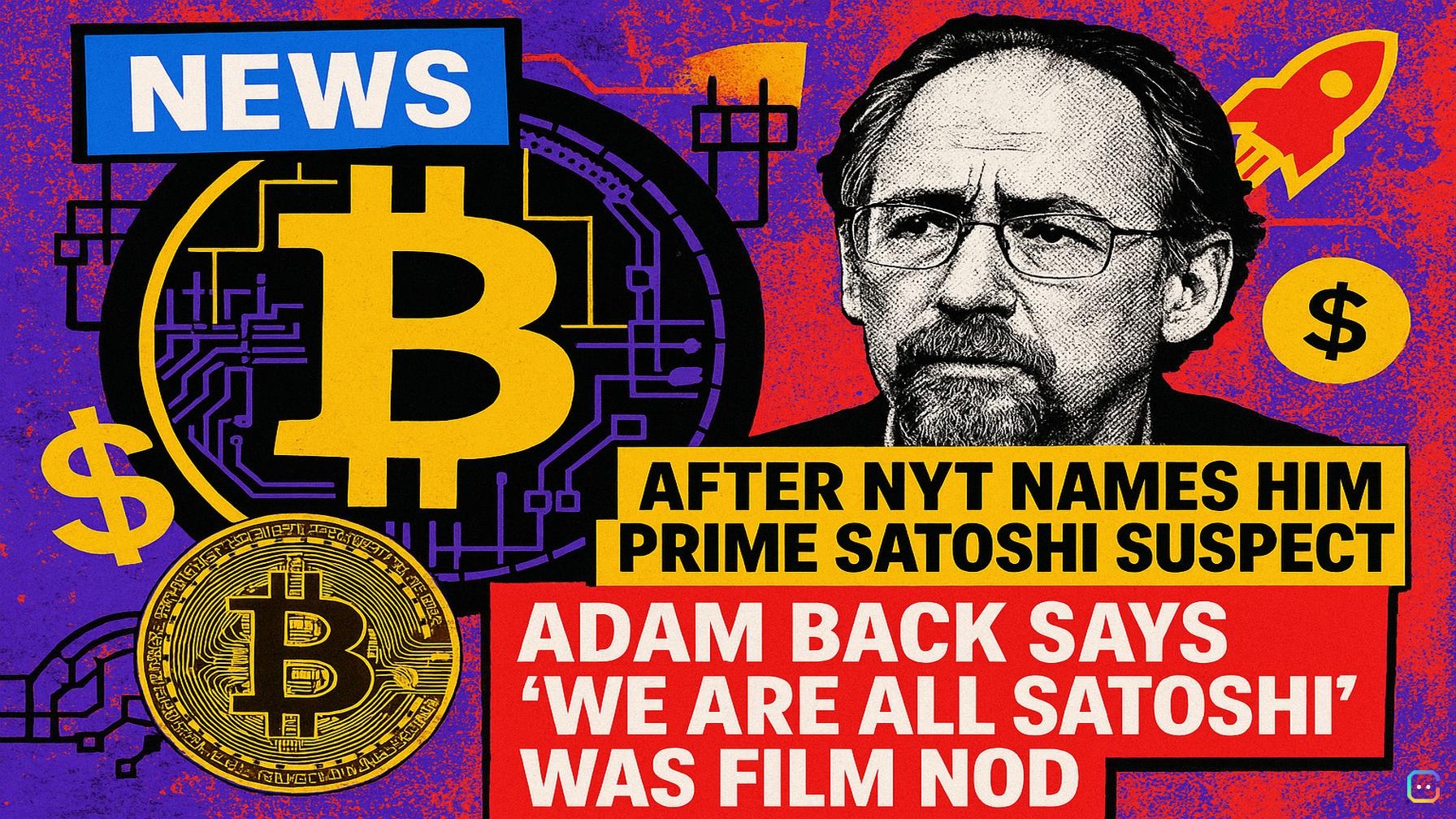
A three-word tweet from 2023—“We Are All Satoshi”—has become one of the most dissected posts in Bitcoin history. The line was thrust into the spotlight after a New York Times investigation published April 8, 2026 identified cryptographer Adam Back as the paper’s prime candidate for Satoshi Nakamoto. Analysts flagged Back’s tweet as a potential veiled admission. Back says the opposite: it was a cultural nod, not a confession.
Back says the phrase came directly from a short film, Block 170, The First Transaction, where those words are literally carved into stone as part of the artwork. His answer to the NYT-driven speculation was simple: the tweet referenced the film, nothing more.
The NYT project, led by John Carreyrou—the reporter who exposed Theranos—was extensive. Reporters reviewed more than 134,000 posts across 620 candidates on cryptography mailing lists dating back to 1992. Using linguistic forensics, the team concluded that Back, a 55-year-old computer scientist reportedly living in El Salvador, was the closest stylistic match to Satoshi.
The investigation leaned heavily on writing-pattern analysis. Researchers catalogued 325 hyphenation idiosyncrasies in Satoshi’s posts and found:
- Adam Back matched 67 of those quirks.
- The second-closest candidate matched 38.
- Other shared markers included British spellings, consistent hyphenation habits, double spaces after sentences, and alternating use of “e-mail” and “email.”
Timing also factored into the NYT narrative. Back had been an active contributor to digital-cash discussions for years; when Satoshi publicly launched Bitcoin in late 2008, Back’s visibility in those forums dropped noticeably—an absence investigators viewed as potentially significant.
Back pushed back on the conclusions. He acknowledged his long presence on mailing lists but argued that active contributors naturally produce more textual evidence, making them likelier to match any broad linguistic profile. He also noted that many researchers were independently exploring similar ideas in that era; overlapping technical language, he said, doesn’t equal shared identity. Crucially, Back has said he does not know who Satoshi is.
Beyond disputing the NYT’s methodology and implications, Back made a broader case: Bitcoin benefits from Satoshi’s anonymity. In his view, a “founderless” currency is more likely to be treated as an independent monetary system rather than the creation or property of a single individual—making the mystery a feature, not a flaw.
The debate over Satoshi’s identity will likely persist, but for now one short tweet has been clarified and the larger questions about provenance and evidence remain at the center of crypto discourse.
Featured image from Blockstream, chart from TradingView.
Read more AI-generated news on: undefined/news