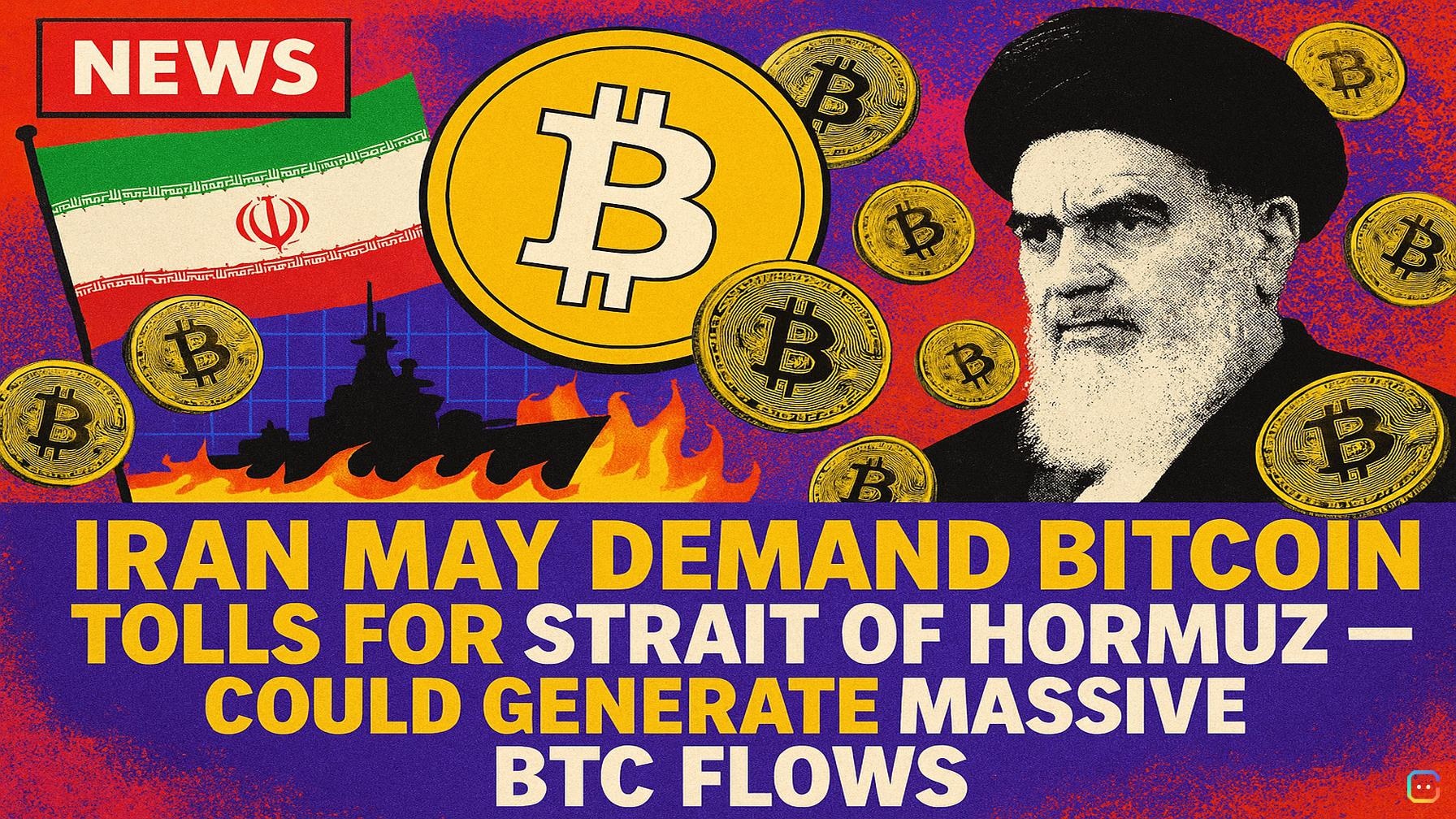
As global tensions flare, investors are again hunting for safe havens — and Bitcoin is increasingly in the frame. Amid the ongoing U.S.–Iran conflict, reports suggest the cryptocurrency is being used more broadly by Iranians to protect wealth, and a new, audacious use case has surfaced: Iran may demand Bitcoin payments from ships transiting the Strait of Hormuz.
What’s being reported
- The Financial Times cites Hamid Hosseini, a spokesperson for Iran’s Oil, Gas and Petrochemical Products Exporters’ Union, saying Iran could require vessels to pay passage tolls in BTC as part of efforts to assert control over the Strait of Hormuz.
- According to the FT, ships would have to email Iranian authorities their cargo details in advance. The proposed tariff is $1 per barrel; cargo would be inspected and ships given only minutes to remit the toll in Bitcoin.
- The report adds that attempts to bypass the system could be met with force, with unvalidated vessels reportedly subject to destruction.
How big is the potential Bitcoin flow?
- Intelligence firm Arkham ran through the arithmetic publicly, using a typical large oil tanker volume of roughly 3 million barrels as an example. At $1 per barrel that equates to ~$3 million per ship in tolls, which Arkham translated into BTC (depending on the price used).
- Arkham’s summary — amplifying a thread that has circulated widely — also referenced a breakdown attributed to Martin Kelly, head of advisory at maritime intelligence group EOS Risk, estimating that the new rules would reduce daily traffic dramatically: from about 130 ships a day before the crisis to only 10–15 permitted daily transits under the proposed regime.
- One headline-grabbing math example (from the social thread) used a $72,000 BTC price and estimated each ship would pay about 27.7 BTC (~$2M in that calculation), extrapolating to thousands of BTC per day and more than 100,000 BTC per month — a volume many times larger than the current daily mining issuance. (For context: after the 2024 Bitcoin halving, miners produce roughly 450 BTC per day.)
Why this matters for Bitcoin
- If a state under sanctions or facing financial isolation begins to accept Bitcoin at scale, it would be a high-profile geopolitical use case: a sanctioned nation effectively building a crypto-denominated treasury by monetizing a strategic chokepoint.
- The story reinforces the narrative that Bitcoin can function as a non-sovereign, portable store of value and settlement medium during geopolitical stress — a theme already emerging among people in affected countries.
Caveats and open questions
- The plans are reported, not confirmed as implemented. Details about enforcement, custody, settlement methodology, and how counterparties (ship owners, insurers, oil traders) would respond remain unclear.
- Legal and practical hurdles are significant: vessels and global shipping firms are subject to international law, insurance constraints, and compliance regimes. Many companies would be wary of transacting in crypto if it risks sanctions violations or creates operational exposure.
- Market impact would depend on adoption speed, enforcement rigor, and how counterparties elect to pay or route around the measure.
Bottom line
The FT report and subsequent analyses have pushed a provocative scenario into the spotlight: a strategically placed toll paid in Bitcoin could, if acted on and enforced, create meaningful demand and成为 a major geopolitical Bitcoin narrative. But there are big uncertainties — operational, legal, and diplomatic — before this moves from a striking headline into a sustained real-world flow of BTC. For crypto markets and policy watchers, it’s a story worth monitoring closely.
Read more AI-generated news on: undefined/news