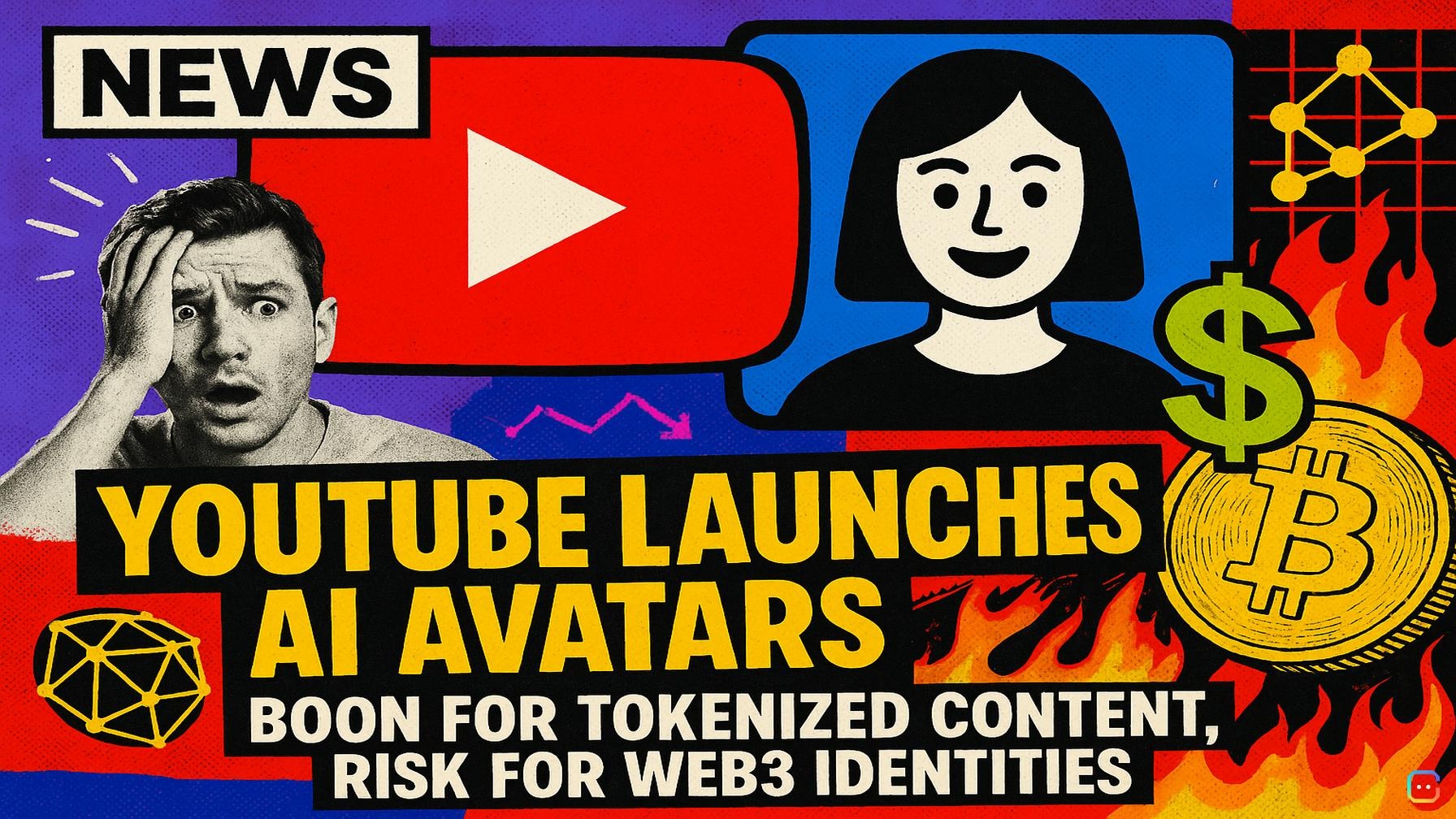
YouTube is rolling out a new AI avatar tool that makes it easy for creators to generate short, avatar-driven videos — and it could reshape how identities and content are used across the creator economy and crypto-native ecosystems.
What’s launching
- The “Make a video with my avatar” feature is now being deployed through the YouTube app and YouTube Create, with a gradual rollout that began Wednesday and should reach most users in the coming days.
- It’s powered by Google’s Veo 3.1 video model and is available only for Shorts and the YouTube Create app at launch.
- Each prompt-driven clip runs for about eight seconds; creators can stitch multiple clips together to make longer content.
- Eligibility: you must be at least 18 and own a YouTube channel. The initial rollout covers mobile users globally outside Europe.
Safety, control and provenance
- Only the account holder can generate videos with their avatar. The creator can delete their avatar at any time, but videos already created won’t be removed automatically unless the user deletes them manually.
- YouTube is adding AI disclosures and digital watermarks to generated clips to signal that content was made with artificial intelligence — an increasingly common industry response to deepfake risks.
Why it matters to the crypto community
- The move accelerates mainstream access to hyper-realistic AI video creation, which has direct implications for identity, reputation, and fraud in web3:
- Scams and social-engineering attacks could leverage convincing AI-generated video of founders, influencers, or NFT project spokespeople to manipulate token holders or execute rug-pull narratives.
- Conversely, creators and projects could use avatar tech to produce gated or tokenized content, spawn on-chain avatar IP, or layer AI avatars into immersive metaverse experiences.
- Watermarks and disclosures are a start, but decentralized provenance (cryptographic signatures, on-chain attestations, or NFT-linked verification) may become valuable tools to prove who actually authorized a given video.
Industry context and cost realities
- Generative video tools are proliferating — companies such as Synthesia, ElevenLabs, and HeyGen already let users produce AI presenters and synthetic media.
- But scale is expensive: OpenAI shuttered its Sora video app in March after six months, reportedly citing costs that ran up to about $15 million per day, even as it said it was refocusing development resources.
- YouTube’s rollout is part of a broader push to bake more AI tools into creator workflows. In a January letter outlining priorities for 2026, CEO Neal Mohan said the company plans to expand AI-powered creation features that let creators “produce Shorts using their own likeness.” He added, “AI will act as a bridge between curiosity and understanding,” and emphasized YouTube’s goal of ensuring “AI serves the people who make YouTube great: the creators, artists, partners, and billions of viewers.”
Bottom line
YouTube’s avatar feature democratizes a powerful form of synthetic media, bringing both creative opportunities and new risks — especially for crypto and web3 projects that rely on trusted identities and token-holder communications. Expect both innovation (tokenized avatar content, new creator-first monetization models) and renewed interest in on-chain verification and anti-fraud measures as the space adapts.
Read more AI-generated news on: undefined/news