USPS on the Brink: What a Postal Collapse Would Mean — and Why Crypto Markets Should Care
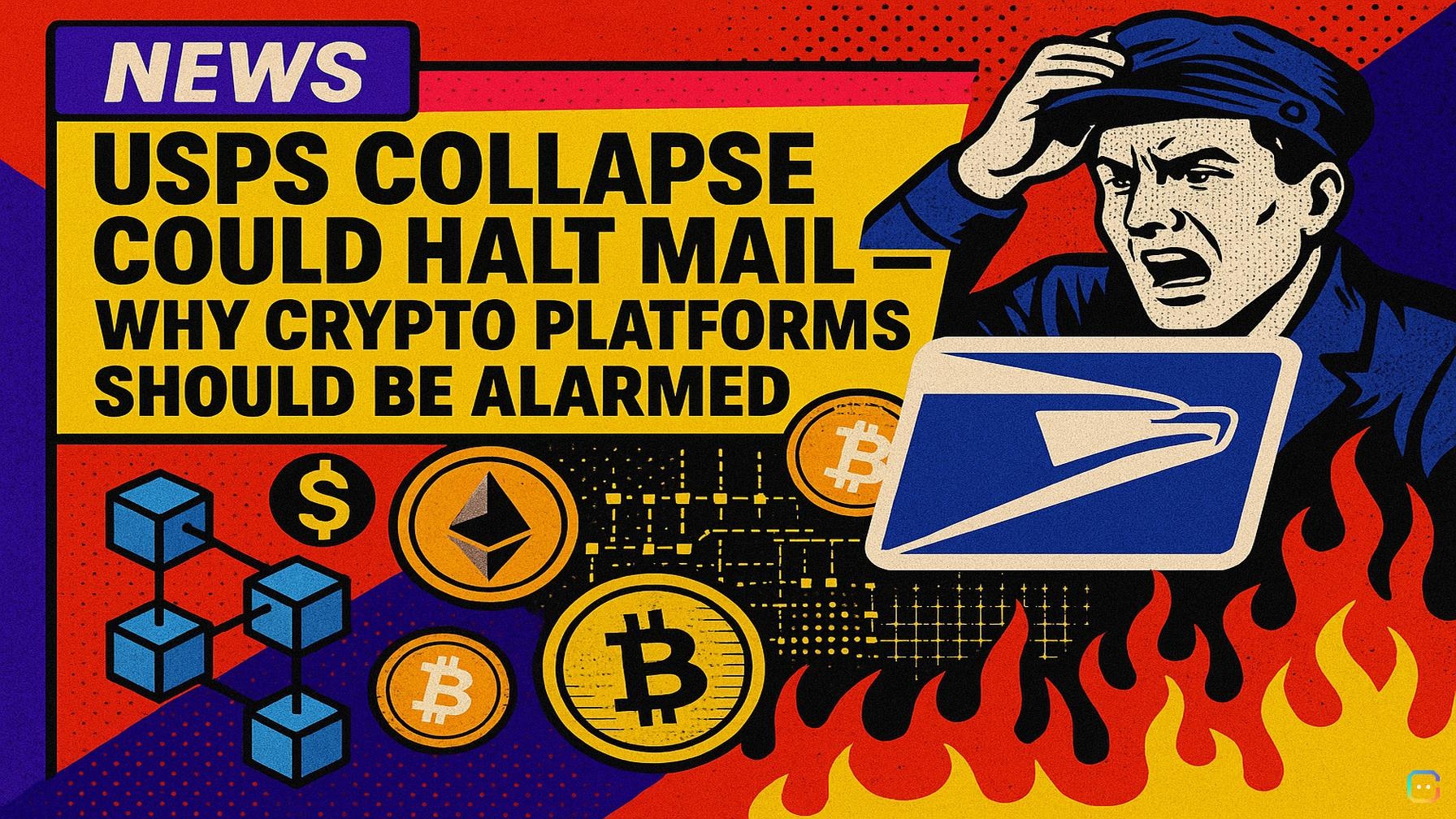
The U.S. Postal Service is warning Congress it could run out of cash within 12 months and may be forced to stop delivering mail unless urgent steps are taken. Postmaster General Louis DeJoy told lawmakers in mid‑March that the agency’s finances are deteriorating rapidly — a crisis made plain by a recent unilateral move to conserve cash.
What the USPS did — and why it won’t solve the problem
- The Postal Service has suspended contributions to the Federal Employees Retirement System, a deferral authorized by a Postal Regulatory Commission waiver. That move could free up to $15 billion by postponing pension payments through September 2030. It is a temporary cash‑management tactic, not a structural fix.
- USPS operates without taxpayer funding for day‑to‑day operations. It relies on revenue from stamps and service fees — revenue that has plunged as email, texting and electronic payments have displaced traditional first‑class mail, historically the agency’s most profitable product.
- Amazon, the agency’s largest parcel customer, has said it may reduce volume routed through USPS by as much as two‑thirds by September, further squeezing income.
Who would be hurt first
- Public‑health and rural communities would bear disproportionate harm. About 6% of diabetes prescriptions are mailed in the U.S., and roughly 3.7 million Medicare beneficiaries live in areas with limited pharmacy access and rely on postal delivery for medications.
- The USPS’s universal service obligation requires equal delivery across urban and rural areas; cuts or service reductions would therefore hit rural Americans especially hard.
- The Government Accountability Office labeled the USPS business model “unsustainable” and urged “urgent action.”
What Postmaster General DeJoy is asking Congress to do
DeJoy outlined three primary requests:
1. Raise the Treasury borrowing limit so USPS can access more capital.
2. Allow more flexible pricing by removing a cap that restricts Postal Regulatory Commission–approved rate increases to once per year through 2030.
3. Grant flexibility on the universal service obligation to adjust service models.
Political response and the uphill legislative fight
- Some Republican lawmakers pressed the agency on internal cost cuts, noting Congress passed the Postal Service Reform Act in 2022, which the chair of the oversight committee said saved USPS $107 billion. Lawmakers want to know whether USPS has squeezed every internal option before seeking additional help.
- A rescue bill would face stiff competition for congressional attention in 2026 — from the Iran war, CLARITY Act negotiations, and partisan positioning ahead of elections — making a quick legislative fix far from certain.
Market spillovers — why this matters beyond mail
- Mail disruption would affect more than letters and parcels. Many financial services, legal notifications, checks, and regulatory documents still move via post. Interruptions could ripple into markets and sectors that depend on physical document flows.
- Crypto platforms are not immune: while much of the industry is digital, some market participants, compliance processes, legal notices and legacy business functions still rely on mailed documents. Delays could complicate KYC paperwork, regulatory notifications, or operational flows for firms that maintain hybrid paper/digital processes.
Bottom line
The USPS has bought time with a pension‑payment deferral, but that’s a temporary fix for a deeper revenue problem. Congress faces a politically crowded calendar, and the agency’s three requests would require meaningful legislative action. If lawmakers don’t act, the consequences range from delayed prescriptions and rural service cuts to broader operational shocks in markets and sectors that still rely on reliable postal delivery — including certain legacy touchpoints in the financial and crypto ecosystems. As DeJoy told lawmakers bluntly: “The mail will stop” if the agency cannot meet its obligations. Watch Congress’s response, Amazon’s routing decisions, and upcoming USPS financial disclosures for the next signs of how this crisis will unfold.
Read more AI-generated news on: undefined/news