A Quiet Fed Change Could Boost XRP’s Role in Cross-Border Payments
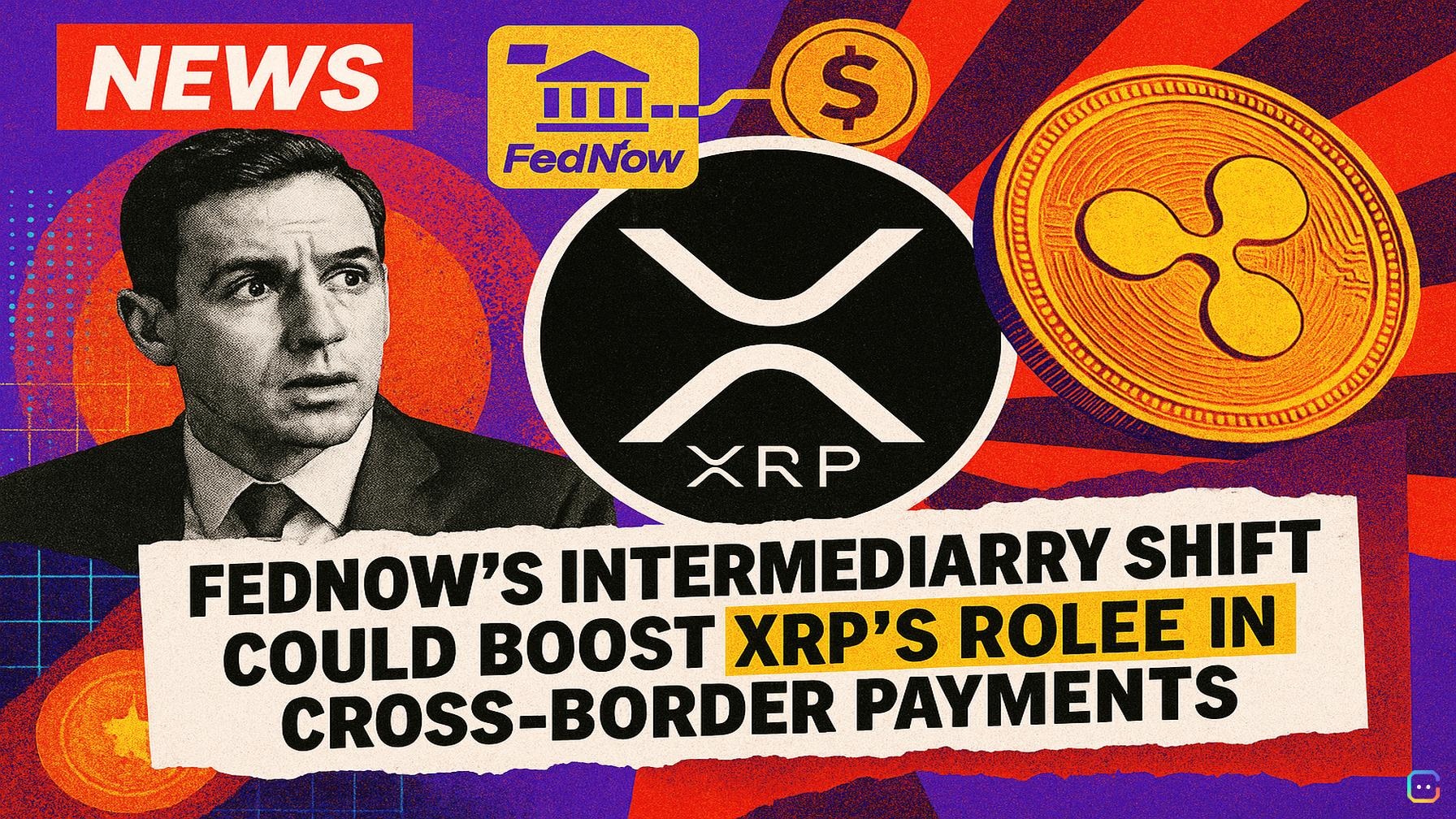
A technical but important tweak to U.S. payments infrastructure is rekindling interest in XRP’s potential as a bridge asset for cross-border transfers. The Federal Reserve’s recent proposal to expand FedNow’s capabilities — specifically by allowing banks and credit unions to route transfers through intermediaries — has prompted fresh discussion in crypto and payments circles about how digital assets might plug into the traditional rails.
What’s changing with FedNow
Under current rules, FedNow primarily supports direct transfers between two U.S. banks. The Fed’s proposal would permit use of third-party intermediaries to facilitate transfers, including the international legs of payments. That change could make it easier for nonbank payment providers and digital-asset infrastructure to interoperate with FedNow without requiring a full banking sponsor relationship for every counterparty.
Why Ripple is being mentioned
Analyst XFinanceBull (on X) has pointed out two developments that make Ripple an obvious candidate to benefit from this shift:
- Ripple National Trust Bank has been conditionally approved by the Office of the Comptroller of the Currency (OCC). That conditional charter, if finalized, would enable the institution to custody digital assets, provide lending services, and seek direct access to Federal Reserve services — including instant-pay systems such as FedNow.
- Ripple is reportedly awaiting approval of a Fed Master Account application. A master account is the mechanism that connects a chartered bank directly to Federal Reserve payment systems; obtaining it would be the final operational step for direct Fed access.
Academic and industry context
A peer-reviewed paper published by the Financial Planning Association examined Ripple and XRP’s evolving role in cross-border settlement, noting potential integration points such as FedNow access and participation in the Fed’s discount window for liquidity support. Those findings align with the Fed’s intermediary-friendly direction: if FedNow supports cross-border flows through intermediaries, a conditionally chartered Ripple bank could conceivably act as one of those bridges.
Broader signals and adoption
Supporters also point to Ripple’s engagements with global institutions such as the IMF and Bank for International Settlements as evidence of its interoperability ambitions. Separately, industry reports say more than 300 financial institutions have explored, adopted, or tested XRP in some capacity — a figure often cited in discussions about enterprise interest in the token as a liquidity tool. Partnerships with firms like Temenos are also highlighted as steps toward real-world banking integrations.
How XRP would be used
Proponents describe XRP as a fast, low-cost bridge currency for converting between local currencies and major settlement currencies like USD. Commentators (including community figures such as “Ledger Man”) argue the token can speed up conversions for currencies with thin FX liquidity — examples often cited include the Iraqi dinar, Vietnamese dong, and Venezuelan bolívar. If intermediaries are permitted on FedNow and Ripple secures full operational approval, those conversion pathways could become easier to stitch into existing banking flows.
A cautionary note
None of this is a guaranteed outcome. Conditional OCC approval and a master account application are significant milestones, but final regulatory approvals and operational integrations remain to be completed. The Fed’s proposal itself still needs to move through policy and rulemaking processes. What’s clear, however, is that the architecture of U.S. instant payments is evolving in ways that could create new entry points for digital-asset firms — and Ripple appears well positioned to try to take advantage if regulators and the Fed give the green light.
Bottom line
The Fed’s intermediary-friendly move for FedNow has opened a possible path for digital-asset infrastructure to interface with U.S. instant payments. With a conditional national charter in hand and a pending Fed master account, Ripple — and XRP as a bridge asset — is getting attention as a potential on-ramp. Whether it becomes an operational reality will depend on final approvals and the Fed’s rulemaking outcome.
Read more AI-generated news on: undefined/news