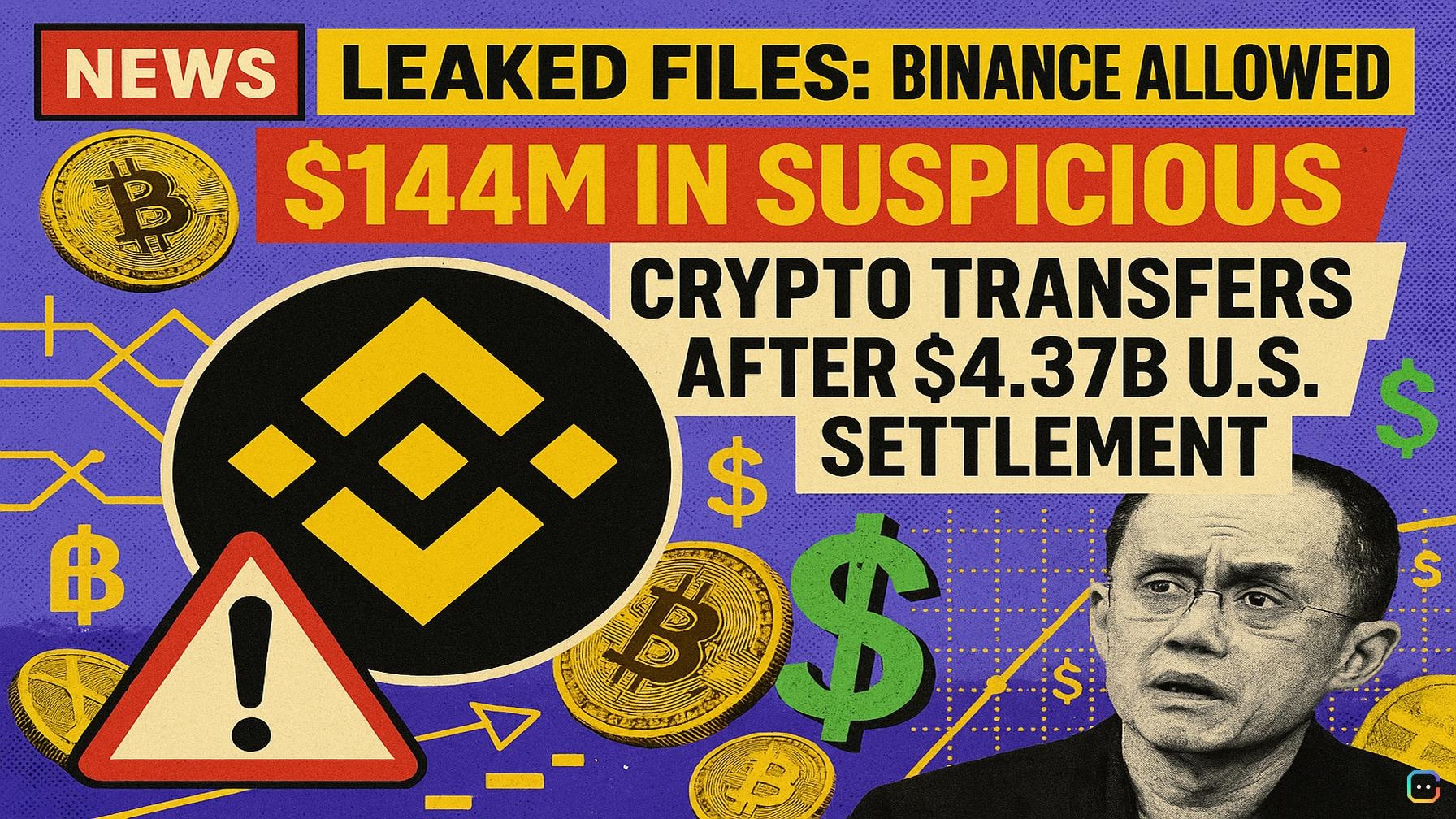
Leaked files suggest Binance didn’t fully stop suspicious accounts from moving large sums even after its high-profile 2023 settlement with U.S. authorities, the Financial Times reports.
What happened
In November 2023 Binance agreed to pay $4.368 billion to resolve alleged sanctions violations and Bank Secrecy Act failures with FinCEN and OFAC. The settlement led to then-CEO Changpeng Zhao’s resignation and imposed a five-year FinCEN monitorship plus tighter anti-money‑laundering controls.
Despite those measures, internal files obtained by the FT show 13 accounts flagged as suspicious continued transacting on the exchange after the settlement. Collectively those 13 accounts handled about $1.7 billion in crypto since 2021, including roughly $144 million moved after November 2023. The leaked data include several high-value, high‑frequency behaviors:
- One account registered to a 25‑year‑old Venezuelan woman received just over $177 million in crypto between April 2022 and April 2024 and changed its payment details 647 times between January 2023 and March 2024 — routing funds through 496 separate bank accounts across the Americas.
- Another account, tied to a 30‑year‑old junior bank employee in Caracas, received about $93 million between 2022 and May 2024 and sent out a similar amount; IP logs showed access in Caracas on Feb. 24 and in Japan less than 12 hours later.
- The 13 accounts were registered across jurisdictions including Venezuela, Brazil, Syria, Niger and China.
Links to alleged terror financing
Between February 2022 and March 2023, all 13 accounts received roughly $29 million in USDT originating from accounts later frozen by Israel for alleged terrorism financing. Most of that $29 million flowed from four wallets tied to Tawfiq Al‑Law, who has been accused of moving funds for Hezbollah, Yemen’s Houthis and an Assad‑linked company. Israel seized those four wallets in May 2023; OFAC sanctioned Al‑Law in March 2024.
Context and caveats
The FT said the leaked data indicate the flagged accounts may have been less active after November 2023, and it found no evidence that Binance made or received transfers to or from parties after they were officially sanctioned.
Binance response
Binance told the FT it operates “robust systems” to flag and investigate suspicious activity and will restrict accounts as required. Speaking to Decrypt, the exchange pushed back on the FT’s framing, saying transactions are judged on the information available at the time and that “none of the wallets referenced were sanctioned when the activity referenced by the Financial Times occurred.” Binance also noted it has been under independent monitorship since November 2023 and said it complies with all relevant financial sanctions, adding that compliance and user safety are priorities.
What’s at stake
Under the 2023 settlement Binance faces ongoing oversight: the FinCEN monitorship must “oversee remedial undertakings,” conduct periodic reviews and report findings to FinCEN, OFAC and the CFTC. If Binance fails to meet its obligations it could incur further penalties, including a suspended $150 million fine.
This story was updated with Binance’s statements.
Read more AI-generated news on: undefined/news