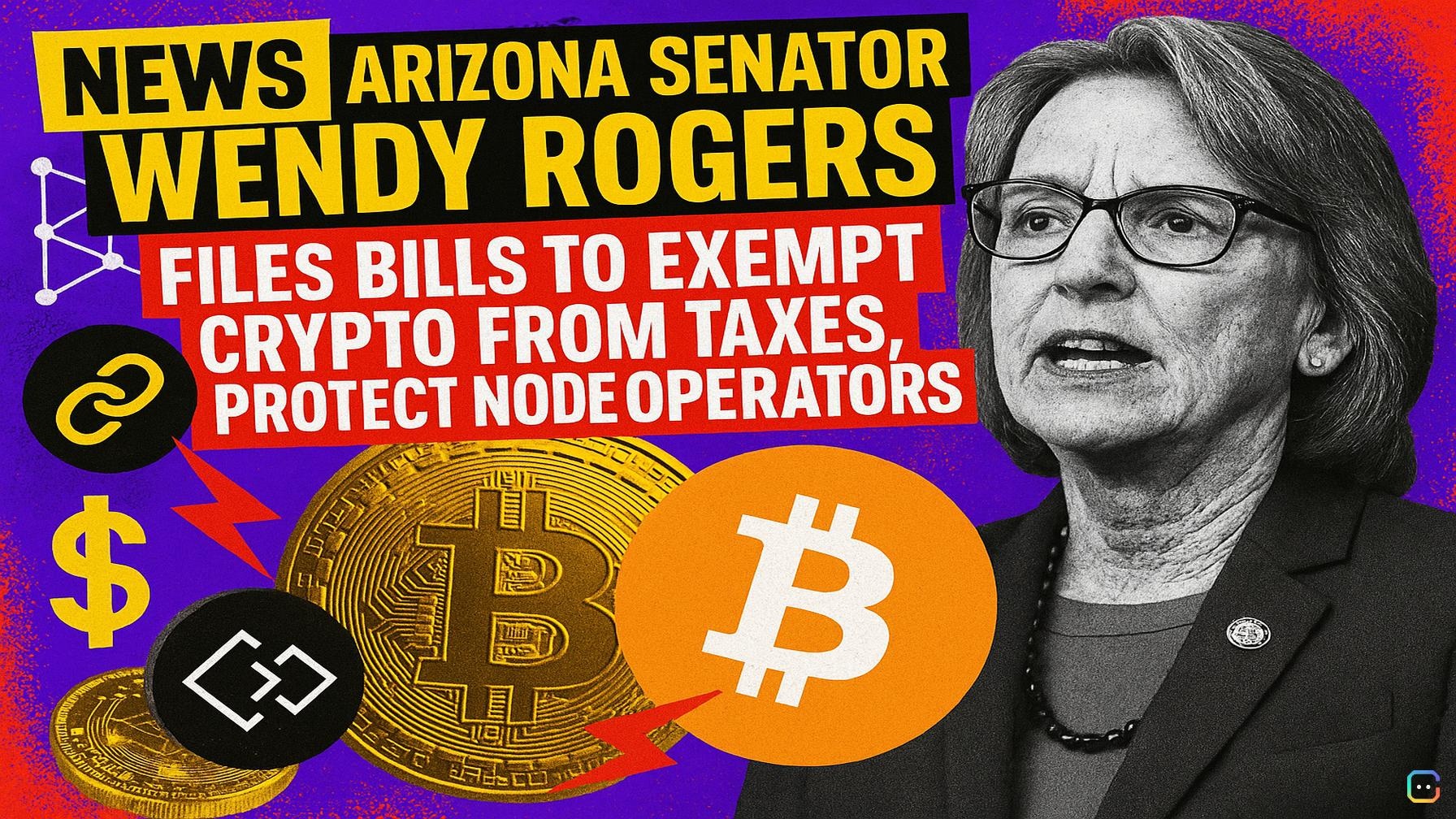
Arizona Republican state Senator Wendy Rogers has prefiled a trio of measures aimed at reshaping how Arizona treats digital assets — from taxes to local regulation and the state constitution.
What Rogers filed
- SB 1044: A statutory change to explicitly exempt “virtual currency” from state taxation. Because it would alter state law on taxation, this measure would also ultimately require approval by Arizona voters in a statewide referendum (next general election: November 2026).
- SB 1045: A bill that would bar cities, towns and counties from imposing “a tax or fee on a person that runs a node on blockchain technology.” This local-tax ban could move through the legislature without a public referendum.
- SCR 1003: A proposed constitutional amendment to amend the state constitution’s definition of property taxes to specifically exclude virtual currency — a change that, like SB 1044, would need voter approval in 2026.
Why it matters
If enacted, the measures would harden protections for crypto users and node operators in Arizona by limiting both local and state taxation of digital assets. The node bill is particularly notable because it would prevent municipal governments from levying fees or taxes on people operating blockchain nodes — a potentially significant protection for hobbyists and infrastructure operators that some localities have discussed regulating or taxing.
Context in Arizona and beyond
Arizona already has one unusual crypto law on the books: legislation that lets the state claim ownership of digital assets that have been abandoned for at least three years. That provision was part of earlier efforts by crypto advocates to create a state-run digital asset reserve. Arizona remains among the few U.S. states with laws touching on state crypto reserves; New Hampshire and Texas have pursued similar frameworks.
Rogers was a co-sponsor of a separate Bitcoin reserve bill that Arizona Governor Katie Hobbs vetoed in May. Rogers criticized the veto and said she plans to refile the reserve proposal in the next session. Cointelegraph contacted Rogers for comment but had not received a response at the time of reporting.
Comparative landscape: other states and federal moves
- New Hampshire’s governor signed a crypto reserve bill into law earlier this year, and Texas has its own reserve-related statutes.
- Ohio’s House passed a bill that would exempt crypto transactions under $200 from the state’s capital-gains taxes, but that measure hadn’t advanced since June.
- In New York, Assemblymember Phil Steck proposed a 0.2% excise tax on digital asset transactions; the proposal was sent to the ways and means committee and did not advance further as of August.
- At the federal level, Senator Cynthia Lummis (Wyoming) circulated a draft bill in July proposing a de minimis exemption for digital asset transactions and capital gains up to $300. Lummis has announced she will retire from the U.S. Senate in January 2027.
What to watch next
- SB 1045 (node protections) could advance through the Arizona legislature without a public vote.
- SB 1044 and SCR 1003, both of which aim to block taxation of virtual currency at the state level and in the constitution, would need to clear the legislature and then win approval from Arizona voters in November 2026.
These filings are part of a broader national debate over how to tax, regulate and potentially incorporate digital assets into public finances. Arizona’s next legislative sessions and the 2026 ballot could become key milestones for crypto policy in the state.
Read more AI-generated news on: undefined/news