Hong Kong is moving closer to letting insurers play a bigger role in the digital-asset economy — but it’s doing so with caution.
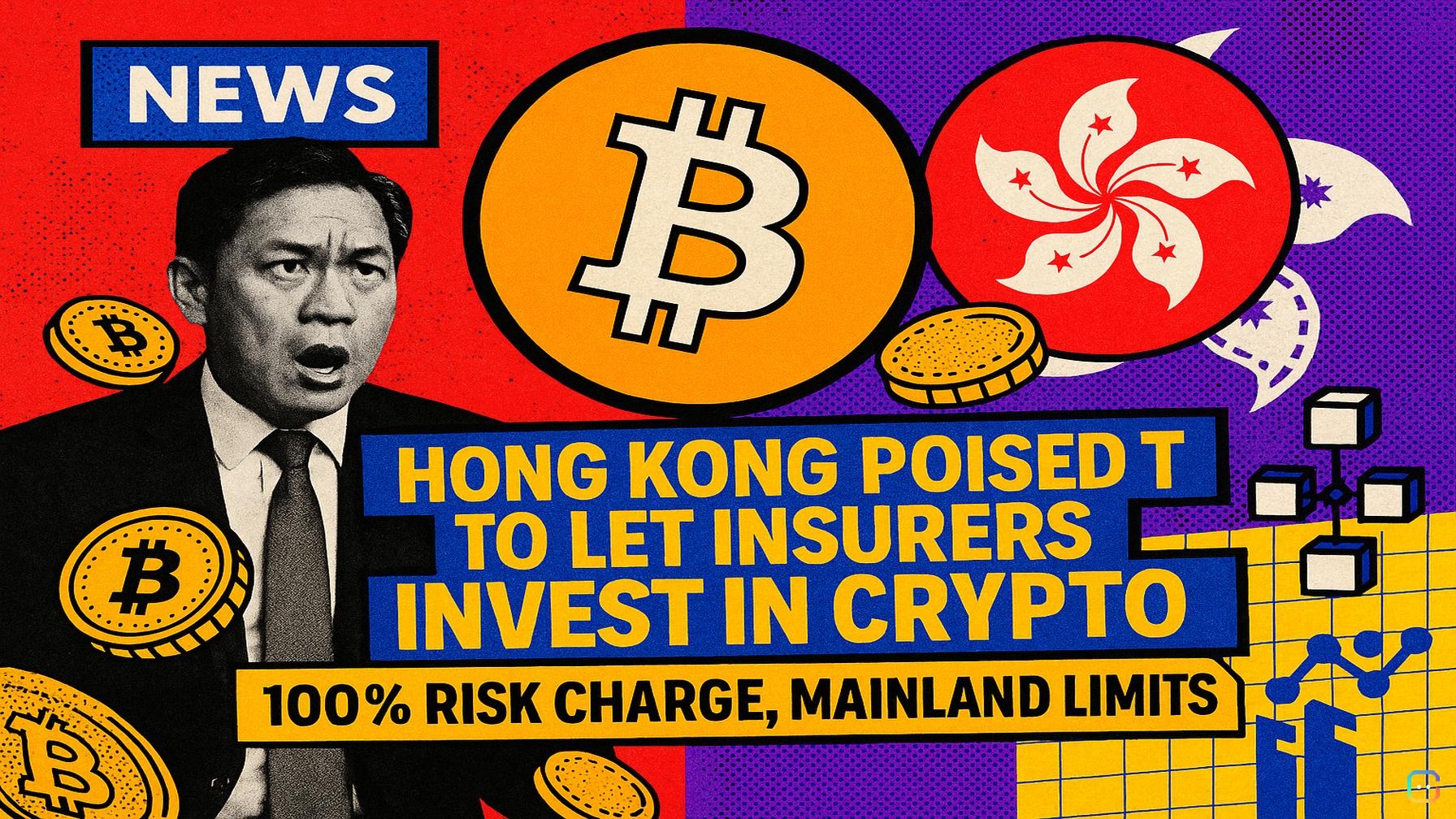
According to a Bloomberg report, the Hong Kong Insurance Authority has floated new rules that would allow insurers to invest in cryptocurrencies, stablecoins and digital-asset infrastructure as part of the city’s broader push to become a global crypto hub and to drive economic growth. The proposal would take a conservative, risk-focused approach: crypto holdings would face a 100% risk charge, meaning insurers would need to hold capital reserves equal to the full value of those investments. Stablecoins, by contrast, would be subject to risk charges tied to the fiat currency to which each token is pegged.
The regulator says the review is part of a wider reassessment of the risk-based capital regime launched this year, aimed at supporting both the insurance sector and the territory’s broader economic development. A spokesperson told Bloomberg: “We are at the stage of gauging industry feedback and will also put the proposals for public consultation in due course.”
Timeline and consultation
- The draft framework Bloomberg reviewed (dated Dec. 4) is expected to enter public consultation from February through April 2026, with legislative submissions to follow. The proposal is not final and could be revised during consultation.
Why it matters
- Hong Kong’s insurance sector is sizable: the Insurance Authority’s website shows 158 authorized insurers as of June 2025, and gross premiums reached HK$635 billion (about $82 billion) in 2024. Channeling some of that capital into digital assets and infrastructure could boost liquidity and fund local projects — but the steep risk charges signal regulators want to limit systemic and policyholder exposure.
Infrastructure incentives and the mainland link
- The proposal also includes incentives for insurers to invest in projects tied to Hong Kong or mainland China, and for assets listed or issued in the city, reinforcing the government’s strategy to spur local growth and deepen financial links across the Greater Bay Area.
Stablecoin licensing and cross-border friction
- The Insurance Authority’s moves sit alongside parallel developments on stablecoins. The Hong Kong Monetary Authority (HKMA) enacted a Stablecoins Ordinance earlier in 2025 that requires issuers of fiat-referenced stablecoins (FRS) and Hong Kong dollar–pegged tokens to be licensed. The HKMA is expected to issue the first batch of stablecoin licenses in early 2026, though some industry participants expect delays. More than 30 applications have reportedly been submitted this year, including filings from logistics tech firm Reitar Logtech and Ant Group’s overseas arm.
Complicating matters, China’s top regulators — led by the People’s Bank of China — recently reiterated that stablecoins are not legal tender on the mainland and flagged regulatory and illicit-use risks. That stance, highlighted by Bitcoinist and analysts, dampens hopes that Beijing will relax its position and creates uncertainty for projects that bridge Hong Kong and mainland markets. Brian Tang, founding director of the Law, Innovation, Technology and Entrepreneurship Lab at the University of Hong Kong, warned that applicants will need to reassess filings that involve mainland issuers or users.
HKMA and applicant expectations
- The HKMA says it is reviewing applications and plans to start with a smaller cohort of licenses. It also noted that, even if it keeps its original timeline, projects involving the yuan or mainland institutions are likely to face delays.
Bottom line
Hong Kong is signaling a pragmatic opening for insurers to invest in digital assets and the infrastructure that supports them — but with strict capital safeguards and a clear eye on cross-border risks. The coming public consultation and the HKMA’s licensing process will be key tests of whether the city can balance ambitious growth goals with regulatory caution and mainland China’s continuing restrictions.
Read more AI-generated news on: undefined/news