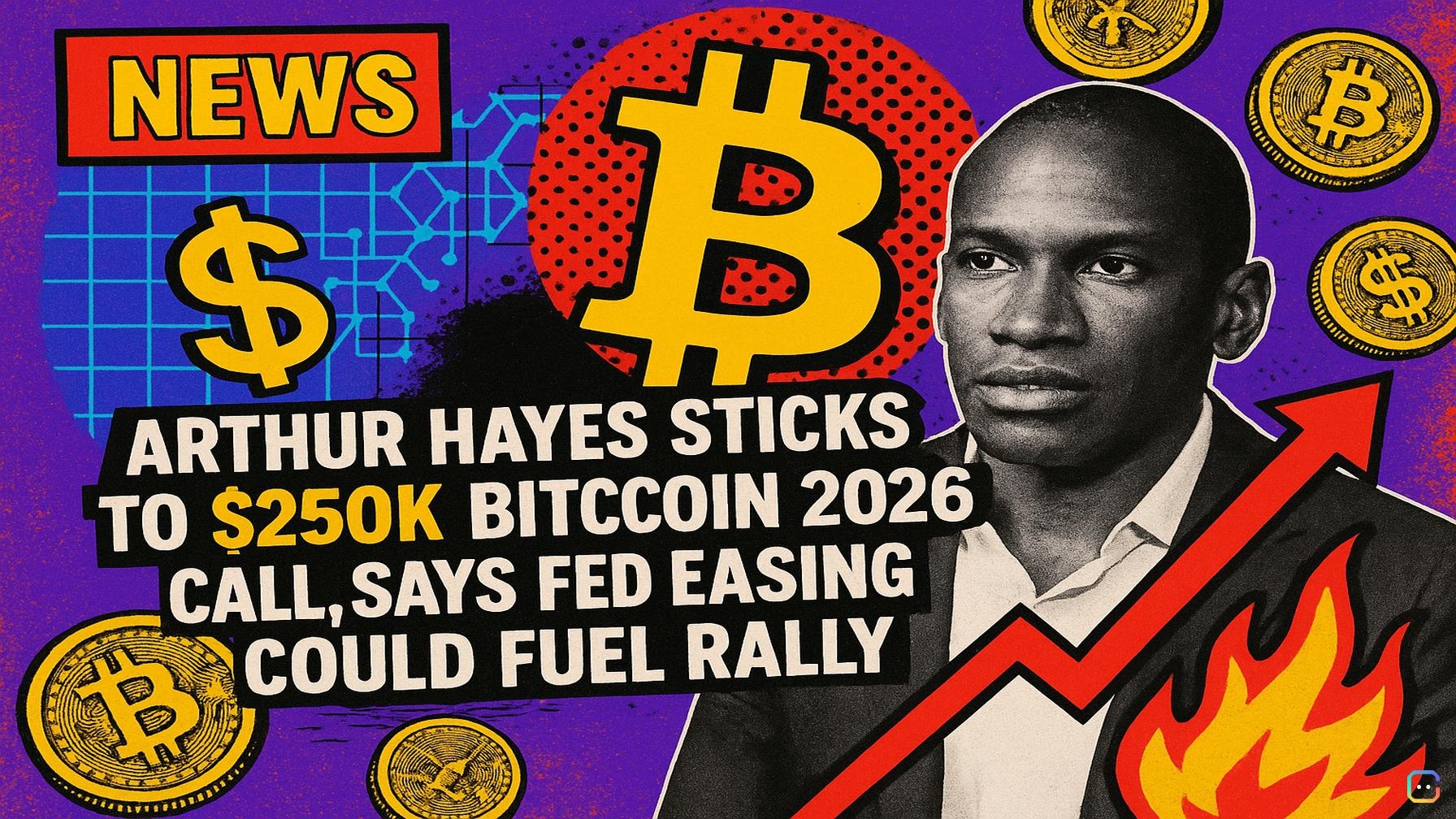
Arthur Hayes, the outspoken co-founder of BitMEX, has once again doubled down on a bullish forecast for Bitcoin — this time restating a $250,000 year‑end target for 2026.
Why it matters
- At roughly $70,100 per BTC today, Hayes’ $250,000 target implies about 256.5% upside and would put Bitcoin well above its prior October 2025 peak near $126,000.
- The call was reiterated in a recent YouTube interview when Hayes was asked whether he’d changed his 2026 outlook. His answer was blunt: he’d “go the same number,” signaling continued conviction despite recent volatility.
Hayes’ rationale (and caveats)
- Hayes has repeatedly argued macro and geopolitical tensions could trigger looser US monetary policy, which he believes would be bullish for Bitcoin. In past interviews he’s pointed to scenarios such as an escalated US‑Iran conflict that could push the Federal Reserve toward more aggressive money printing.
- He has previously floated even larger targets — at one point projecting $500,000–$750,000 by the end of 2026 if geopolitical pressures intensify.
- Yet he has also urged caution for individual investors. On another podcast he said, “If I had $1 to invest right now, would I be putting it into Bitcoin? No. I would wait,” adding that he’d only become a buyer once the Fed starts easing.
Market backdrop
- Bitcoin recently appears to have found a floor just above $61,000 and has been consolidating in a roughly $60,000–$74,000 band without a decisive trend.
- For a move to $250,000, BTC would first need to clear its current consolidation and reclaim higher zones lost during the post‑2025 correction. Technical observers point to supply gaps above ~$76,000; if those are taken out, thinner resistance could enable faster upside momentum.
Takeaway
Hayes’ renewed $250,000 projection underscores a hawkish bullish narrative that ties Bitcoin’s upside to macro liquidity and geopolitical risk. While his conviction remains strong, he combines big-picture speculation with a prudent stance for timing allocations — cautioning individual investors to wait for clearer signals from monetary policy before entering.
Read more AI-generated news on: undefined/news