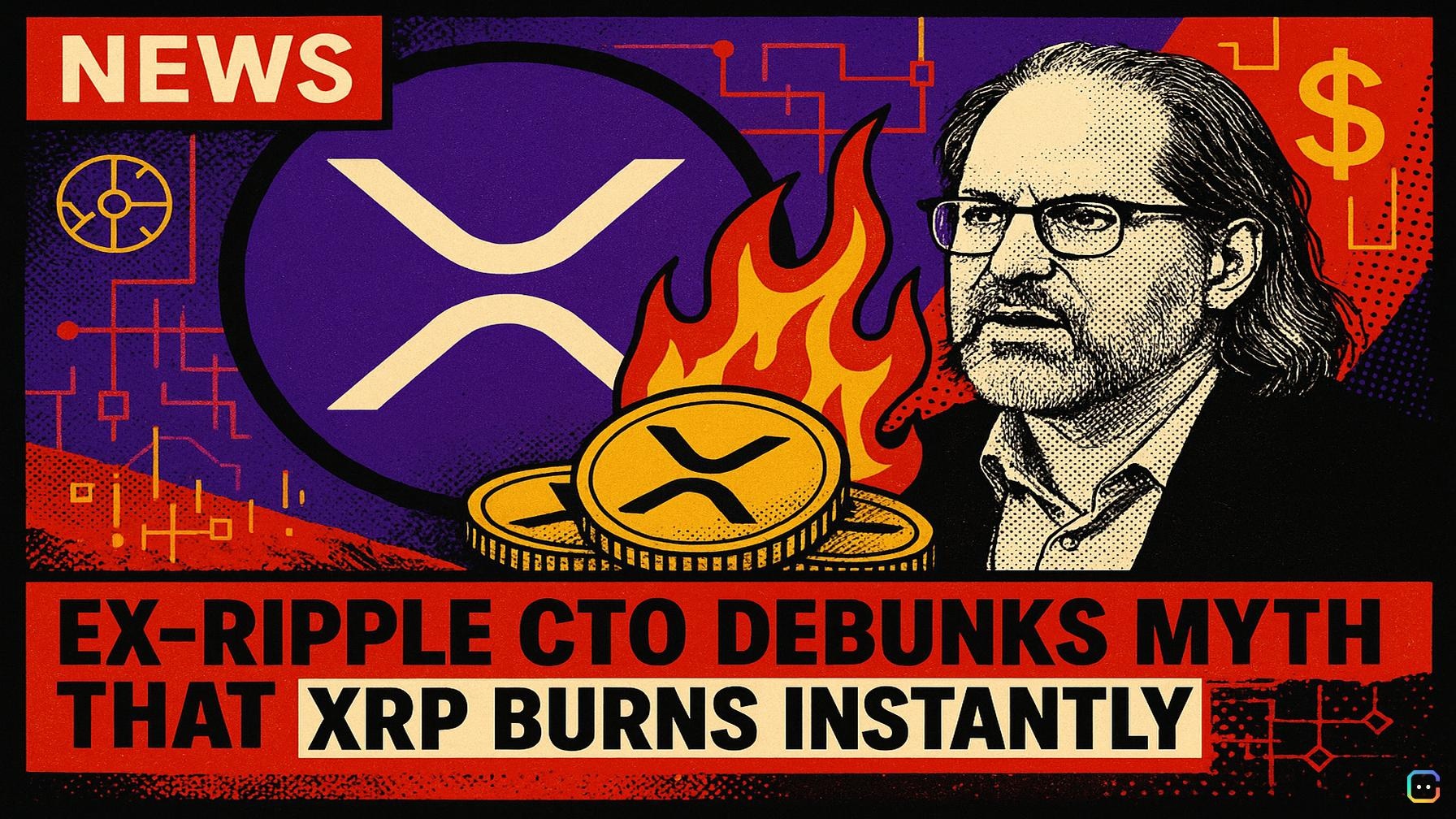
A former Ripple executive has stepped into a heated community debate over XRP token burns, pushing back on the long-held notion that burning tokens automatically triggers immediate price gains.
David Schwartz, Ripple’s former CTO, took to X on March 12 to respond after a pseudonymous community member, “XRP Launch,” publicly questioned Ripple’s recent $750 million share buyback. The post — which tagged Ripple CEO Brad Garlinghouse, President Monica Long and CLO Stuart Alderoty — urged the company to burn the XRP held in escrow instead of buying back shares that primarily benefit the company. The user suggested, tongue-in-cheek, that perhaps escrowed XRP can’t be burned because doing so “might push XRP’s price beyond $1.39.”
Schwartz countered with a chart comparing historical price action for XRP and Stellar (XLM). He highlighted that both assets have experienced intermittent volatility and spikes, but challenged the premise that token burns produce immediate price reactions. He pointed to Stellar’s November 2019 burn — in which Stellar destroyed roughly half its supply — and noted there was no clear, immediate upward price move in November or the months that followed. The first meaningful rally appeared only around February–March of the following year, undermining the idea of a direct causal link between supply reduction and instant price appreciation.
Schwartz argued that while burns reduce supply, they do not directly determine an asset’s valuation or short-term price trajectory; at best, they can exert indirect effects on market psychology and dynamics. That distinction — between direct economic impact and indirect market signaling — became central to the exchange.
The discussion then broadened to Ripple’s broader ecosystem initiatives, including its stablecoin RLUSD and the XRPL’s push into real-world asset (RWA) tokenization. Another pseudonymous community participant, “Spade,” pushed back: if burns don’t add value, he argued, then projects like RLUSD, RWA tokenization and XRP’s utility as a bridge asset likewise may not deliver direct price benefits. Spade maintained that liquidity generated by RLUSD won’t raise XRP’s value on its own, and that genuine price appreciation requires buying and holding XRP. He also criticized the narrative that XRP “frees up capital,” calling it counterproductive for price growth.
The exchange underscores a wider debate within the XRP community: what mechanisms truly support token value — corporate actions like buybacks, supply reductions through burns, or utility-driven adoption such as stablecoins and RWA flows — and how direct or indirect those effects are. As Ripple pursues corporate and product strategies, the conversation highlights lingering skepticism among holders about which moves will translate into tangible price outcomes.
Read more AI-generated news on: undefined/news