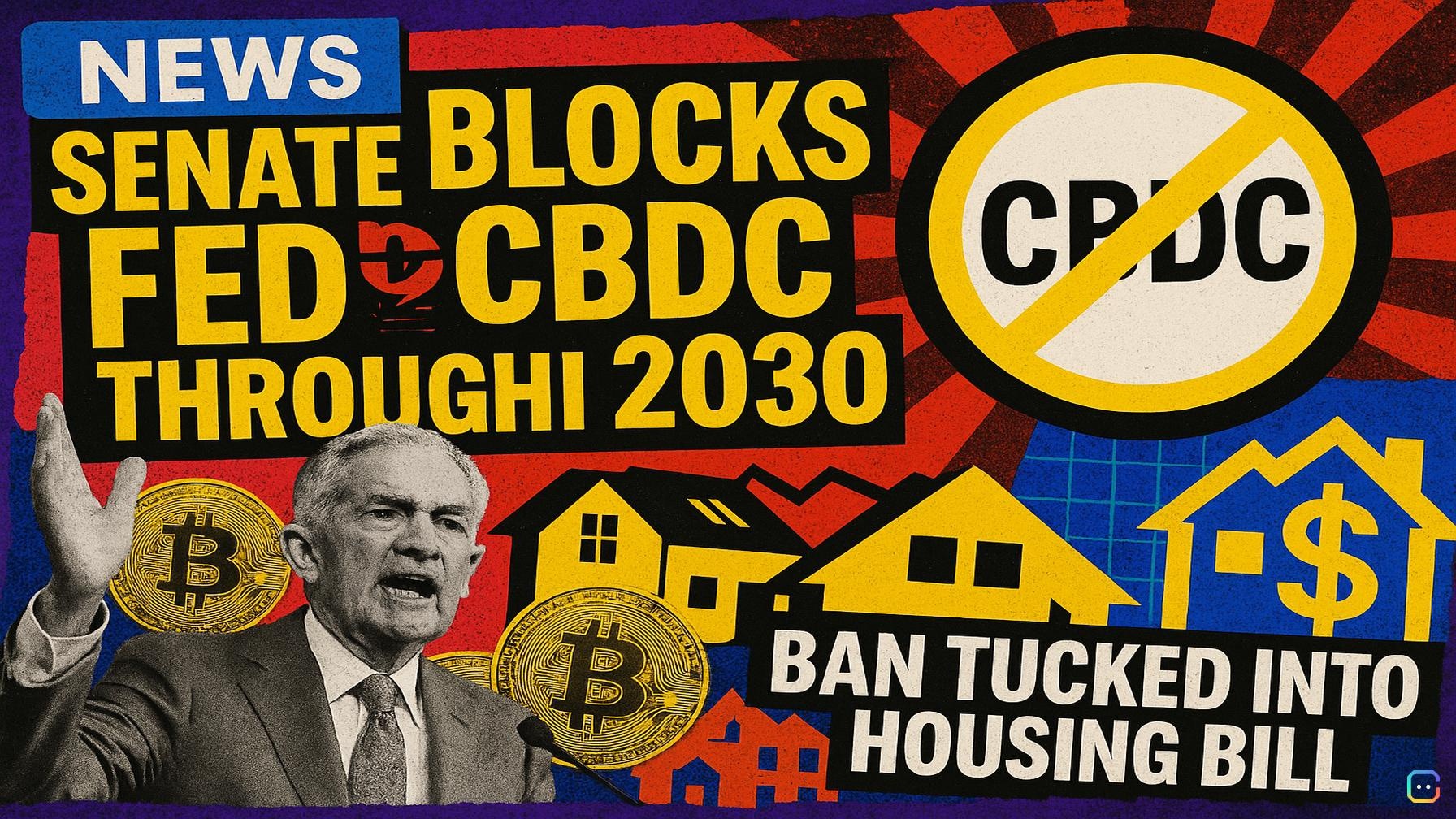
In a decisive show of bipartisanship, the U.S. Senate voted 89–10 to block the Federal Reserve from issuing a government-backed digital dollar — but the move is tucked into a broader housing bill that could face significant hurdles in the House.
The provision, appended to the 302-page 21st Century ROAD to Housing Act, bars the Fed “from issuing or creating a central bank digital currency or any digital asset that is substantially similar to a central bank digital currency directly or indirectly through a financial institution or other intermediary” at least through the end of 2030. The measure targets central bank digital currencies (CBDCs) — government-issued digital money that, in theory, could compete with private stablecoins and the CBDCs being developed by other countries such as China — though the U.S. has only advanced as far as research and pilot work to date.
Crypto industry lobbyists welcomed the Senate move. “Financial privacy is a cornerstone of American freedom, and any decision to authorize a Central Bank Digital Currency must remain with Congress and the American people,” Digital Chamber CEO Cody Carbone said in a statement. “We appreciate the Senate reinforcing that digital innovation in the United States should be led by the private sector while protecting individual liberty.”
Despite the large Senate margin, the CBDC ban’s placement inside a housing bill complicates its prospects. House lawmakers have signaled they may push for amendments or a second Senate vote, in part because the bill includes unrelated and contentious measures — notably a proposal to cap the number of homes large investors, like private equity firms, can own. That housing provision has attracted both Democratic and Republican interest, including support from former President Donald Trump, who has endorsed tighter limits on large corporate landlords.
But Trump has also tied his willingness to sign legislation to separate demands: he has said he will not sign bills unless Congress first passes legislation requiring voters to present ID and proof of citizenship at the polls for the upcoming midterm elections. With that issue unresolved, the fate of the housing bill — and the embedded CBDC ban — is uncertain. The same uncertainty clouds other crypto-related efforts awaiting legislative traction, like the Digital Asset Market Clarity Act.
For crypto markets, the Senate vote signals strong legislative skepticism toward a U.S. CBDC and a preference for private-sector-led stablecoin and digital asset innovation — at least for now. Whether that posture survives the House’s scrutiny and political horse-trading remains to be seen.
Read more AI-generated news on: undefined/news