Headline: Uniswap voters greenlight protocol fees and massive UNI burn, reshaping tokenomics
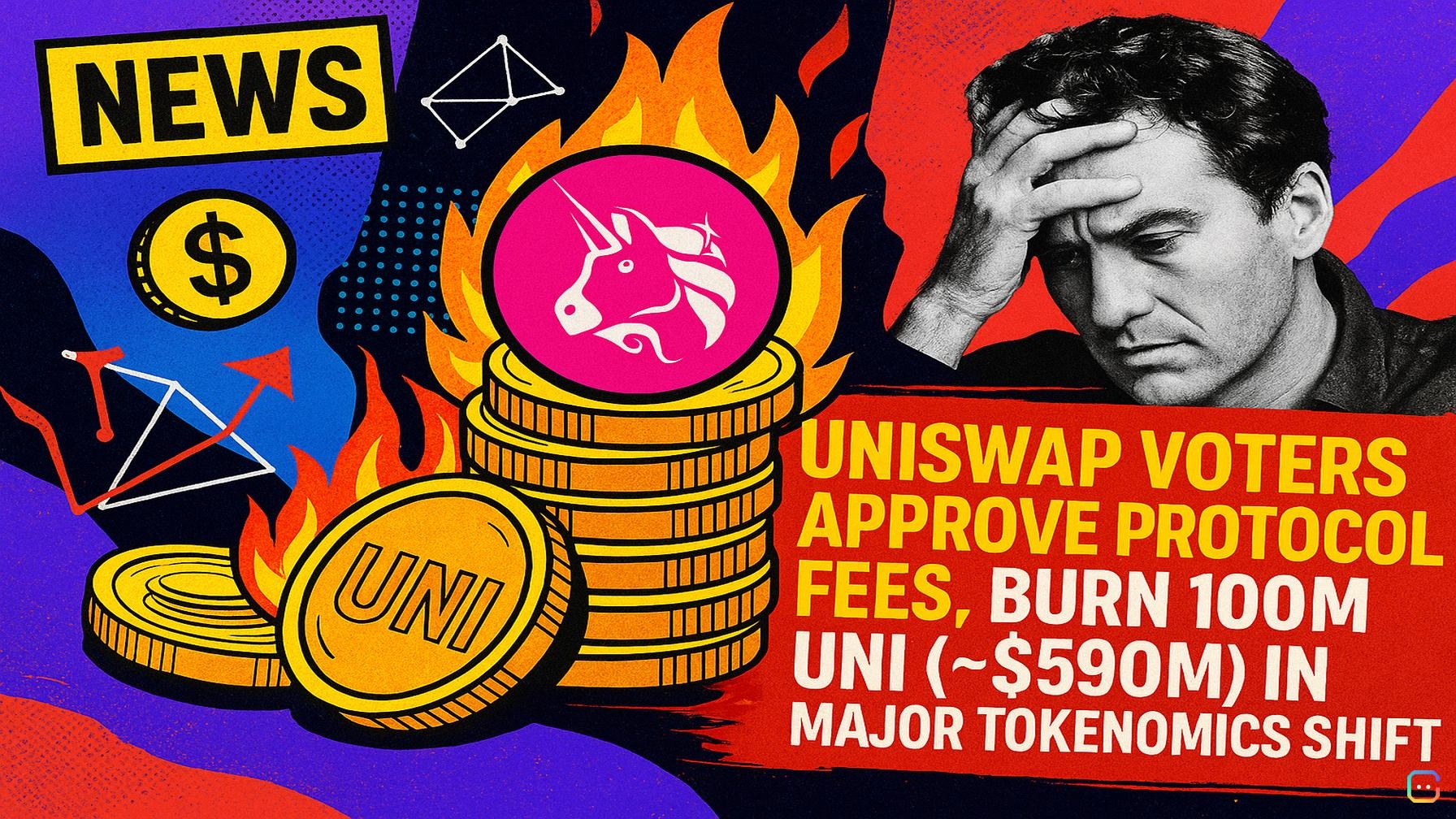
Uniswap’s community has overwhelmingly approved the “UNIfication” proposal from Uniswap Labs and the Uniswap Foundation to activate protocol fees and institute a large token burn, moving UNI from a governance-only token toward a value-accruing asset.
By the numbers
- The five-day vote passed with more than 125 million votes in favor and just 742 against.
- DeFiLlama data shows Uniswap averages roughly $2 billion in daily trading volume and generates about $600 million in annualized fees.
- As part of the change, some future protocol fees will be routed to an on-chain mechanism that burns UNI, tying platform usage directly to supply reduction.
- In a retroactive step, 100 million UNI from the treasury — worth over $590 million at current prices — will also be burned to reflect fees that could have accrued if protocol fees had been active since Uniswap’s 2018 launch.
Why it matters
Until now, Uniswap routed trading fees exclusively to liquidity providers, leaving UNI solely as a governance token with no direct economic link to the protocol’s revenue. Routing a portion of fees to a burn mechanism creates a forward-looking deflationary pressure and a clearer economic alignment between on-chain activity and token value — a structural change that could support long-term price appreciation.
Market reaction
The UNI token rose about 2.5% in the past 24 hours, trading near $5.92 as the community digests the changes.
Bottom line
The UNIfication vote represents one of the most consequential governance decisions in Uniswap’s history, formalizing a path for protocol revenue to affect token supply and moving UNI toward being a value-bearing crypto asset. Expect continued scrutiny on the fee split, burn cadence, and how the change impacts liquidity providers and market dynamics.
Read more AI-generated news on: undefined/news