Outside Lugano’s city hall, the refrain that once centered on parking permits has changed: residents now ask clerks several times a day, “Can I pay this in Bitcoin?” In this lakeside Swiss city, that question no longer gets laughed off — it gets a straightforward “Yes.”
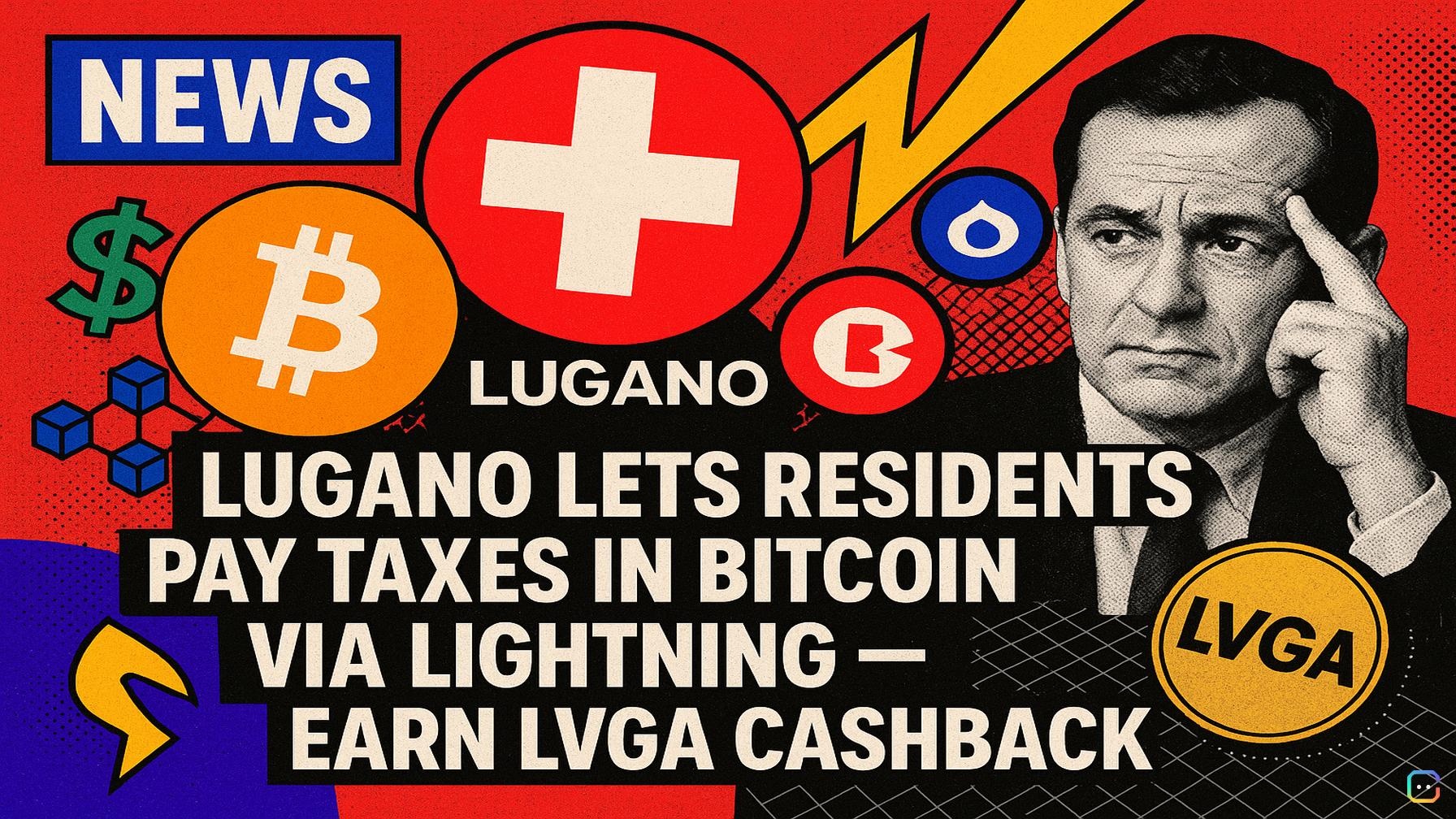
Under Lugano’s Plan ₿ initiative, the municipality lets residents pay virtually any city invoice — income and corporate taxes, parking fines, tuition, waste collection — with Bitcoin (BTC) or Tether’s USDT. Payments are accepted on the Bitcoin Lightning Network or processed via Bitcoin Suisse, and the city immediately converts any crypto received into Swiss francs. There is “no amount limit,” the city notes — even seven‑figure tax bills can be settled in crypto.
The details of how payments are processed matter. Crypto payments are either routed directly over Lightning or handled by Bitcoin Suisse, which embeds a roughly 1% fee in the FX rate to cover crypto‑to‑franc conversion risk. For small merchants and cafés used to paying 2.5–3.4% in card fees, that spread isn’t academic — it hits margins. “Bitcoin fees are below 1%, my card terminal takes up to 3.4% — I don’t need a philosophy degree to choose,” one shop owner told reporters.
Lugano is careful to emphasize it isn’t building a Bitcoin treasury. “Any amount paid in cryptocurrency will be immediately converted into Swiss francs and paid to the City,” the municipal guidance states. Structurally, Plan ₿ is payment plumbing rather than a HODL manifesto — but the ecosystem growing on top of it has a more ideological bent.
Through the city‑backed MyLugano app, shoppers earn up to 10% cashback in LVGA tokens when they pay with crypto at participating businesses. Those LVGA tokens can be used for municipal services — public parking, childcare fees, and even kindergarten invoices — creating a circular local crypto economy where someone might buy espresso with BTC, collect LVGA, and later burn those tokens to pay a school bill.
Adoption is visible on the street. Plan ₿ and the city report more than 350 merchants accept Lightning payments, evident in sticker clusters on shop doors from gelaterias to vintage watch stores. Institutional interest is rising too: the fourth Plan ₿ Forum on October 24–25, 2025 drew over 4,000 participants from 64 countries, a 140% increase since the initiative’s launch in 2022 and a 38% year‑over‑year jump. Tether CEO Paolo Ardoino hailed Lugano as “a working model of Bitcoin adoption and open technology,” noting that “people are using Bitcoin for payments.”
What does this mean for markets? Practically, not much in the short term. Bitcoin trading dynamics today — BTC hovering just under $90,000 in thin year‑end liquidity, ETF outflows (“leaking coins”), and only mildly positive perpetual‑swap funding after failed price tests — suggest the Lugano story won’t spark an immediate parabolic move. However, it nudges the narrative: every municipal invoice paid in BTC and flipped to francs is incremental sell pressure, but each Lightning point‑of‑sale installed is another reason locals keep hot wallets topped up — a steady, bottom‑up demand source that can matter during future volatility.
In trading terms, this rollout probably doesn’t change the immediate setup: the rally is vulnerable if BTC falls back below recent ETF inflow levels and the roughly $85,000–$86,000 zone loses support. But for anyone arguing Bitcoin remains purely a macro‑speculative asset detached from everyday cash flows, Lugano poses a simple question: why is a Swiss tax office more comfortable with on‑chain money than many national treasuries?
For Lugano, the calculus is practical. Plan ₿ is less about slogans and more about making commerce smoother: cafés getting paid, taxes clearing, and merchants shaving a few percentage points off fees. In short — less moon, more receipts.
Read more AI-generated news on: undefined/news