Russia is moving quickly to transform fiat‑pegged stablecoins from niche tokens into a piece of national payment infrastructure that could bypass Western financial pressure.
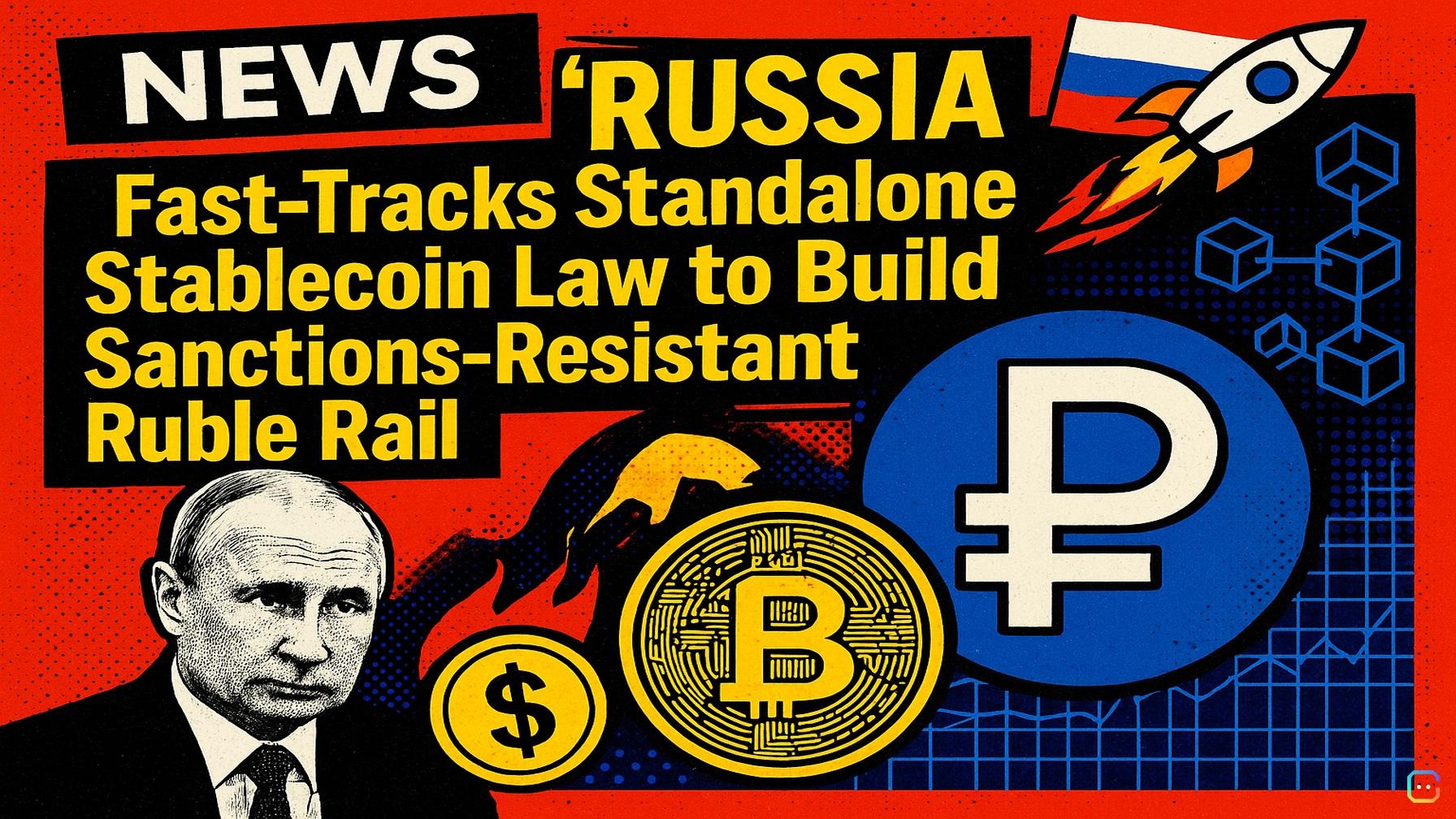
The Ministry of Finance is drafting a standalone stablecoin law — separate from its broader crypto trading framework — signaling regulators want tailored rules for fiat‑pegged digital assets rather than folding them into a generic crypto statute. Alexey Yakovlev, head of the ministry’s Financial Policy Department, called the potential of stablecoins “enormous, even astonishing,” reflecting a shift in thinking: stablecoins are being framed less as speculative instruments and more as strategic settlement tools.
According to local reports, the broader crypto bill is expected to hit the State Duma this spring and could take effect as early as July 1, 2026. Meanwhile, technical work on stablecoin rules is being accelerated on a parallel track. That two‑lane approach lets regulators fast‑track instruments tied to trade and settlement while keeping a cautious stance on retail activity in volatile assets like Bitcoin.
The Central Bank of Russia has already created legal cover by categorizing certain stablecoins as “foreign digital rights.” That designation lets approved tokens be used in cross‑border trade settlements without opening the door to widespread domestic crypto trading or broad on‑ramp access. In practice, the CBR could selectively license state‑aligned stablecoins for cross‑border use while limiting retail access and offshore issuers.
A practical example is A7A5, a ruble‑pegged stablecoin that won approval for overseas trade in October 2025. By green‑lighting A7A5 for international settlements, regulators effectively created a programmable ruble proxy that can move value over blockchain rails instead of through correspondent banks. Analysts point out that, under tightening Western sanctions, such tokens could help Russian exporters and importers keep flows moving when dollar and euro channels are restricted.
The timing makes strategic sense: targeted sanctions have increasingly hit Russian banks, payment providers and cross‑border corridors, prompting Moscow to explore alternative infrastructure. Policymakers appear to be betting that tightly controlled, Russia‑approved stablecoins can form the backbone of new payment routes with friendly jurisdictions, even as exposure to open networks like Ethereum remains constrained.
If the framework succeeds and more ruble‑pegged or approved stablecoins are cleared, analysts warn it could create a parallel, sanctions‑resistant liquidity pool for cross‑border payments. Such a system would sit largely outside Western banking oversight and complicate enforcement — especially if commodity or energy trades start settling in these instruments instead of dollars or euros.
Russia’s approach diverges from heavy‑rule regimes such as Europe’s MiCA and highlights how states can use stablecoin design and licensing as geopolitical tools, not just financial regulation. For the crypto sector, Moscow’s move opens another front in the broader contest over who controls stablecoin issuance, distribution and the rails that underpin global value transfer.
Read more AI-generated news on: undefined/news