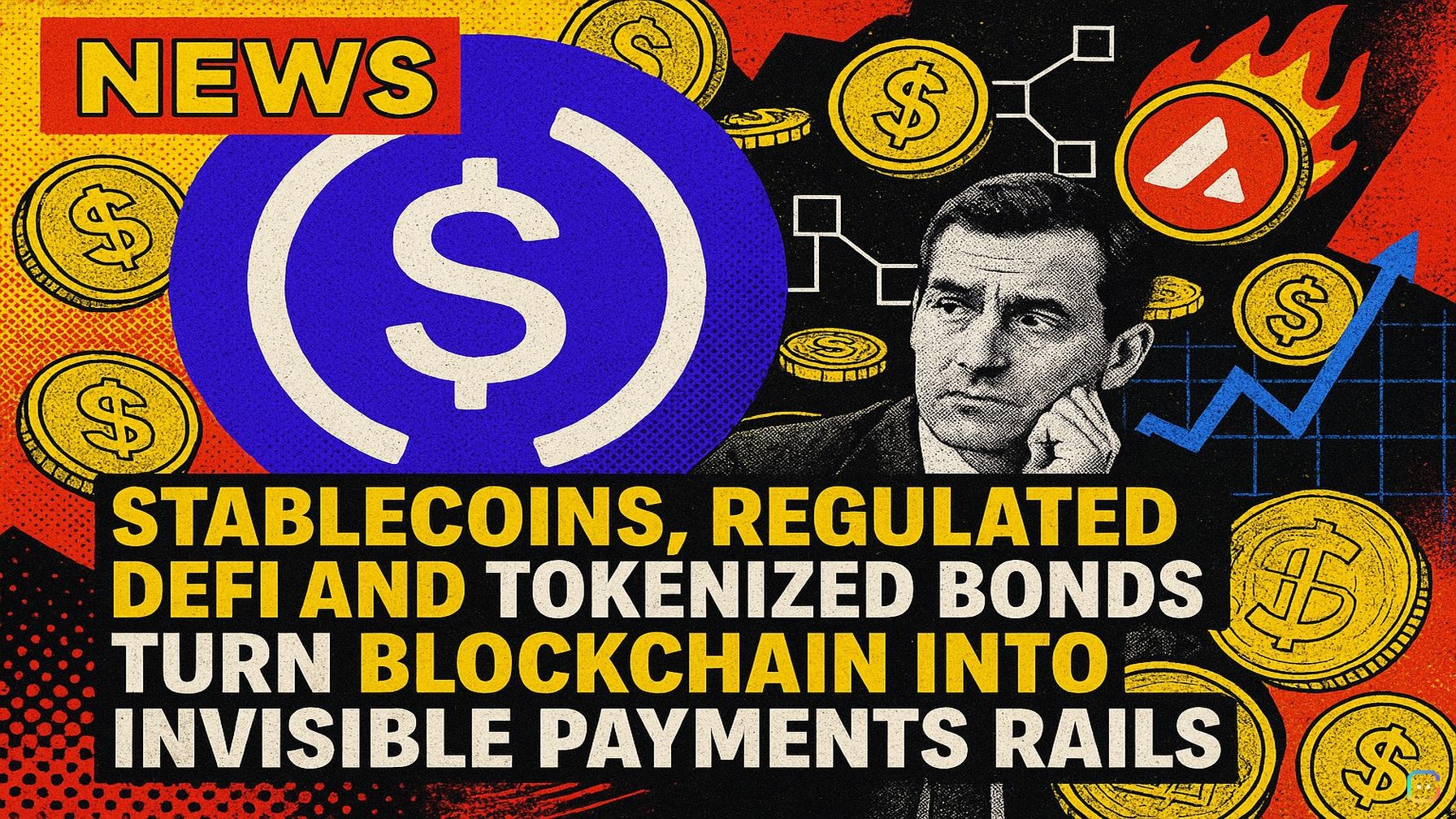
Headline: Stablecoins, regulated DeFi and tokenized bonds turn blockchain into invisible payments plumbing in 2025
Lede: In 2025 blockchain is slipping into the background of everyday business finance. Stablecoins, regulated decentralized finance (DeFi) platforms, tokenized real-world assets and AI-augmented smart contracts are quietly wiring traditional finance into faster, cheaper payment rails — and businesses are starting to treat that plumbing as a utility rather than a novelty, according to Live Bitcoin News and industry observers.
What’s happening now
- Stablecoins have become a routine payments tool. Firms and consumers use them to move value faster and at lower cost than many legacy rails, with particular uptake where banking infrastructure is limited.
- Regulated DeFi is no longer just an experiment. Compliant DeFi platforms are emerging as credible alternatives to certain banking functions, enabling payments and treasury workflows without the same intermediaries and opening partnership opportunities with traditional financial institutions.
- New regulatory frameworks in the US and EU are clarifying how digital-asset services can operate, which is helping institutional adoption and cross‑sector collaboration.
Tokenization and on‑chain bonds
- Governments and corporates are testing tokenized real-world assets—bonds, property and other instruments—on blockchain networks. Tokenization promises lower administrative friction, clearer ownership records and faster settlement.
- On-chain bond issuance is gaining traction as an efficient, more transparent way for issuers to access capital and for investors to track holdings in near real time.
AI-enhanced smart contracts
- Artificial intelligence is being layered into smart contracts to boost security, automate monitoring and flag anomalies in payments and supply chains. Industry sources say AI can also help harden contract code against emerging computational threats.
- AI-driven monitoring reduces the need for manual oversight and helps these systems run “in the background,” supporting use cases from automated payments to asset tracking.
The invisible infrastructure effect
- Businesses—especially SMEs—are benefiting without needing deep blockchain expertise. Many organizations now interact with blockchain-powered services the same way they rely on utilities like internet or electronic payment processors.
- The net effect is a shift from blockchain as a visible product to blockchain as embedded infrastructure that reduces waste, fraud and operational errors while increasing transparency and trust.
Why it matters
This quiet integration marks a maturation phase for digital finance: regulated stablecoins and DeFi provide practical plumbing for traditional finance use cases, tokenization opens new capital and liquidity channels, and AI helps those systems operate securely and unobtrusively. As 2025 closes, observers say the biggest story isn’t hype — it’s that these technologies are becoming reliable background infrastructure for real-world business.
Read more AI-generated news on: undefined/news