A potential governance shift inside Shiba Inu could reshape how crypto projects handle losses — and it’s already in motion.
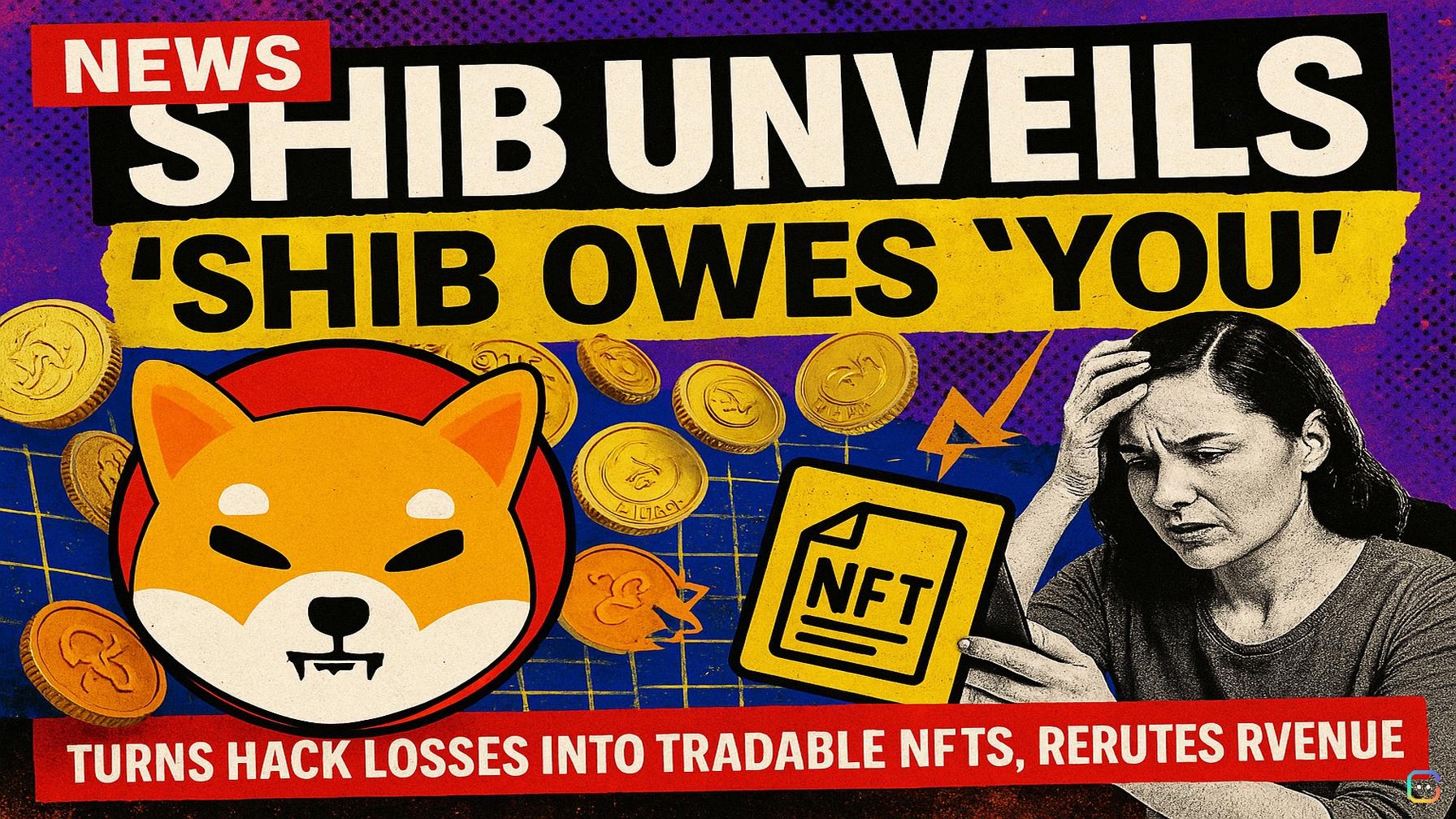
After a $4 million bridge exploit in September that shook investor confidence, Shiba Inu’s core developers are moving beyond promises and toward on-chain restitution. On December 29, lead developer Kaal Dhairya introduced “Shib Owes You” (SOU), a radical financial restructuring that turns verified user losses into tradable, dynamic NFTs — effectively converting written-off claims into liquid on-chain assets.
What SOU does
- Verified user claims are minted as dynamic NFTs on Ethereum, audited by Hexens.
- Each debt NFT updates automatically as revenue flows into a centralized restitution pool, giving holders real-time on-chain visibility.
- Claims can be held, split, merged, or sold on a secondary market, allowing victims fast liquidity or enabling larger backers to consolidate claims.
“This isn’t a promise in a database somewhere. It’s cryptographic proof that you own a claim, recorded permanently on the Ethereum blockchain,” Dhairya said — underscoring the shift from opaque ledgers to public, verifiable ownership.
Austerity and accountability
To sustain the model, Dhairya has mandated that all SHIB-related revenue feed the SOU pool — including funds from partner platforms, social channels, and ecosystem ventures. The change is explicitly designed to target “value extractors” and pivot the project from marketing-first strategies to a restitution-first governance framework. “If we’re going to ask the community to be patient while we rebuild, then everyone who has access to ecosystem resources needs to be held to the same standard,” Dhairya added.
Security-first rollout and risks
The recovery plan is cautious by design. The Plasma Bridge has been hardened with a seven-day withdrawal delay and hardware-based custody, but the SOU portal itself is not yet live. While the debt tokens exist in code now, claims will remain locked until comprehensive security testing finishes. Dhairya also warned the community to watch out for fake recovery sites looking to capitalize on confusion. The phased approach is meant to prevent another exploit, but it does mean users must wait for the full system to go live before claiming or trading assets.
Market reaction and on-chain behavior
Despite the overhaul’s gravity, markets have shown buying support rather than panic. CoinMarketCap reported SHIB trading at $0.057149, down 4.15% in the past 24 hours at the time of writing. Beneath that modest dip, however, institutional activity has been notable: on December 10, 406 large transfers moved over 1.06 trillion SHIB into exchanges — typically a bearish signal. Instead of collapsing, SHIB has held key support levels, which observers interpret as both retail “Shib Army” defenders and institutional players actively protecting positions.
What matters now
The SOU framework is novel and potentially precedent-setting: mandatory revenue redirection could force every participant in an ecosystem to “have skin in the game.” But its ultimate success depends on flawless execution — secure implementation, transparent audits, healthy secondary-market functioning, and clear communications to avoid scams. For now, the community appears resolute and the project has not capitulated.
Disclaimer: AMBCrypto's content is informational and not investment advice. Trading cryptocurrencies is high-risk; readers should do their own research before making decisions. © 2025 AMBCrypto
Read more AI-generated news on: undefined/news