Ethereum’s recent surge in on-chain activity may be louder than it looks. Blocks are full and wallet feeds are busy, but a growing share of that traffic appears to be malicious noise rather than genuine user activity.
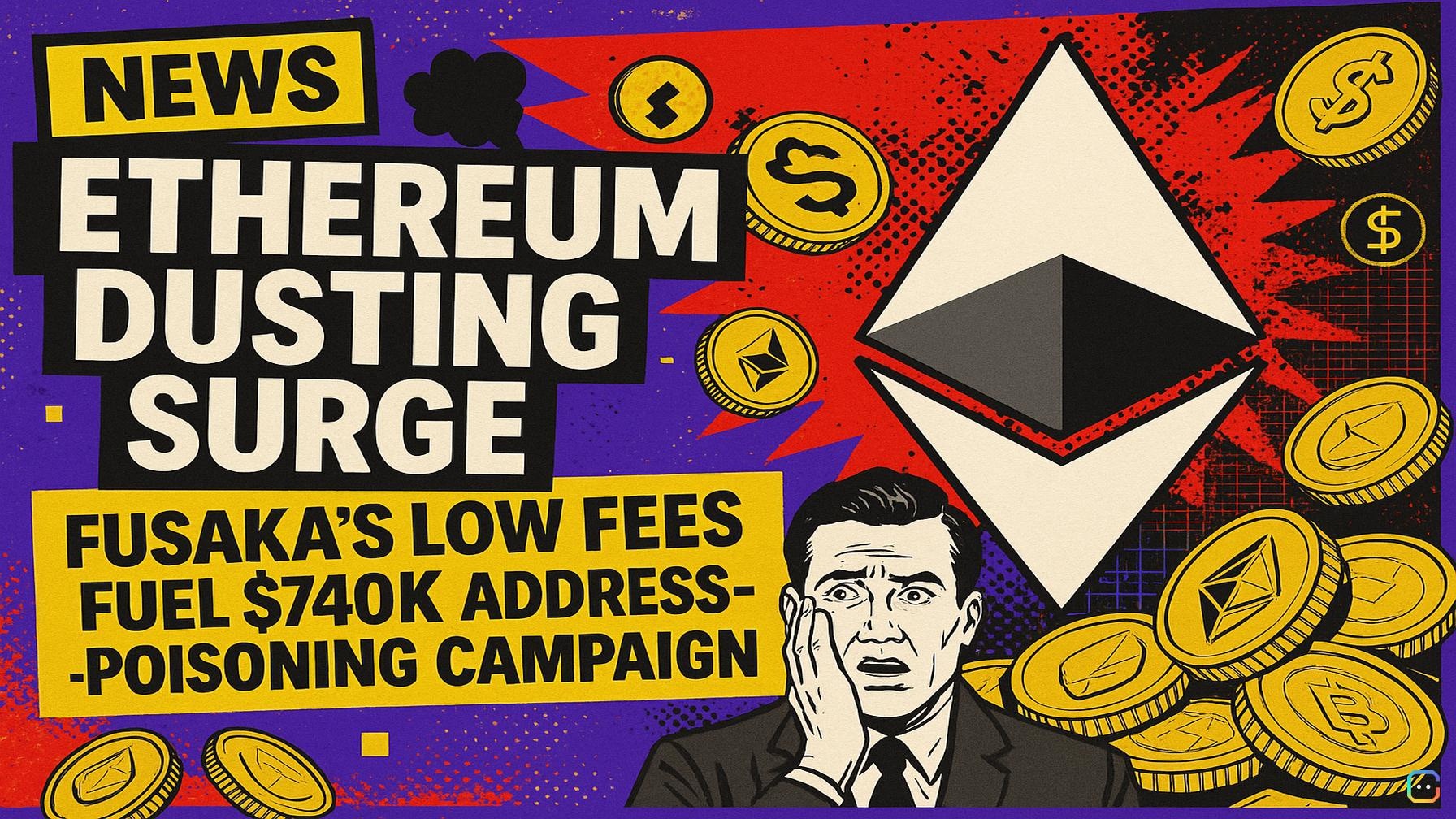
Researcher Andrey Sergeenkov flagged the problem in a recent blog post and tweets: the Fusaka upgrade, combined with lower average gas costs, has made it cheap to send millions of tiny transactions. Attackers are using those micro-transfers—often worth less than a dollar—to populate wallets’ recent-history lists in a tactic known as “dusting” or address poisoning. Sergeenkov says the campaign is ongoing and that losses have already topped roughly $740,000.
How the attack works
- Step 1: Spray many addresses with tiny deposits so an attacker’s address (or a lookalike) appears in victims’ wallet histories.
- Step 2: Wait for victims to use recent-history shortcuts, copy a wrong address, or be lured by a follow-up message mimicking a past transfer. Once funds go to the attacker, they’re typically irretrievable.
Why it’s dangerous now
- Lower fees after Fusaka make mass dusting affordable.
- The trick preys on human behavior—people scanning short lists, copying addresses from recent transactions, or trusting a small incoming deposit as a prompt.
- Some variants aim to deanonymize wallets; others are straightforward bait to steal funds later.
Signs to watch for
- Small, unexpected incoming transfers from unknown addresses, especially in large batches.
- Many deposits with identical amounts, identical memo fields, or repeating patterns.
- Wallet histories that suddenly show clusters of tiny token receipts.
How to protect yourself
- Always verify the full destination address before sending funds—don’t rely on the first or last few characters.
- Use address book/contact features, QR codes, hardware wallets, or ENS names you trust.
- Avoid copying addresses from a short recent-history view; double-check addresses in a full view.
- Enable wallet/security features that hide tiny transfers or flag suspicious incoming dust.
- Treat unexpected micro-deposits as a red flag, not an invitation.
This wave of tiny-transaction scams is a reminder that higher on-chain volume doesn’t necessarily equal healthier network usage. As the community adapts to Fusaka’s changes, vigilance and good UX/security defaults in wallets will be critical to limit the impact of address-poisoning campaigns.
Read more AI-generated news on: undefined/news