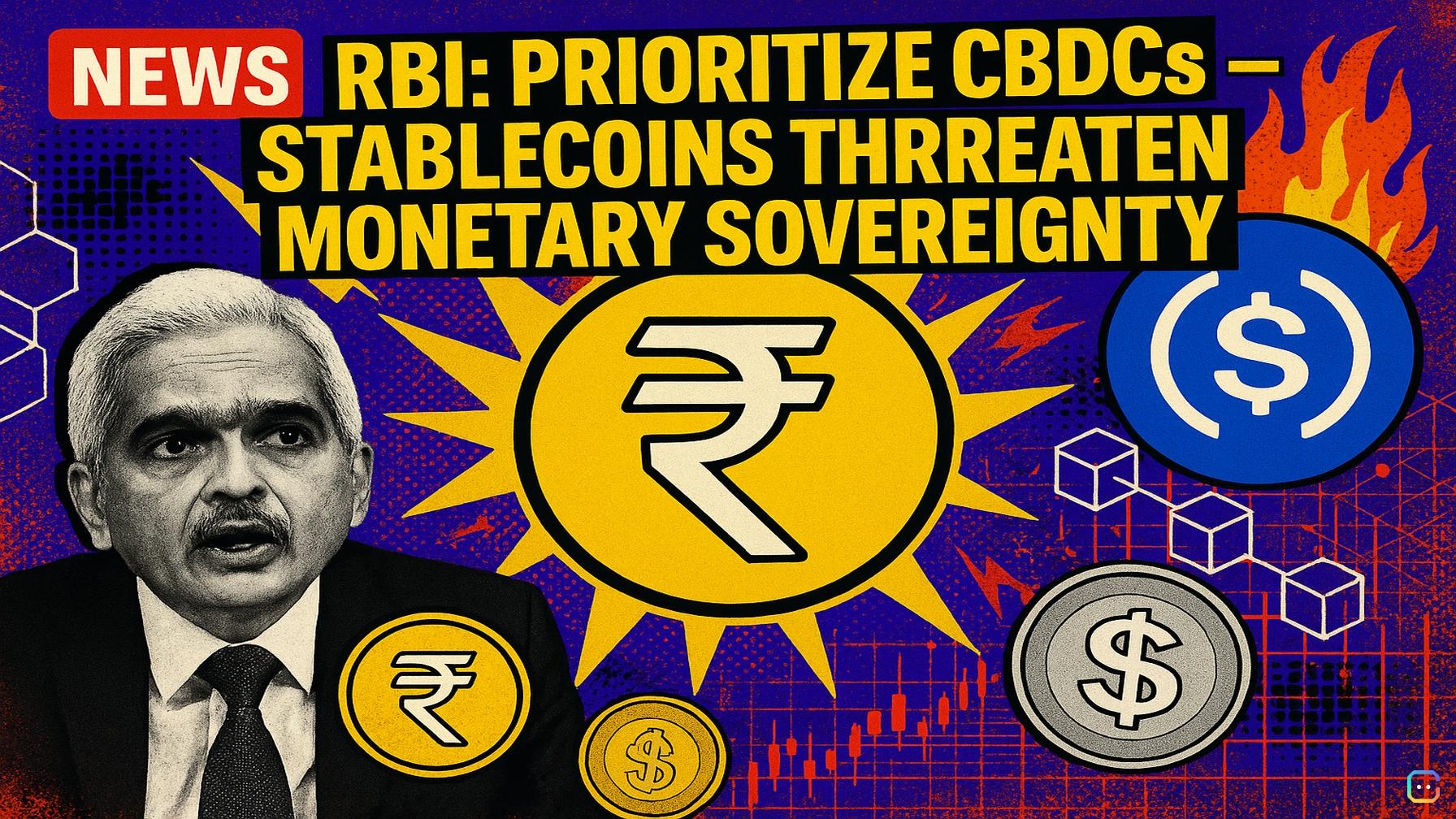
Reserve Bank of India urges global peers to favor CBDCs, warns stablecoins threaten monetary sovereignty
India’s central bank has doubled down on its long-standing caution toward privately issued stablecoins, urging major economies to prioritize central bank digital currencies (CBDCs) as the safer, sovereign alternative. In its annual financial stability report released Dec. 31, the Reserve Bank of India (RBI) argued that stablecoins — despite their growing role in the crypto ecosystem — carry “important financial stability risks” and can undermine a nation’s monetary sovereignty.
“Stablecoins have emerged as a key component of the crypto asset ecosystem,” the RBI noted, but stressed that they “fall short of the foundational requirements expected from a sound monetary system — singleness, elasticity, and integrity.” In the report, the central bank framed CBDCs as a better fit for the digital era because they preserve the “singleness of money” and the integrity of the financial system.
Why the RBI is worried
- Private issuance and limited oversight: Stablecoins are typically issued by private firms or fintechs and lack the institutional backing, regulatory guarantees, and structural safeguards that central-bank-issued money enjoys.
- Peg failures: Past episodes in which stablecoins lost their peg to underlying assets have heightened concern and eroded regulatory confidence.
- Monetary policy risks: The RBI warned that rapid growth in foreign-currency-pegged stablecoins could lead to currency substitution, weakening domestic monetary policy transmission and challenging monetary sovereignty.
- Frictionless features pose regulatory challenges: Benefits often touted by stablecoin proponents — pseudonymity, low costs, and easy cross-border use — were described by the RBI as potential regulatory and financial stability risks rather than unalloyed public benefits.
CBDCs as the preferred path
The RBI argues that CBDCs can deliver many of the benefits associated with stablecoins (fast, cheap, cross-border-capable payments) while also serving as the “ultimate settlement asset” and remaining the anchor for public trust in money. Consequently, the central bank “strongly advocates” countries prioritize state-backed digital currencies over privately issued stablecoins to preserve trust, financial stability, and next-generation payments infrastructure.
Where India’s digital rupee stands
India has been developing a digital rupee since 2022 and has taken a deliberately cautious approach to broader crypto assets. Initial pilots involved several banks, and the RBI rolled the CBDC out to the public through selected banking channels. Adoption, however, has been gradual: the RBI reported about 1 million retail transactions by late June — a milestone reached after banks introduced incentives and even started partially paying employees in the digital currency.
Global context
Worldwide progress on CBDCs remains limited: the Atlantic Council’s tracker shows only three CBDCs have fully launched so far. By contrast, the stablecoin market has expanded rapidly, and regulators in major jurisdictions such as the United States and the European Union have been moving to create dedicated frameworks to govern their use. That regulatory attention, in turn, has fueled interest from financial institutions in developing fully collateralized, compliant stablecoins for integration into global payments rails.
Bottom line
The RBI is making a clear policy choice: prioritize sovereign digital currencies over private stablecoins to protect monetary sovereignty and financial stability. As jurisdictions wrestle with payment-system modernization, the debate between CBDC and stablecoin pathways is likely to shape how digital money evolves — and who gets to anchor trust in it.
Read more AI-generated news on: undefined/news