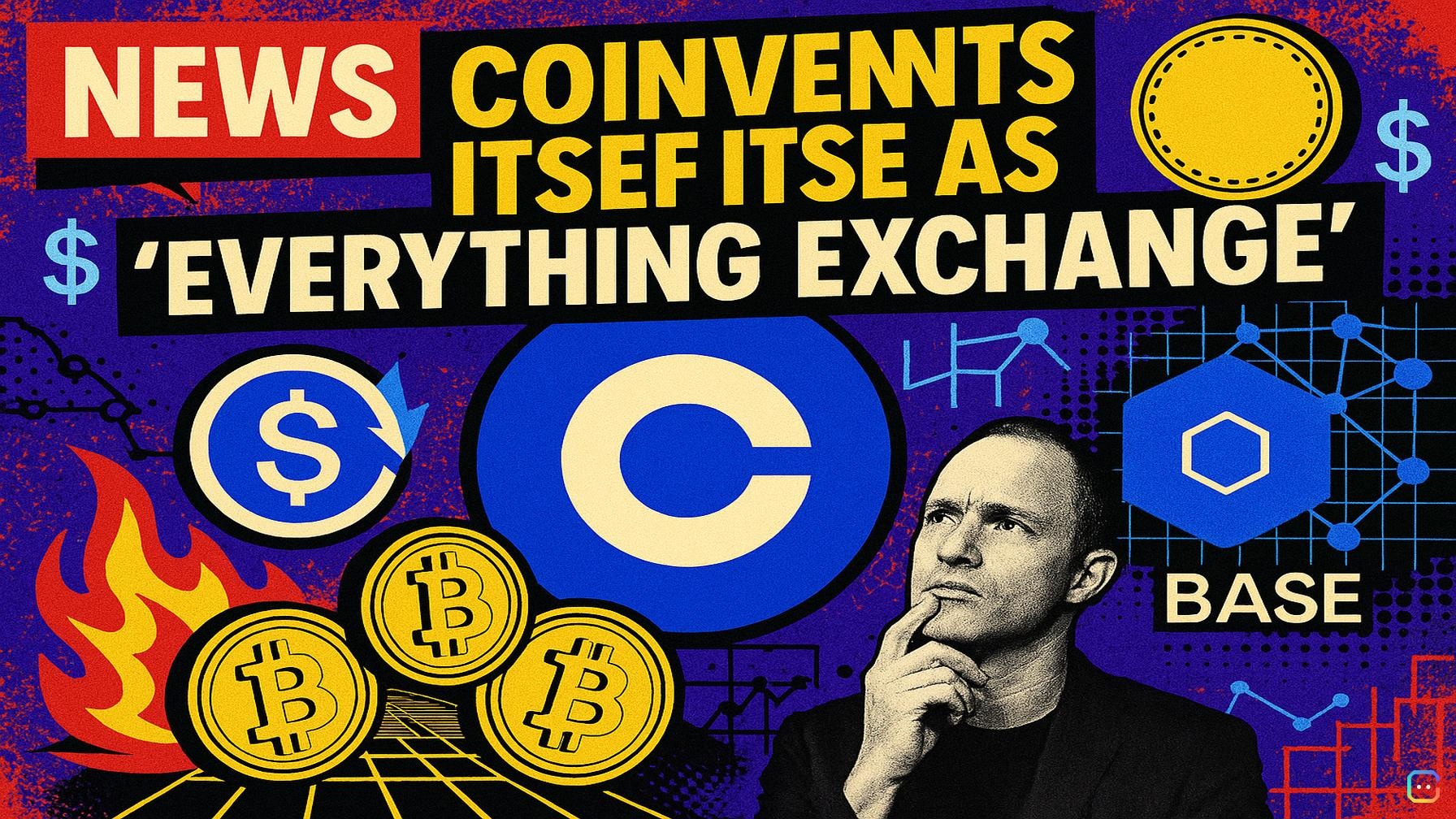
Coinbase is entering 2026 looking less like a conventional crypto exchange and more like a broad financial platform. As spot trading cools and competition intensifies, the company is pivoting away from a single-minded focus on token markets toward an ecosystem built around stablecoins, its Ethereum layer-2 Base, and a growing array of trading and onchain products that reach well beyond cryptocurrencies.
A new “everything exchange” vision
In a New Year’s post, CEO Brian Armstrong reiterated Coinbase’s ambition to become an “everything exchange.” That strategy—made concrete at the company’s year-end conference—centers on giving users a single interface to access multiple asset classes. December’s product rollout included stock trading and prediction markets, signaling a deliberate move into territory traditionally held by retail brokerages and derivatives platforms. Coinbase frames these additions as steps toward 24/7 market access, where crypto, equities, and ETFs can sit side-by-side.
A wallet reimagined as an “everything app”
Coinbase’s expansion isn’t limited to its exchange. The company has rebranded its wallet into an “everything app,” layering social features and richer onchain capabilities to keep users active across payments, social interactions, and decentralized apps—not just trades. That broader engagement strategy aims to reduce reliance on trading volumes as the primary driver of user activity.
Onchain markets and new derivatives
Onchain products are front and center: Coinbase launched onchain prediction markets in partnership with Kalshi, letting users bet on real-world events from inside the platform. It has also signalled plans for perpetual futures that could cover both crypto assets and stocks, putting the company in direct competition with firms that span equities, derivatives, and commodities—not just crypto-native rivals.
Stablecoins as financial infrastructure
Stablecoins are a core part of Coinbase’s long-term roadmap. The company is positioning them as foundational infrastructure for cross-border payments, payroll, and settlement. Armstrong has suggested banks may eventually seek interest-bearing stablecoin products, underscoring Coinbase’s view that stablecoins will play a larger role in mainstream finance.
Base as a growth engine—and a source of debate
Base, Coinbase’s Ethereum layer-2 network, is another strategic pillar. Built to host consumer apps, creators, and scalable onchain services, Base is intended to extend capabilities beyond Ethereum’s main chain. But the network has also generated some criticism: certain developers worry Base’s approach to creator coins emphasizes viral growth and onboarding over longer-term principles some in the developer community prioritize.
What this means for the market
Taken together, Coinbase’s moves show a company redefining its role from crypto gateway to multi-product financial access point—blending trading, payments, and onchain activity into one ecosystem. The shift reflects broader industry trends as firms diversify beyond pure spot trading to capture users across a wider set of financial behaviors.
For crypto observers, the big questions now are whether Coinbase can execute on this ambitious convergence, whether stablecoins will gain the mainstream traction Coinbase expects, and how Base’s growth strategy will sit with the developer community.
Read more AI-generated news on: undefined/news