Fed minutes flag liquidity risks as repo use surges — what crypto traders should watch
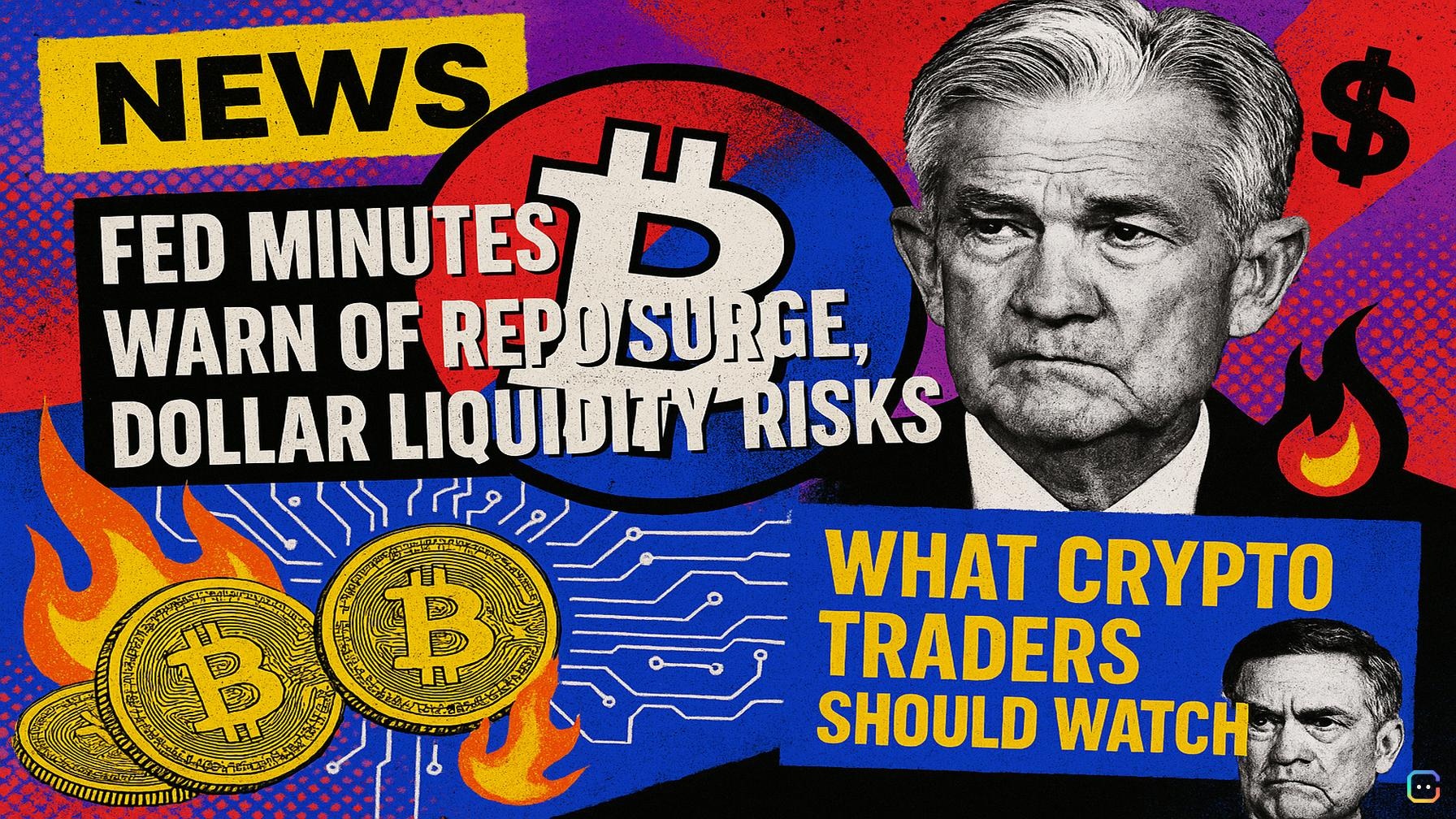
Minutes from the Federal Reserve’s Dec. 9–10 policy meeting, released Dec. 30, show Fed officials growing worried about strains in short-term funding markets — even as the policy rate remains effectively on hold. That could have knock-on effects for crypto markets that rely on dollar funding, leverage and cash-on-exchange dynamics.
What the minutes revealed
- Policymakers flagged mounting pressure in overnight funding: volatile repo rates, wider gaps between market rates and the Fed’s administered rates, and rising use of the Fed’s standing repo facility.
- The Fed described banking-system reserves as “ample,” but several officials stressed that “ample” is a transition zone rather than a comfortable buffer. When reserves sit near that lower bound, modest swings in demand can push overnight borrowing costs sharply higher and strain funding markets.
- Some participants compared the current setup to the Fed’s 2017–2019 balance-sheet runoff that culminated in a repo spike in September 2019 — and warned current pressures may be building faster this time.
Why reserves could fall further
Fed staff flagged several near-term drivers that could shrink reserves: year-end balance-sheet pressures, shifts around late January, and a large springtime drain when tax receipts flow into the Treasury’s account at the Fed. Left unchecked, those flows could push reserves below policymakers’ comfort level and increase the risk of market disruptions.
Planned toolkit to stabilize funding — not to ease policy
To head off funding stress, participants discussed buying short-term Treasury securities to keep reserves ample. The minutes said such purchases would be aimed at supporting interest-rate control and market functioning, not signaling a change in the Fed’s monetary policy stance. Surveyed staff expected roughly $220 billion of these purchases in the first year.
Officials also considered operational tweaks to the standing repo facility — including removing its overall usage cap and improving communication so the facility is seen as a routine backstop rather than an extraordinary measure.
Rate outlook
The federal funds target remains 3.50%–3.75%. As of Jan. 2 the CME FedWatch Tool assigned an 85.1% probability that rates will hold at the Fed’s next meeting (Jan. 27–28, 2026) and a 14.9% chance of a 25-basis-point cut. The minutes noted investors had been expecting a quarter-point cut in December and had priced in additional reductions for 2026, but rate expectations shifted only modestly between meetings.
What this means for crypto markets
- Funding and margin pressure: Tight dollar liquidity and spikes in repo or overnight rates can push up borrowing costs across markets, raising funding rates for leveraged crypto traders and making margin financing more expensive.
- Stablecoins and dollar liquidity: Reduced bank reserves and funding stress can complicate stablecoin mint-redemption dynamics and custodial dollar flows into exchanges and lending platforms.
- Elevated volatility risk: Sudden repo spikes have historically driven rapid repricing in risk assets; crypto, with high leverage and liquidity concentration on certain venues, could experience outsized moves if short-term dollar funding strains spike.
Bottom line
The Fed is watching liquidity closely and is prepared to buy short-term Treasuries and adjust the standing repo framework to keep reserves from dipping too low. Those are technical fixes intended to smooth market functioning, not a signal of easier monetary policy — but they matter for crypto participants because short-term dollar liquidity is a core input to leverage, lending and exchange operations. Keep an eye on repo rates, standing repo usage and Fed communications over the coming weeks.
Read more AI-generated news on: undefined/news