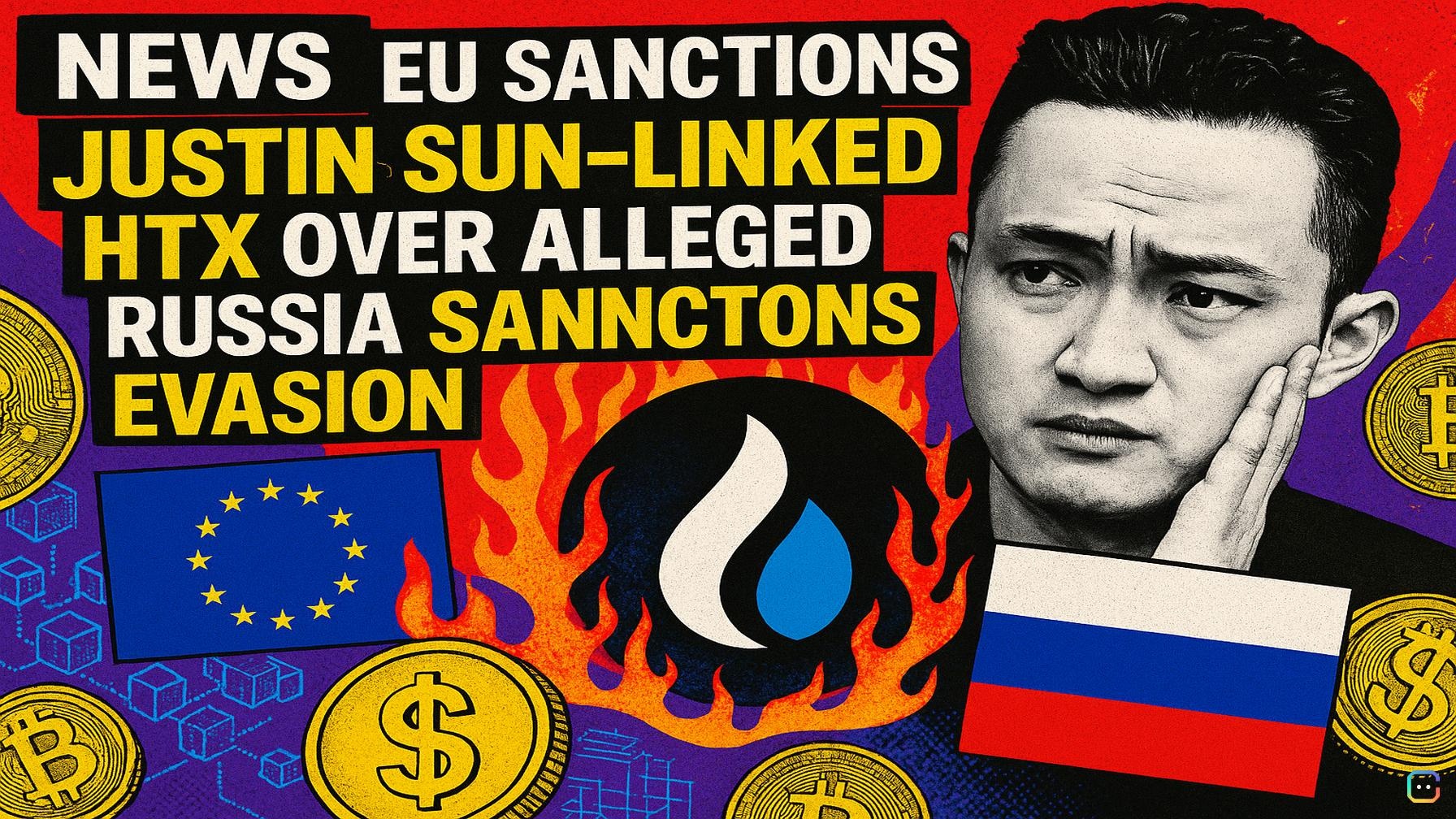
The European Union has added Justin Sun–linked exchange HTX (formerly Huobi) to a sanctions list of crypto firms it says helped Russian users evade financial restrictions — a move that raises fresh regulatory pressure on one of the world’s largest trading platforms.
What happened
- The EU included HTX among dozens of targets in its latest, broad sanctions package against Russia, adopted in late July. The measures span banks, crypto platforms, oil and energy channels, and vessels linked to Russia’s “shadow fleet.”
- Reuters reported 18 crypto companies appeared on the published list; the Council of the European Union said 14 crypto services were hit with transaction restrictions. The discrepancy reflects different ways the measures count parent companies versus the platforms they run.
- Unlike a full designation that freezes assets, the EU’s treatment of HTX places the exchange under the package’s transaction controls rather than requiring an immediate asset freeze.
Who is HTX and Justin Sun
- HTX is the rebranded Huobi exchange, founded in China in 2013. Justin Sun — best known as the founder of Tron — acquired a controlling stake in 2022, though HTX describes him as an adviser.
- The exchange did not immediately respond to Reuters on the EU action. HTX previously denied wrongdoing when the UK sanctioned Huobi Global S.A. in late May.
Why the measures matter
- According to the Council, the 14 targeted crypto services operate from jurisdictions including Georgia, Panama, the UAE, the Marshall Islands, Kyrgyzstan and Belarus. EU authorities say those platforms were linked to financial channels used by Russia to bypass sanctions.
- The package also establishes a new EU mechanism to ban dealings with crypto providers in third countries if they’re found to be facilitating sanctions evasion — intended as a deterrent to jurisdictions hosting such services.
Related UK sanctions and HTX’s response
- On May 26, the UK sanctioned Panama-based Huobi Global S.A., accusing it of providing services to A7 (a payments network backed by state-controlled Promsvyazbank) and Moscow exchange Garantex — both previously sanctioned. UK measures included an asset freeze and restrictions on UK firms’ business with the designated entities.
- HTX rejected the UK allegations, saying regulatory compliance is its “absolute top priority” and that it monitors and follows local rules. The company has not issued a public response to the EU action.
Bigger picture: the wider EU package and Belarus restrictions
- The July sanctions package contains 218 listings (48 people and 170 entities) and is the bloc’s largest batch of new listings in four years, according to the Council.
- Measures include asset freezes and funding bans on 94 banks and major financial institutions, transaction bans for additional Russian and third‑country banks, and listings of more than 40 vessels tied to Russia’s shadow fleet. Over 50 listings relate to Russia’s military‑industrial sector, including firms tied to long-range drone production.
- Separately, Council Decision (CFSP) 2026/1847 expands EU restrictions on Belarus: as of late July the rules entered into force, and from Aug. 25 Belarusian nationals and residents will be prohibited from owning, controlling, or managing crypto-asset service providers regulated under the EU’s Markets in Crypto-Assets (MiCA) framework. The ban covers all MiCA-defined services — trading platforms, custody, exchanges, portfolio management, token placement, and more.
Implications
- HTX now faces transaction restrictions connected to alleged Russian activity, compounding earlier UK sanctions. The EU’s new tool could make it easier for Brussels to cut off third‑country crypto platforms used to skirt sanctions.
- The combined decisions also tighten who can own and operate MiCA-authorized firms inside the EU, signaling tougher scrutiny of foreign crypto platforms and ownership structures going forward.
Read more AI-generated news on: undefined/news