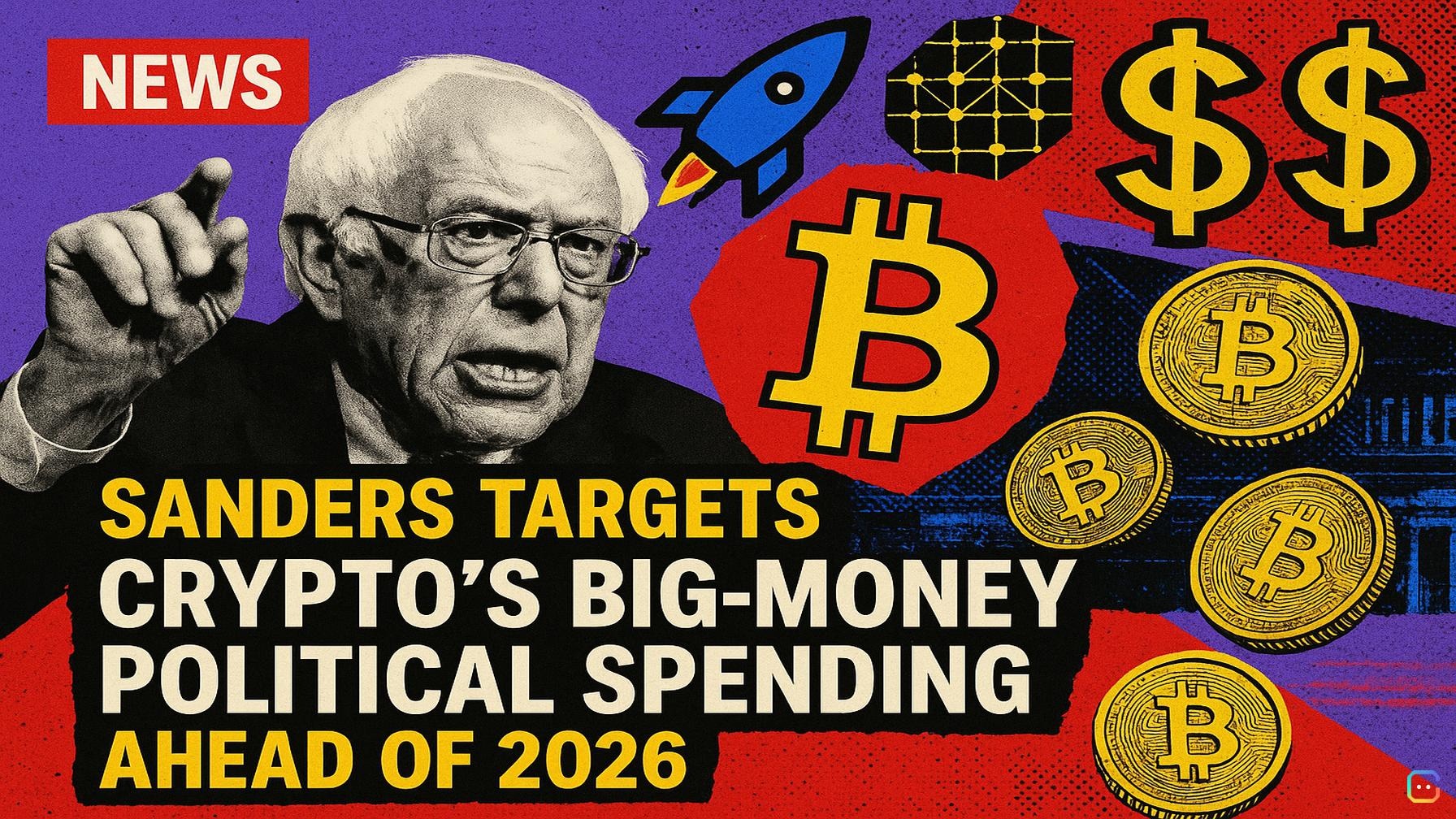
Sen. Bernie Sanders has put the crypto industry squarely in his sights as the 2026 campaign season heats up, framing digital-asset groups as part of a larger problem of big-money political influence.
Speaking at a Minneapolis rally backing Minnesota Lieutenant Governor Peggy Flanagan’s Senate run, Sanders wrote on X in late July: “Together, we are going to take on crypto, the AI industry, AIPAC and other billionaire super PACs.” His comments—and the campaign messaging around them—focused on political spending and industry influence, not on crypto technology or specific tokens.
Why this matters for crypto
- Political spending by crypto-backed groups has surged ahead of the 2026 midterms. Public Citizen estimated the industry had contributed roughly $189 million during the current election cycle as of late June.
- A network of industry-backed organizations—most prominently Fairshake and affiliated groups—has been a major funder. Crypto.news reported Fairshake-linked groups deployed more than $8 million in targeted primary contests in Maryland, New York and Utah.
- Industry players including Ripple, Coinbase and Andreessen Horowitz have funded this broader political network. Fairshake affiliates have supported both Democratic and Republican candidates: for example, crypto-linked groups backed Democrat Adrian Boafo in Maryland and a Fairshake-linked PAC spent more than $12 million supporting Republican Barry Moore in an Alabama Senate primary and runoff.
Sanders’ stance — politics, not policy specifics
Sanders’ announcement aligns him with lawmakers who view crypto political spending as part of a larger problem of wealthy donors shaping elections. He did not call for a ban on crypto or announce a new piece of legislation; his message was aimed at countering the political clout of well-financed industries and super PACs.
This isn’t Sanders’ first engagement with crypto policy. In June he joined Sen. Elizabeth Warren and Rep. Bobby Scott in urging the U.S. Labor Department to withdraw a proposal that could expand access to crypto and other alternative assets in 401(k) plans—arguing that retirement savers could face added volatility and weaker protections if plan managers began including digital assets without stronger safeguards. (The Labor Department’s draft would not force employers to offer crypto, but would permit managers to consider alternative investments under existing fiduciary duties.)
What’s next
Congress is still negotiating key pieces of digital-asset legislation—market-structure rules and bills like the CLARITY Act—and industry political spending has tracked those debates. Past reporting found Fairshake affiliates spent about $7 million on selected Democratic primary races while CLARITY negotiations were underway. With substantial war chests still available, industry-backed groups are likely to remain active across primaries and general elections, while critics continue to elevate campaign finance as a central way to push back.
Sanders’ public support for Flanagan brings this national fight over political money into Minnesota’s Senate race, but his “take on crypto” line remains a campaign posture more about curbing big donors’ influence than a detailed crypto-policy blueprint. For the industry, the episode underscores that political strategy and campaign spending will be as consequential as regulatory lobbying as the U.S. heads toward 2026.
Read more AI-generated news on: undefined/news