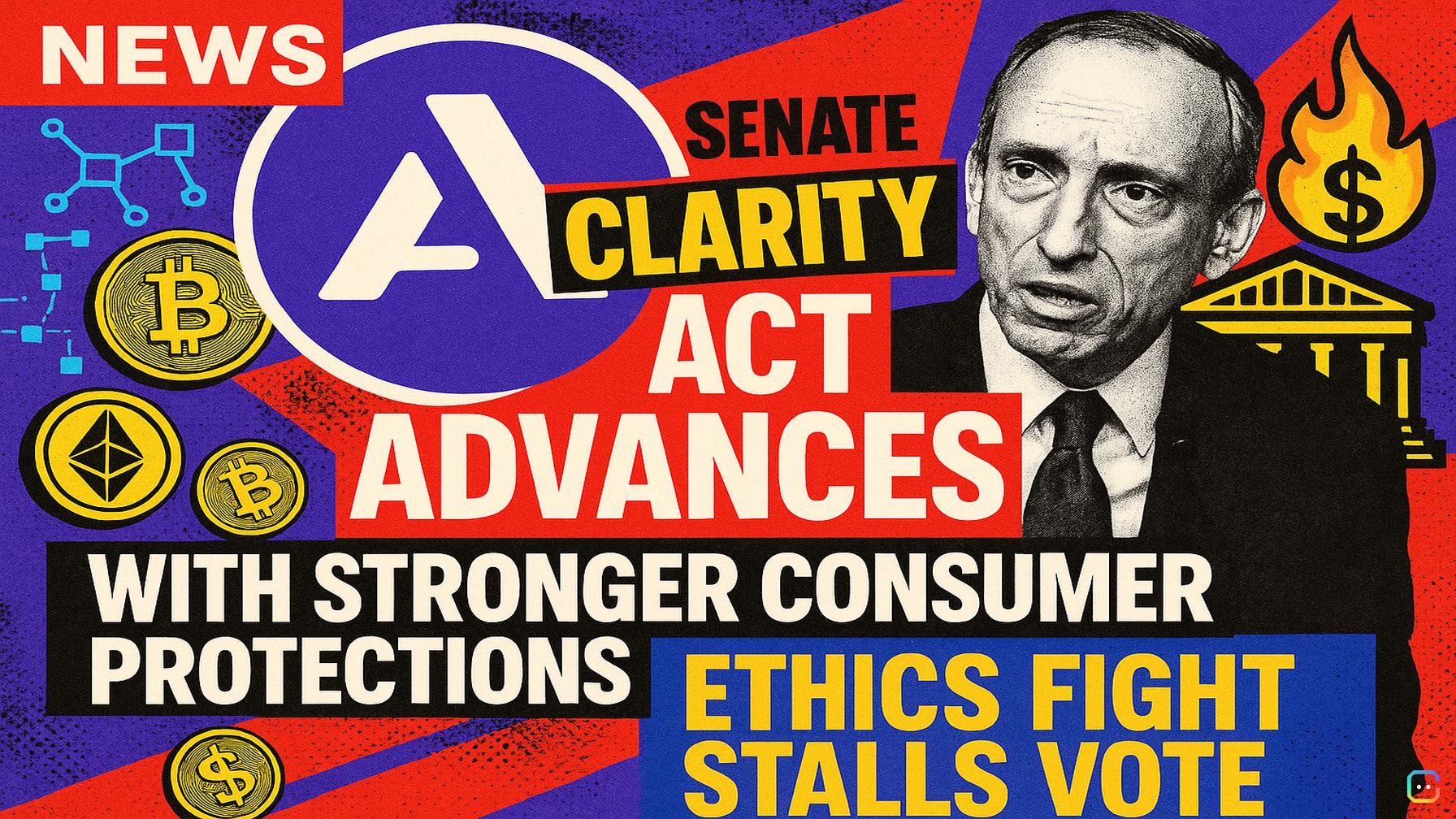
Senate talks over the CLARITY Act are advancing — and Democrats have won tougher customer protections — but a fight over ethics rules still blocks a final text and a floor vote.
What’s new
- Senate negotiators working on the Digital Asset Market Clarity (CLARITY) Act have added stronger customer-protection measures at Democrats’ insistence, according to sources close to the talks. Coinbase vice chair Ryan VanGrack told CNBC the changes give the bill “more teeth” and shift consumer safeguards from an afterthought to a core part of the market-structure framework.
- Lawmakers are still wrestling with a handful of unresolved issues — most notably proposed ethics limits on senior officials’ crypto holdings and business ties. That disagreement is the biggest barrier to a bipartisan deal and the release of the bill’s final language.
Why the ethics fight matters
- Democrats want clearer restrictions to prevent senior policymakers — including presidents — from profiting from crypto businesses while shaping federal policy. They point to President Trump’s financial disclosures, which reported up to $1.4 billion tied to digital-asset ventures such as Official Trump (TRUMP) and World Liberty Financial, as evidence of the need for guardrails.
- The White House had not approved particular ethics language as of July 20, leaving Senate negotiators without administrative guidance. Republican senators have met with Trump, but Democrats are pressing for stronger ethics provisions before delivering votes to move the bill forward. Senate leaders say bipartisan support is not yet secured.
Other points of contention
- Stablecoin yield rules: Banks argue reward-like incentives on regulated stablecoins could siphon deposits from traditional banks. Crypto firms want to preserve activity-based rewards inside a regulated framework.
- DeFi and developer liability: The proposed Blockchain Regulatory Certainty Act (BRCA) would prevent qualifying developers from being automatically treated as money transmitters if they don’t control customer funds or execute transactions. Developers and the industry back the protection; law enforcement groups oppose it, saying it could hamper investigations into illicit finance. Industry groups expect BRCA language to survive in the Senate bill despite objections.
- Law enforcement authorities and other technical details remain on the table.
Who’s backing the bill now
- Coinbase, which earlier in January opposed an earlier draft (a stance tied to delays in committee discussions), has publicly shifted to support the negotiations. In addition to VanGrack, Coinbase’s chief legal officer Paul Grewal has urged senators to approve the legislation. The exchange has remained central to the debate after the SEC sued it during the prior administration; that case was later dismissed after leadership changes at the SEC under the Trump administration.
Timing and stakes
- Time is tight. The Senate’s last session before an August recess is scheduled for Aug. 7. Even if the Senate approves its version, lawmakers will then need to reconcile differences with the House-passed bill before it can reach the president.
- Prediction markets have grown cautious: Polymarket put the chance of the CLARITY Act becoming law in 2026 at roughly 31%, citing unresolved ethics and other disputes.
What the bill would do
- If enacted, the CLARITY Act would create a federal market structure for digital assets by divvying oversight between the Securities and Exchange Commission and the Commodity Futures Trading Commission and codifying rules for stablecoins, DeFi, exchanges and developers.
White House involvement
- White House crypto adviser Patrick Witt has deferred military JAG training to remain in Washington and continue leading administration negotiations. A recently announced departure of the White House Crypto Council’s deputy director also leaves a potential leadership gap within the administration’s crypto team.
Bottom line
Negotiators have made meaningful progress on consumer protections and several technical fronts, but unresolved ethics language — and other industry and enforcement disagreements — leave the CLARITY Act’s path uncertain as lawmakers race the August recess. The next two weeks will be critical for whether a bipartisan compromise emerges.
Read more AI-generated news on: undefined/news