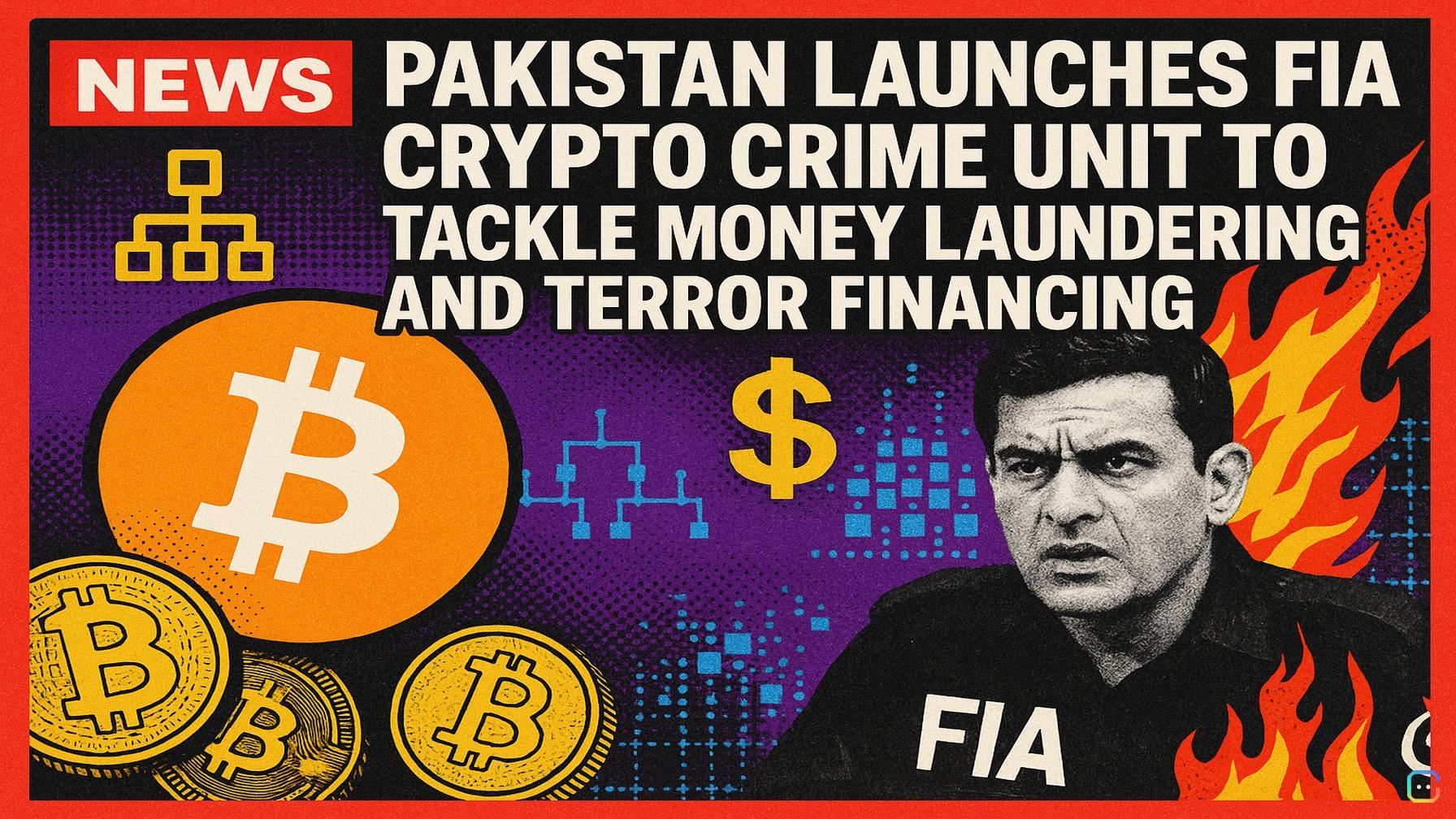
Pakistan’s top investigators have launched a dedicated crypto crime unit as part of a wider push to both embrace and police digital assets.
The Federal Investigation Agency (FIA) has set up a cryptocurrency investigation unit inside its newly operational National Command and Control Centre (NC3). FIA Counter-Terrorism Wing Director Dr. Muhammad Athar Waheed told Dawn the unit will focus on money laundering and terrorism financing tied to virtual currencies, while the Pakistan Virtual Assets Regulatory Authority (PVARA) remains the country’s regulator for digital assets.
NC3 consolidates the FIA’s financial-crime capabilities on a single platform, bringing together anti-money-laundering and virtual-currency desks, an Interpol coordination point, and teams for open-source intelligence, cyber patrolling and dark web investigation. Waheed also urged the National Cyber Crime Investigation Agency and the Anti-Narcotics Force to build parallel units to tackle crypto’s misuse in cybercrime and drug trafficking. He said new rules are being drafted to ensure inquiries are completed within fixed timeframes.
The enforcement move comes as Pakistan rapidly formalizes its crypto sector. The country—which ranked third in Chainalysis’s 2025 Global Crypto Adoption Index—has lifted an eight-year banking ban on crypto, created PVARA, started licensing crypto exchanges, and explored tokenizing state assets. Islamabad has even used crypto in diplomatic outreach, striking a deal with an affiliate of World Liberty Financial (the Trump family’s crypto venture) to explore using its USD1 stablecoin for cross-border payments.
But the rollout has faced religious and public-policy pushback. In June, the influential Jamia Darul Uloom Karachi seminary issued a fatwa declaring cryptocurrency is not “wealth” under Islamic law and therefore not a valid means of payment—raising doubts about the government’s plans. PVARA chairman Bilal bin Saqib has asked the seminary to distinguish between speculative tokens and asset-backed instruments such as fully reserved stablecoins and blockchain-recorded sukuk, telling Reuters Pakistan could “lead the world in Shariah-compliant digital finance.”
What this means for the market: the FIA unit gives Islamabad an enforcement arm to match its regulatory ambitions, signaling that authorities intend to clamp down on illicit crypto activity even as they build out licensing and innovation pathways. At the same time, the unresolved religious debate over whether crypto qualifies as legitimate “wealth” adds an unusual layer of legal and reputational risk for projects, exchanges and investors operating in Pakistan.
Read more AI-generated news on: undefined/news