Headline: Crypto cash, golden fees and political heat — how Farage’s funding spotlight landed on crypto
Nigel Farage’s return to Westminster has rapidly shifted from theatrical upset to a controversy that intersects politics and crypto. Once cast as the avuncular campaigner of Brexit lore, Farage now faces scrutiny over unusual outside earnings and large donations from figures tied to the cryptocurrency world — raising fresh questions about conflicts of interest and the future of crypto policy in the UK.
What’s happened
- Since entering Parliament in July 2024, Farage has drawn criticism for low attendance and limited participation in Commons business, even as his outside income has ballooned.
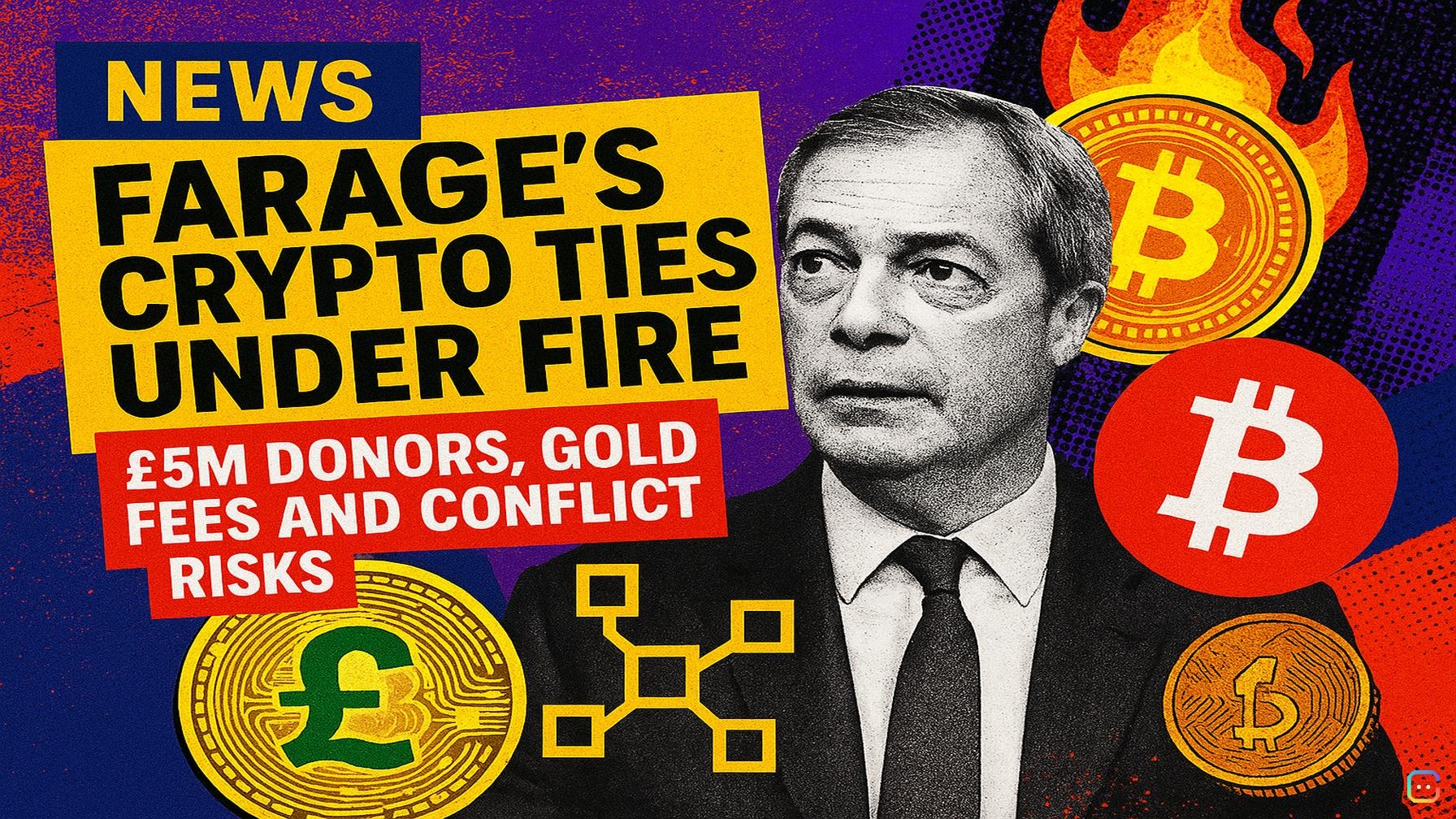
- His parliamentary register shows a basic MP salary of roughly £98,000. It also records almost £2m in outside fees. Reporting has also flagged a reportedly secret £5m donation from a crypto-linked billionaire shortly before he announced he would stand for Parliament again.
- Combined with corporate gifts, funded travel and personal donations, several analyses put Farage’s post-election income at an eye-watering average of around £95,000 per month. In June 2026 alone he registered a payment of £270,000 for up to four hours’ work promoting gold bullion — an implied hourly rate of about £22,500 — and took £18,492 for six hours presenting on GB News.
Why the figures matter for crypto
- Among Farage’s biggest backers are crypto entrepreneurs. Reports name Ben Delo, a founder associated with the BitMEX derivatives platform, as having given around £4m to the party; Delo has previously faced US enforcement over anti-money-laundering compliance (and, according to reporting, later received a presidential pardon). Another donor reportedly gave Farage £5m personally.
- Critics point out timing and policy overlap: Farage has reportedly advocated a “Big Bang” for crypto that could materially boost crypto company valuations. That raises the standard conflict-of-interest question for politicians who accept large donations from sectors that stand to benefit from favorable regulation.
The laundering angle that grabbed headlines
- Much of the media scrutiny has focused on a figure known in recent reporting as “Posh George,” a long-time associate of Farage. Podcast reporting and other coverage describe him as having served time in the US for wire fraud and later publishing a book titled How to Launder Money — framed by its authors as a prevention guide but criticized for containing practical techniques (including a chapter bluntly titled “Gold is the Gold Standard in Money Laundering”). Media accounts also link him to the family of a significant donor, Fiona Cottrell.
- Those connections have amplified public concern about opaque flows between crypto, precious metals promotion and politics.
Parliamentary friction and political responses
- When Parliament moved to examine Farage’s outside earnings and donations, he and allies framed the inquiry as an “establishment” attack and an overreach — arguing that his constituency should judge his conduct. Reform Party deputy leader Richard Tice publicly denounced press coverage and defended donations from Cottrell as legitimate.
- Opponents and watchdogs argue that the scrutiny is about transparency and the integrity of policy-making: when political figures take substantial payments or gifts from industry actors, the public has a right to know whether policy positions are being influenced.
What this means for the UK crypto debate
- The episode highlights a recurring tension for crypto: a fast-growing industry with wealthy backers and murky histories seeking legitimacy through political influence. That can produce regulatory backlash as much as deregulatory pressure.
- For lawmakers and regulators, the immediate task is straightforward: clarify rules on outside earnings and donations, and ensure disclosure is timely and complete. For crypto companies, the reputational risk is real — associations that look transactional or opaque can invite tougher enforcement and political resistance.
Bottom line
Farage’s finances — large fees, high-profile crypto-linked donations, and relationships spotlighted by media investigations — have pushed him from Brexit raconteur to a lightning rod in a broader debate about money, influence and crypto’s place in public life. For the crypto industry, the story is a reminder that political patronage can be a double-edged sword: it may open doors, but it also invites scrutiny that can reshape the regulatory landscape.
Read more AI-generated news on: undefined/news