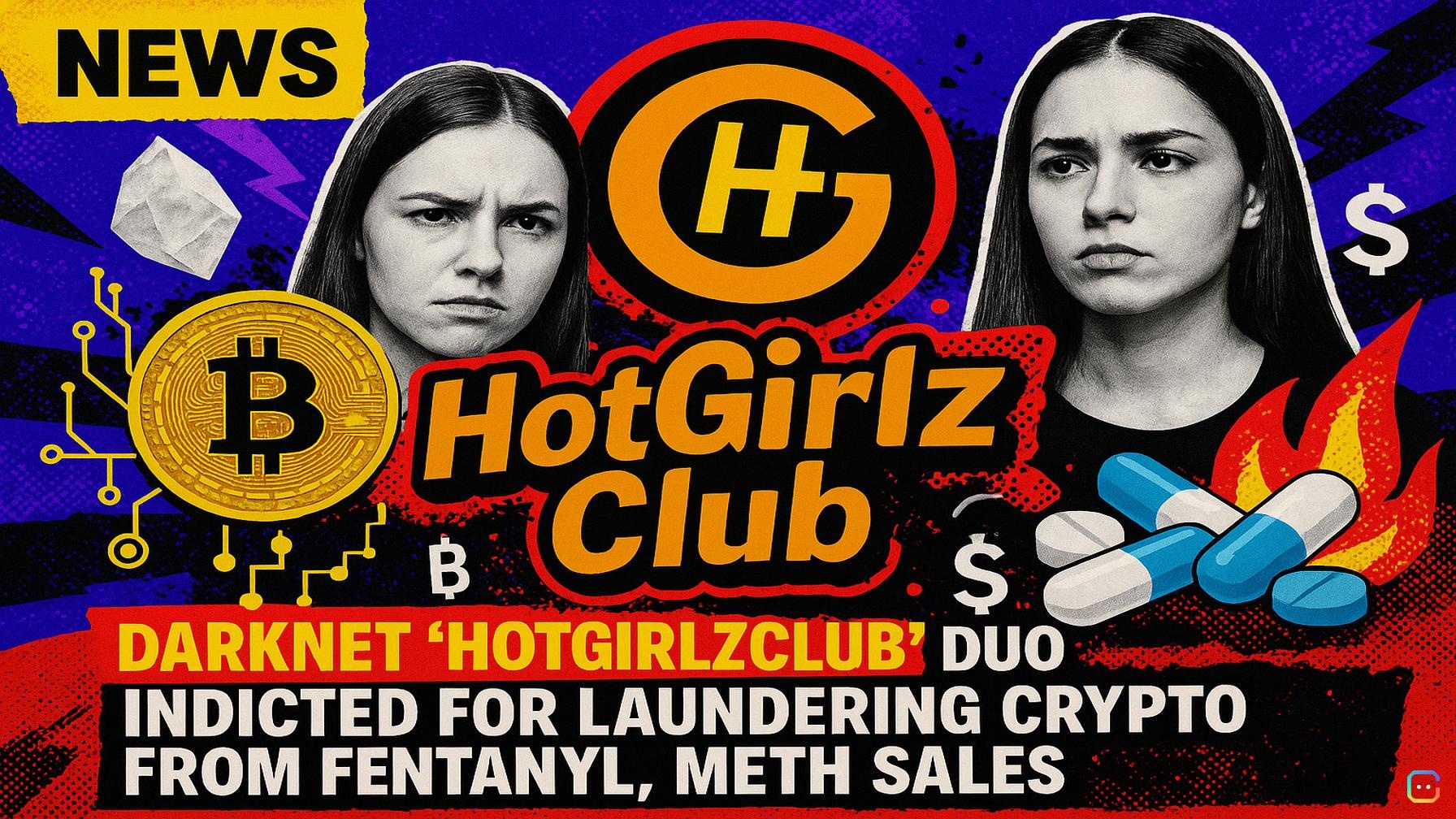
A California duo has been indicted for allegedly running a darknet drug storefront and laundering hundreds of thousands of dollars in cryptocurrency tied to fentanyl and methamphetamine sales, the U.S. Department of Justice said Wednesday.
Prosecutors say Nicholas Aguilar and Jessica Marcolina ran vendor accounts under the moniker “HotGirlzClub” across multiple darknet marketplaces. Over a seven-month period in 2025, the pair allegedly shipped more than 500 drug parcels across the United States and moved proceeds through cryptocurrency transactions designed to conceal the funds’ origin.
Searches of the defendants’ California home reportedly turned up drug packaging supplies, a food processor with suspected narcotics residue, firearms, warning labels telling customers to “be safe until you know your tolerance for the product,” and equipment used to manufacture illegal firearms — including ghost guns, suppressors, and upper and lower receivers, investigators said.
If convicted, Aguilar and Marcolina each face severe penalties: up to life in prison on drug trafficking conspiracy charges and up to 20 years on conspiracy to commit money laundering counts.
The indictment illustrates a broader enforcement trend targeting crypto’s role in drug supply chains. U.S. authorities have increasingly used blockchain forensics and traditional investigations to trace and seize crypto tied to narcotics profits. Recent examples cited by prosecutors include:
- May: The Treasury’s Office of Foreign Assets Control sanctioned over a dozen people and entities accused of converting fentanyl cash into cryptocurrency for Mexico’s Sinaloa Cartel.
- March: A federal grand jury in Ohio indicted two Chinese pharmaceutical companies and six Chinese nationals for trafficking fentanyl precursors and laundering proceeds through crypto.
- April: South Korean authorities, aided by blockchain forensics, extradited an alleged trafficking leader and traced roughly 6.8 billion won (about $5 million) in Bitcoin-linked proceeds.
- March: Ireland’s Criminal Assets Bureau, with Europol technical help, recovered access to and seized a wallet holding 500 BTC tied to a convicted drug dealer — funds previously thought inaccessible.
- February: A U.S. court sentenced the founder of the Incognito dark web marketplace to 30 years, after prosecutors said the site used crypto to facilitate illegal drug sales.
Taken together, these cases underscore both the appeal of cryptocurrency for illicit actors seeking to move value, and the growing capability of law enforcement to follow blockchain trails, recover assets, and prosecute those behind crypto-enabled darknet operations.
Read more AI-generated news on: undefined/news