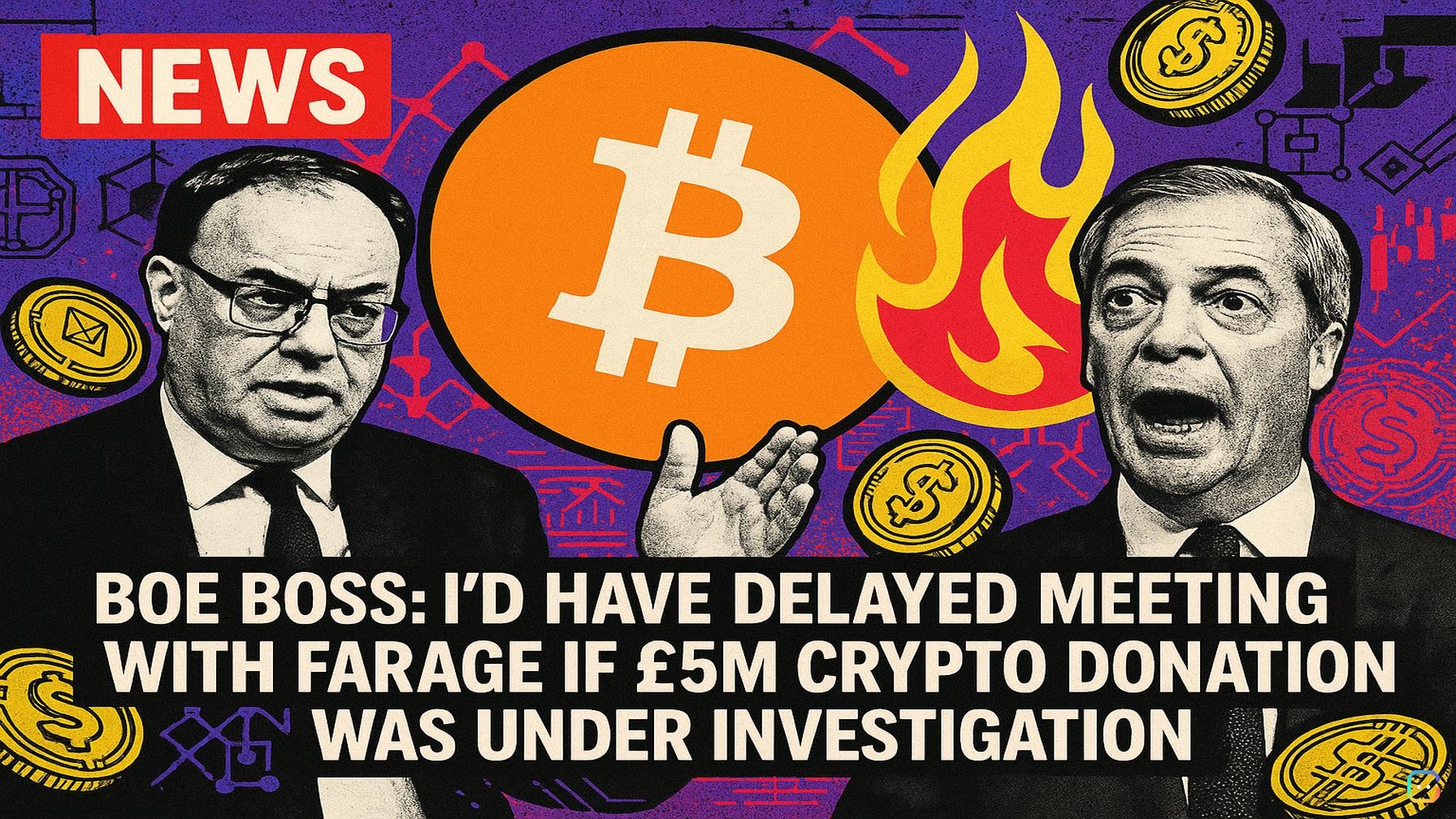
Bank of England boss: I would have delayed Farage meeting if the £5m crypto donation had been under investigation
The Bank of England’s governor, Andrew Bailey, has revealed he would have postponed a meeting with Nigel Farage last autumn if the Bank had known at the time that the Reform UK leader’s £5m donation from a crypto billionaire would later trigger a parliamentary inquiry.
Bailey met Farage in September to discuss the Bank’s emerging plans for cryptocurrency regulation — months before the Guardian disclosed in April that the donation came from Thailand-based investor Christopher Harborne. Harborne, who has provided roughly two-thirds of Reform UK’s funding, has made a substantial portion of his estimated £18bn wealth from crypto assets and holdings tied to Tether, reportedly earning up to £1bn a year from his stake.
“If we’d known then what we know now — that an investigation would be launched — we would probably have said: ‘Let’s wait until the investigation is done before we have the meeting,’” Bailey told the Guardian. He said the fact of an active inquiry would have been “a material fact” shaping the Bank’s judgment.
Why the meeting matters for crypto policy
The September discussion focused on stablecoin policy — a key battleground for crypto regulation. Farage later said he pressed the Bank to abandon plans for a state-backed competitor to stablecoins such as Tether and to drop a proposed cap on how many stablecoins individuals could hold. The Bank ultimately removed the cap on individual holdings after consultation, with Bailey arguing it’s more practical to cap overall issuance of particular stablecoins than to police each person’s holdings.
Stablecoins — cryptocurrencies typically pegged to assets like the US dollar and often used as on- and off-ramps between fiat and crypto markets — are central to the Bank’s efforts to manage financial stability and consumer protection as crypto use grows. Bailey, who also chairs the international Financial Stability Board, defended the Bank’s approach as balancing innovation and safety: “I do actually think we’re encouraging innovation, so I think we are doing the right thing there,” he said, noting some critics have swung between calling the Bank “dinosaurs” and praising it for supporting innovation.
Lobbying, confidentiality and standards complaints
Bailey has previously said he is able to resist lobbying and insisted the meeting was a “perfectly polite exchange of views” in which he did not yield to pressure. He described Farage’s stance toward the Bank as typical of an “anti‑establishment” challenger.
Farage has been reported to the parliamentary standards commissioner over whether his contact with the Bank breached lobbying rules. Bailey said the controversy would not change the Bank’s longstanding practice of meeting political leaders and other stakeholders. He argued that the Bank must remain accessible to party leaders and that confidentiality is important because people sometimes bring very market-sensitive information to the institution.
“There is a degree of confidentiality around these discussions,” Bailey said, acknowledging that can be politically awkward in some circumstances but stressing it is necessary to preserve the flow of information to the central bank.
What’s next
The revelations and ensuing inquiries add political scrutiny to the UK’s evolving stablecoin rules and underscore tensions between regulators, political actors, and major crypto backers. The Bank of England maintains it will continue to consult and refine its approach, balancing the need to encourage safe innovation in digital assets with the imperative to protect markets and consumers.
Read more AI-generated news on: undefined/news