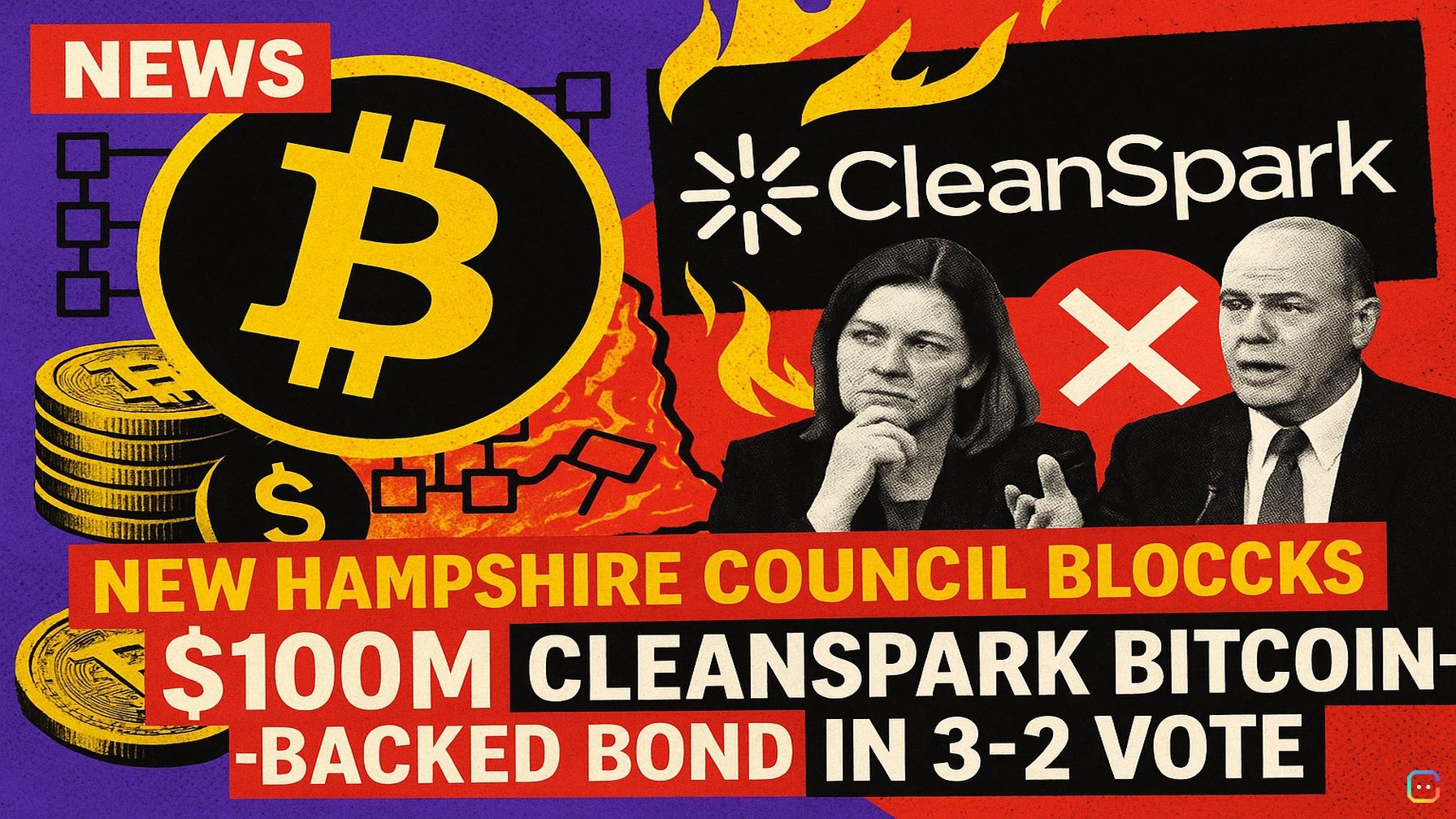
New Hampshire’s Executive Council on July 8 voted 3-2 to block a proposal to issue up to $100 million in Bitcoin-backed revenue bonds tied to miner CleanSpark, stopping the final state sign-off that the New Hampshire Business Finance Authority (BFA) needed to move forward.
What was proposed
- The plan would have had the BFA issue taxable revenue bonds for “NH CleanSpark Borrower Trust 2026‑1.” Proceeds were earmarked to buy Bitcoin and cover bond issuance costs.
- The borrower — a private entity linked to CleanSpark — would have posted roughly $160 million worth of Bitcoin as collateral for up to $100 million in bonds. The collateral was to be held in segregated wallets managed by custodian BitGo.
- The structure included an overcollateralization buffer: if collateral value fell to about $140 million, the arrangement would trigger liquidation and bond redemption.
- Bonds were designed as limited‑recourse obligations: bondholders could look only to the Bitcoin collateral and related proceeds, not to state funds or public credit.
Why the council said no
Opponents on the five‑member Executive Council raised concerns about using a state‑linked conduit for a Bitcoin‑backed financing structure, despite repeated assurances that no taxpayer dollars, the state’s general credit or other public assets would be on the line. Governor Kelly Ayotte supported the deal, saying it could attract new investment “without risking state funds or taxpayer dollars,” but three councilors voted to reject it. New Hampshire journalist Kevin Landrigan posted the 3‑2 result on X.
Credit and risk considerations
Moody’s in March assigned a provisional Ba2 rating to the proposed bonds — a speculative‑grade rating below investment grade. Moody’s review focused on Bitcoin price volatility and how the collateral liquidation process would work, noting the 160% collateral target was intended to protect bondholders but that material credit risk remained. The provisional rating signaled risks but did not guarantee losses would or would not occur — and it did not compel the council to approve the deal.
Political and market fallout
New Hampshire House Majority Floor Leader Keith Ammon criticized the council’s decision as “extremely short‑sighted” and urged the council to reconsider after further review, warning it could reduce future fee revenue for the BFA. The authority has not announced a follow‑up hearing or a revised proposal.
Context: New Hampshire’s crypto stance
The vote halts what supporters had pitched as the first rated Bitcoin‑backed bond issued through a U.S. state authority. It follows an earlier BFA approval of the structure in November 2025 and sits against a backdrop of broad state support for digital assets: New Hampshire previously approved an initial bond framework and became the first state to authorize a strategic cryptocurrency reserve, allowing the state treasurer to invest a limited share of eligible public funds in qualifying digital assets. The failed vote does not revoke that reserve law — it applies only to this CleanSpark‑linked conduit bond proposal.
Why it matters
The defeat underscores the political and reputational hurdles that remain for public‑sector involvement in crypto financing, even when structures are designed to isolate taxpayer exposure. Proponents argue such deals could expand capital markets innovation; critics point to volatility and the optics of state‑linked crypto transactions. Watchers will be looking for whether CleanSpark or its backers revise the offering, seek private markets instead, or try again with additional safeguards or political outreach.
Read more AI-generated news on: undefined/news