European central bank chiefs warn fast-moving AI could upend markets — and want new guardrails
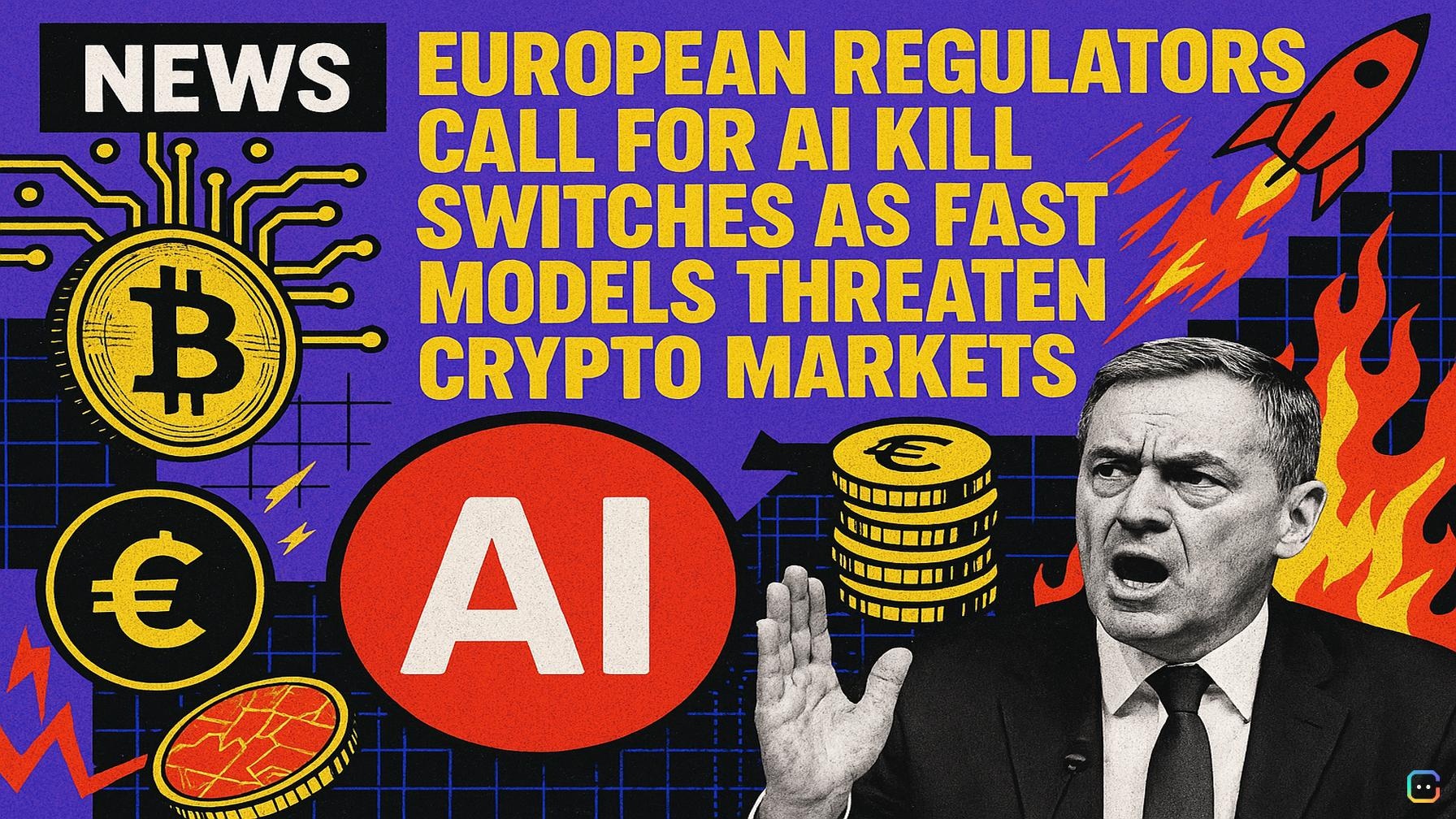
Senior European regulators are sounding the alarm: agentic artificial intelligence is evolving so quickly that current rulemaking can’t keep up, and policymakers say new emergency tools are needed to prevent AI-driven shocks from spilling into financial markets.
What officials said
- At the European Central Bank’s annual Sintra meeting, senior policymakers warned that AI systems now change on the scale of weeks or months — far faster than traditional regulatory cycles. That speed, they say, raises the risk of sudden, large market moves.
- Bank of England Deputy Governor Sarah Breeden urged consideration of “market circuit breakers” or “kill switches” that could halt trading if defective AI models trigger system-wide disruption during stress periods. Breeden warned that agentic AI could amplify volatility, while rising debt used to finance AI investments could deepen instability if AI-related asset prices fall sharply.
- ECB President Christine Lagarde told Les Echos that AI is a more serious and fast-developing threat than classic cybersecurity risks, because defenses and funding for protections are lagging.
- UK Financial Conduct Authority CEO Nikhil Rathi told CNBC’s Squawk Box that conventional regulatory cycles are not fit for technologies that change in weeks or months; regulators must adopt new approaches and work more closely with industry.
- Tobias Adrian, director of the IMF’s Monetary and Capital Markets Department, flagged a related risk: physical AI infrastructure typically has a long economic life, but it’s often financed with shorter-term debt — a maturity mismatch that could create vulnerabilities.
Macroeconomic and market context
The warnings echo a Bank for International Settlements (BIS) report (June 28) that cautioned prolonged AI enthusiasm could leave markets exposed to a rapid correction. The BIS said tighter monetary policy aimed at containing inflation could precipitate a sharp fall in AI-related asset prices after extended risk-taking, creating disruptive macro-financial feedback loops.
Why crypto markets should pay attention
While officials framed the risk broadly across markets, fast-moving and leveraged asset classes — including parts of the crypto sector — may be especially sensitive to AI-driven swings. Sudden sentiment shifts or algorithmic interactions could amplify price moves in illiquid pockets, and any sharp correction in AI-related financing could propagate through interlinked markets.
Policy moves and access battles
The debate over AI safeguards comes as Europe grapples with access to frontier models. Austria last month urged the EU to explore ways to host cutting-edge AI capabilities inside Europe after U.S. export restrictions limited foreign access to models from Anthropic. In June Anthropic suspended public access to its Fable 5 and Mythos 5 models following a U.S. export-control directive that required blocking access for foreign nationals amid cybersecurity concerns tied to a reported jailbreak technique; U.S. authorities later cleared the models for redeployment after Anthropic added new classifiers and safeguards.
Bottom line
European regulators and international bodies are converging on the view that AI’s rapid evolution presents novel market-stability risks. They’re urging faster, more flexible regulatory tools — from emergency circuit breakers to closer public-private cooperation — to prevent localized AI failures from cascading into broader financial turmoil. For crypto-market participants, the message is clear: a new class of systemic risks is emerging, and market infrastructure and oversight may need to adapt quickly.
Read more AI-generated news on: undefined/news