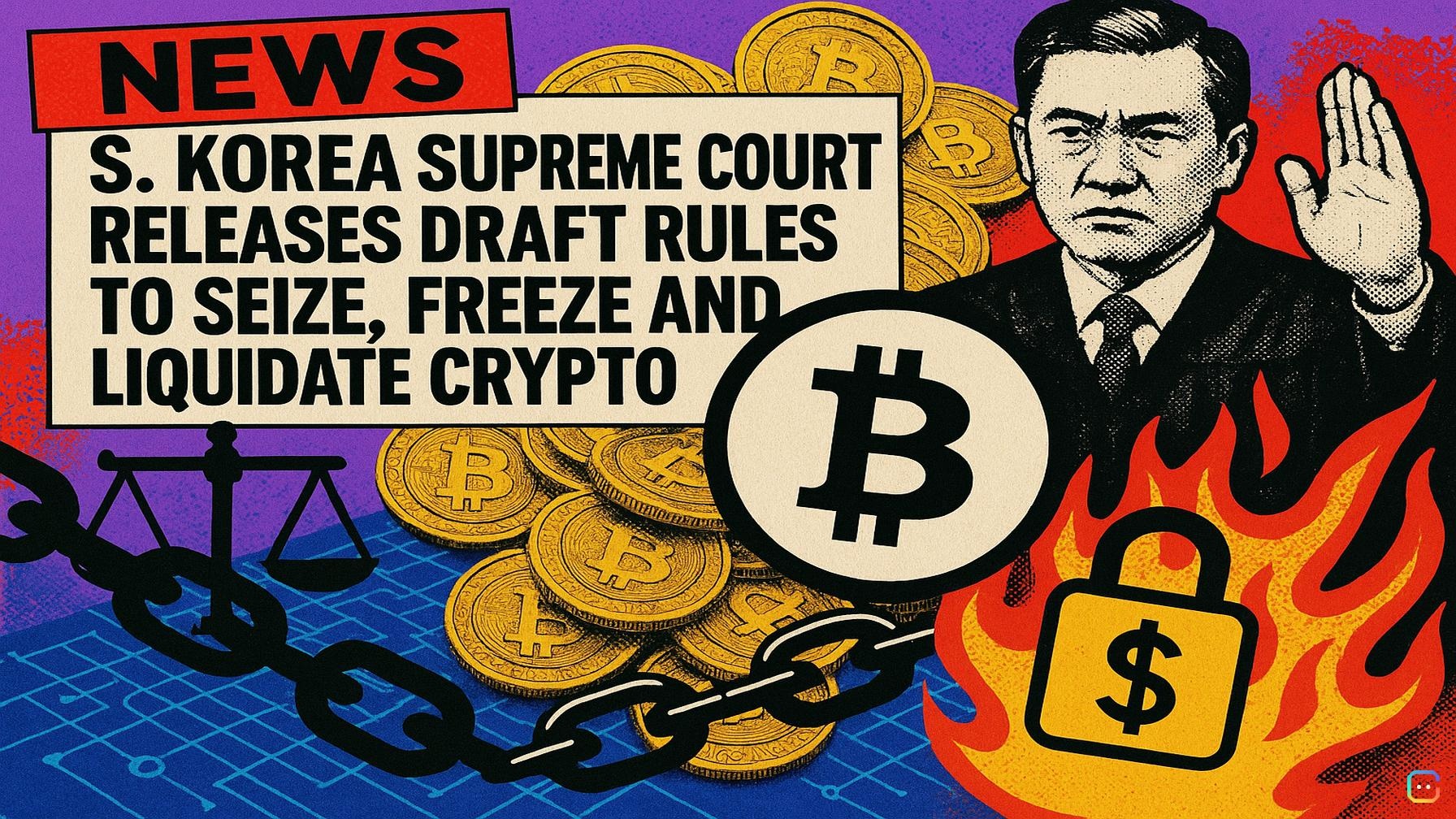
South Korea’s Supreme Court has moved to bring clarity to how cryptocurrencies are treated in civil debt cases, publishing draft rules that spell out how digital assets can be seized, frozen, transferred and converted to cash during enforcement proceedings.
What’s happening and when
- On July 2 the Supreme Court released draft amendments to the Rules on Civil Execution to introduce formal procedures for enforcing claims against digital assets.
- The public consultation runs through Aug. 11; the Court’s National Court Administration intends to finalize the rules and implement them on Oct. 1.
Why it matters
Cryptocurrency ownership and trading in South Korea have grown sharply, and courts have faced an increasing number of cases where digital assets are implicated in civil enforcement. These amendments fold digital assets into an enforcement system that previously focused on physical property, bank accounts and other traditional claims — giving creditors, courts and service providers clearer legal tools and responsibilities.
Key provisions (what the draft does)
- Seizure of transfer claims: If a court issues a seizure order on a debtor’s right to demand the transfer of crypto, compulsory execution begins. Exchanges and other third parties holding the assets are barred from transferring them to the debtor, and the debtor cannot dispose of or receive the assets.
- Disclosure powers for creditors: Creditors can ask the court to compel exchanges and other holders to disclose whether a transfer claim exists, what kind and quantity of digital assets are held, and whether other creditors or priority claims are already attached.
- Converting seized claims into cash: The draft sets out two routes — transfer orders or court-approved sales. Enforcement officers may instruct a virtual asset service provider (VASP) to sell assets, move them into an account opened specifically for enforcement before sale, or swap illiquid tokens into more tradable ones prior to liquidation (allowed when a token has low market value or limited liquidity).
- Direct seizure of assets: Separate procedures cover compulsory execution against the digital assets themselves. After a seizure order, the assets would be transferred to an enforcement officer and the seizure becomes legally effective upon transfer.
- Liquidation options: Once a transfer order becomes final the crypto can be sent to a creditor’s designated address; alternatively, sales can be conducted through VASPs. The draft also addresses how to return assets if enforcement requests are withdrawn.
- Other enforcement mechanics: The proposal includes rules on applying existing creditor enforcement practices to digital assets, enforcing security interests over transfer claims, and provisional preservation measures.
Context and related policy moves
The draft comes amid a broader push to update South Korea’s crypto rulebook. Recently the Financial Services Commission expanded disclosure requirements for applicants seeking debt relief under the New Start Fund to include virtual asset holdings. The FSC has also proposed allowing digital asset matters to be handled under the country’s financial regulatory sandbox as lawmakers and regulators continue to refine the legal framework for cryptocurrencies.
Bottom line
If approved, the amendments will create the country’s first clear, court-backed procedures for handling crypto in civil debt enforcement — clarifying obligations for exchanges and service providers, strengthening creditors’ enforcement tools, and offering a predictable liquidation path for seized digital assets. Public feedback is open until Aug. 11, with the rules slated to take effect Oct. 1.
Read more AI-generated news on: undefined/news