Nigel Farage’s most lucrative side hustle yet: why a gold dealer is paying him six figures — and what it means for crypto
Despite the demands of being MP for Clacton and leader of Reform UK, Nigel Farage has continued to earn substantial money from media and commercial work. Alongside presenting on GB News, acting as a social media influencer and recording paid messages for Cameo (a period that produced several public controversies), his newest commercial role stands out for its scale.
What the disclosures show
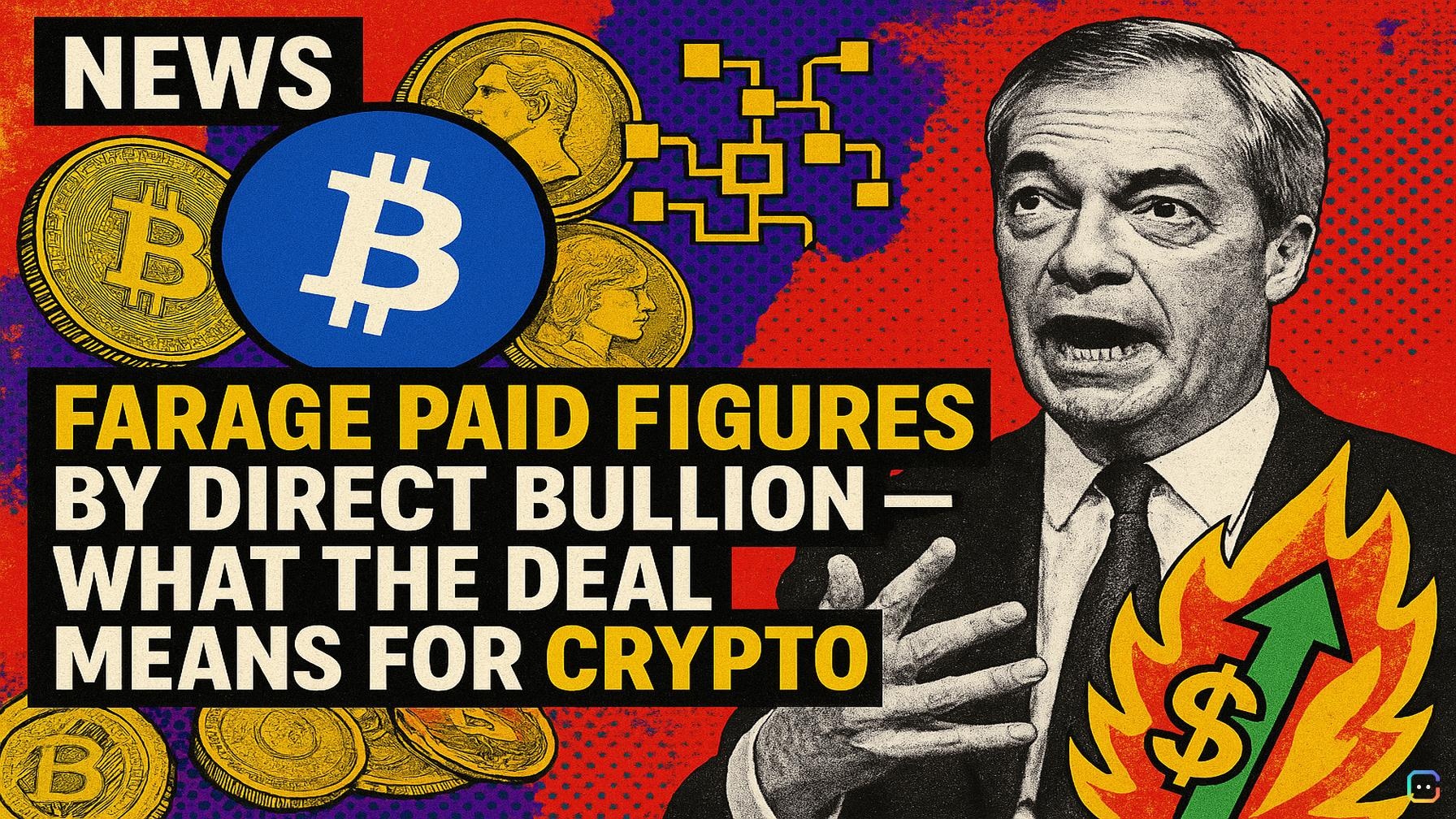
- Official registers reveal Farage was paid £270,000 for 12 hours’ work promoting Direct Bullion — a rate of £22,500 per hour.
- That payment brings his total earnings from the company to £685,500. By comparison, he received a £5m donation from Christopher Harborne shortly before entering Parliament.
- The most recent work reportedly included recorded videos and on-site filming, including a segment outside the Bank of England where Farage warned of geopolitical risks and promoted gold as a haven asset.
Who is Direct Bullion?
- Founded in 2016 and based in Mayfair, Direct Bullion sells physical precious metals — mainly gold coins and bars, and some silver — positioning gold as a protection against inflation, debt and economic uncertainty. Its website leans on stark warnings about the UK economy and pitches products as ways to preserve savings. One company line reads: “We believe gold is your seatbelt and airbag …”
- It does not appear to hold huge vaults of its own metal. Instead, Direct Bullion sources coins and bars from mints and suppliers and acts as a dealer/broker. Customer storage is handled via Brinks vaults in the US, and the company also markets home safes and “panic rooms” (including a £16,200 dual‑locking safe).
- Filings at Companies House show modest net assets of about £2.6m — only around four times what the company has paid Farage so far — though industry lists put its 2022 revenue at roughly £17m (Financial Times growth ranking, 2024).
Why would Direct Bullion pay Farage so much?
- Brand and reach: Farage is a high-profile, media-savvy figure whose warnings about national decline and monetary risk dovetail precisely with Direct Bullion’s messaging. His public profile can translate into customer trust and sales in a market that relies heavily on perceived credibility.
- Past marketing routes: Direct Bullion has previously advertised on outlets like RT and sponsored GB News at launch — the latter link reportedly helped introduce the company to Farage. CEO Paul Withers has said he wanted Farage specifically as an ambassador.
- Cost versus potential revenue: If the business model depends on converting a small percentage of a large, fearful audience into high-value purchases, six-figure ambassador fees can be rationalized as marketing spend.
The CEO and the crypto connections
- Paul Withers, Direct Bullion’s co-founder and CEO, has an eclectic résumé: Royal Navy electronic warfare specialist (1999–2004), a period described elsewhere as time spent working as a carpenter, and commercial roles in digital gold and crypto projects.
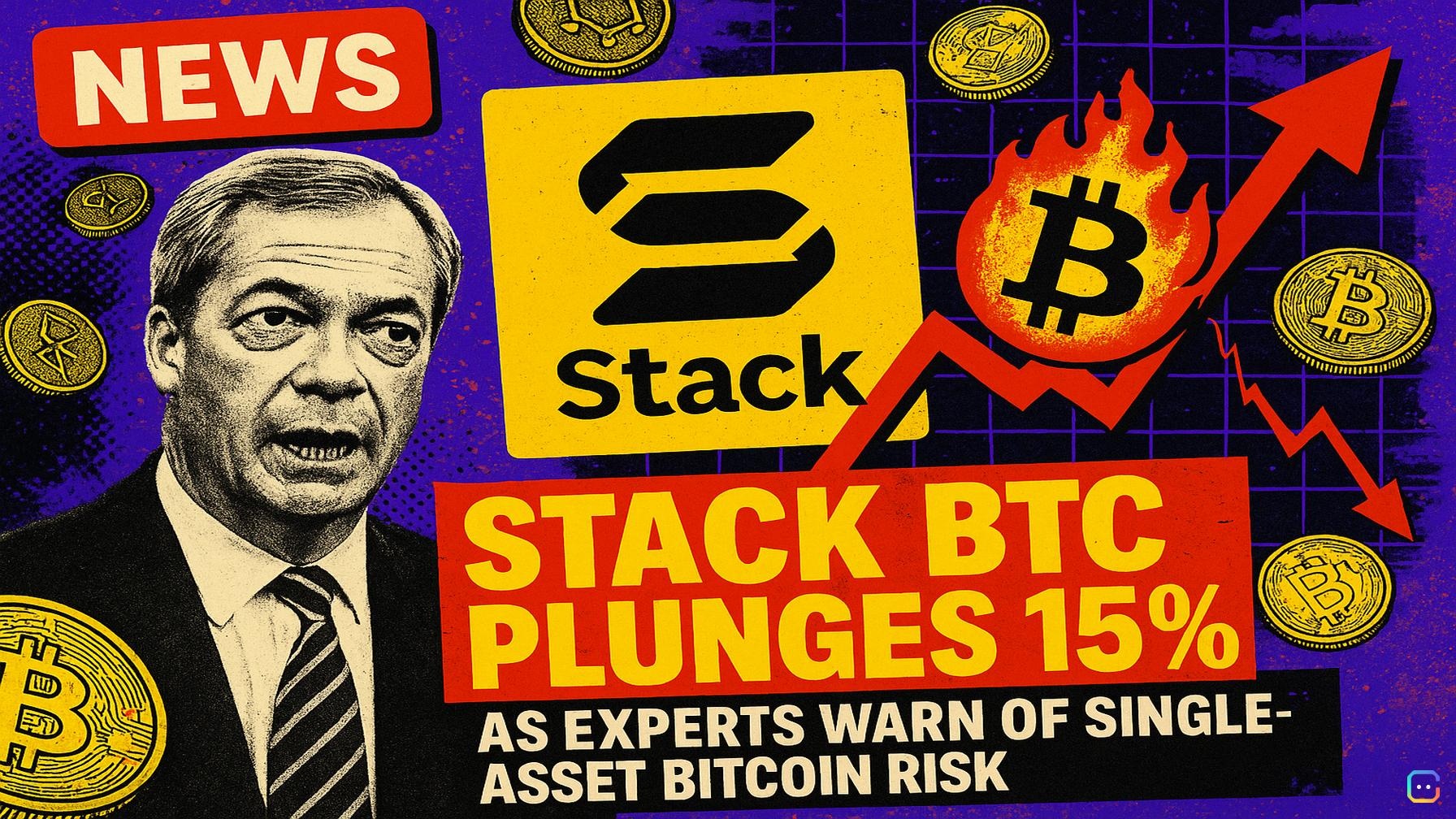
- Withers was involved in selling tokenised gold for Aurus from 2019–2025 and now acts as chief strategy officer at Stack BTC, a cryptocurrency company chaired by former chancellor Kwasi Kwarteng.
- Farage has a direct crypto link too: he invested £215,000 earlier this year for a reported 6% stake in Stack BTC.
- Withers has publicly praised Farage and expressed political views against high taxation. Those ties — commercial, ideological and political — help explain the deepening relationship between the MP and the bullion dealer.
Why this matters to crypto audiences
- Cross-pollination of markets: The deal illustrates how traditional safe‑haven assets (physical gold) and crypto interests are increasingly entwined. Withers’ background in tokenised gold and his role at a crypto firm suggest that some players are positioning across both physical and digital stores of value.
- Reputation and influence: A high-profile political figure promoting a bullion dealer raises questions about transparency and the use of public profiles to drive private sales — relevant to crypto, where celebrity endorsements and political connections often shape investor sentiment.
- Business model signals: Direct Bullion’s approach — marketing economic fear, selling physical metal and storage, and exploring tokenisation histories — offers a window into how firms can monetise macroeconomic anxiety across both physical and on‑chain products.
Bottom line
Direct Bullion’s multi‑hundred‑thousand‑pound payments to Nigel Farage are a calculated marketing bet: buying endorsement from a politically prominent, media-savvy voice whose message aligns with the company’s product. For crypto observers, the story is notable for the overlap between tokenisation efforts, a crypto‑adjacent executive team, and a high-profile investor in a crypto firm. It’s a reminder that traditional safe havens and digital-asset ventures are converging in ways that blend politics, marketing and finance.
Read more AI-generated news on: undefined/news