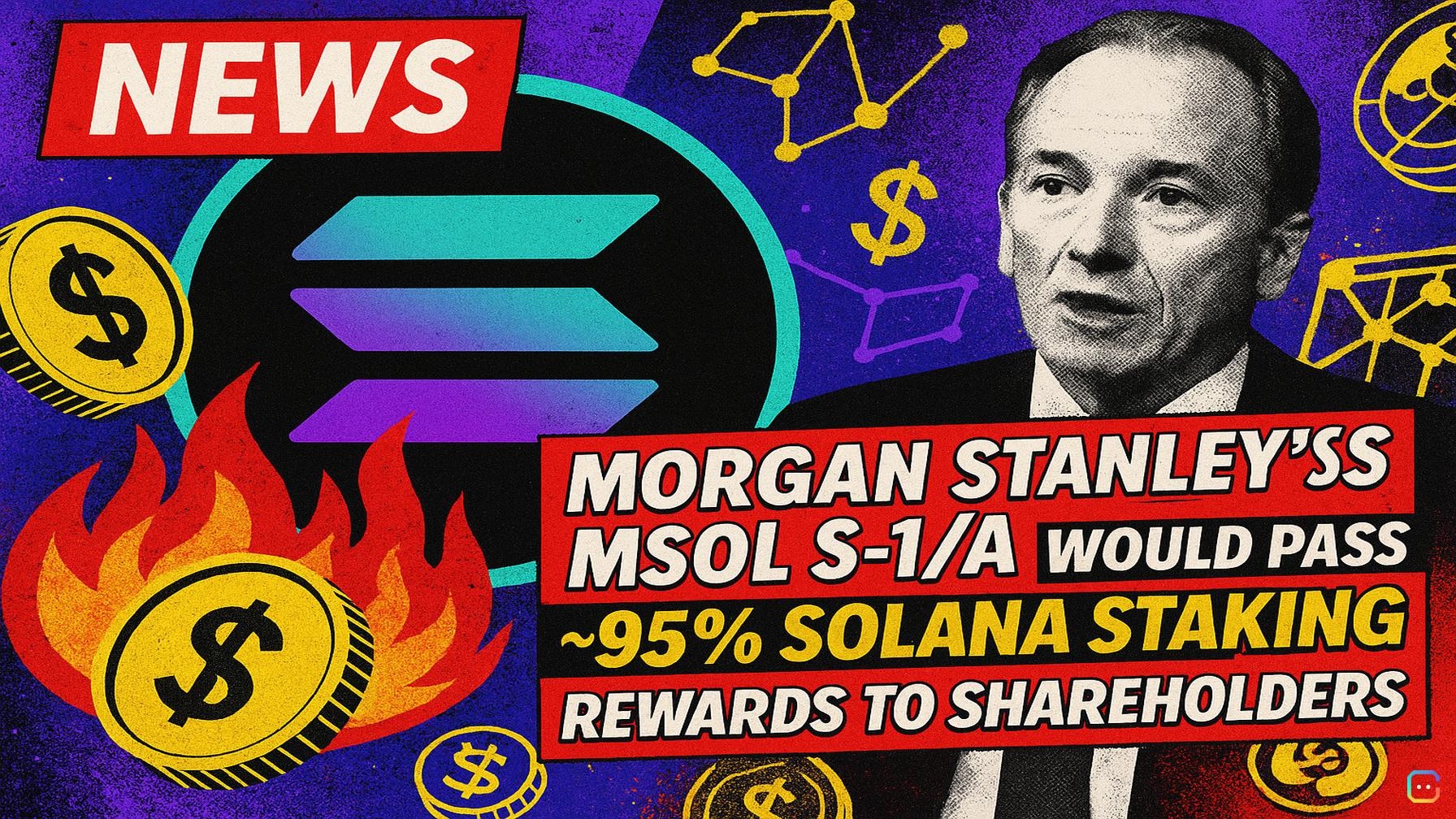
Morgan Stanley’s amended S-1/A for a proposed spot Solana trust has put both product design and short-term market action in focus for SOL traders.
The filing, for a trust that would trade under the ticker MSOL, lays out key product details: a 0.14% annual sponsor fee and plans to support native staking through custodial partners including Figment, Galaxy and Coinbase Canada. Crucially, the document says the trust would pass roughly 95% of staking rewards through to shareholders — a provision that could materially affect how the product is viewed versus an ETF that simply holds unstaked SOL.
Why staking matters
Staking treatment has become one of the central questions for any spot Solana product. Because staking is integral to Solana’s token economics, a structure that funnels most staking rewards to investors may be seen differently by market participants and could influence the trust’s competitiveness if regulators approve multiple offerings.
Market context — no implied causation
On the market side, TradingView data shows SOL traded in a $67.21–$70.46 range on June 26, with immediate resistance near $74 and meaningful support around $60. The amended filing provides a concrete document for analysts to dissect, but it’s important to separate regulatory developments from short-term price moves: this report does not attribute SOL’s intraday volatility directly to the filing. Price action also reflects broader crypto volatility, liquidity conditions and trader positioning.
What traders and investors will watch next
- Regulatory response: whether the SEC requests further amendments or clears the path forward.
- Competing issuers: other firms may update their own Solana ETF documents, making fee structures and staking treatment a likely arena for competition.
- Technical levels: traders will watch whether SOL reclaims $74 or falls through the $60 support—either scenario would help determine the near-term narrative.
Why the filing still matters
Even without an immediate price link, the S-1/A matters because it gives the market specific, analysable terms — fees, custody arrangements, chosen staking providers and how rewards are treated. Those details shape how an approved product would compete and how investors might value it relative to other offerings.
Bottom line
Solana currently has two live storylines: an evolving ETF structure that could change how investors access SOL, and a market attempting to hold key support during a challenging period for altcoins. Both deserve close attention from traders, investors and analysts.
Sources: Morgan Stanley Solana Trust S-1/A; TradingView.
This article was written by the News Desk and edited by Samuel Rae.
Read more AI-generated news on: undefined/news