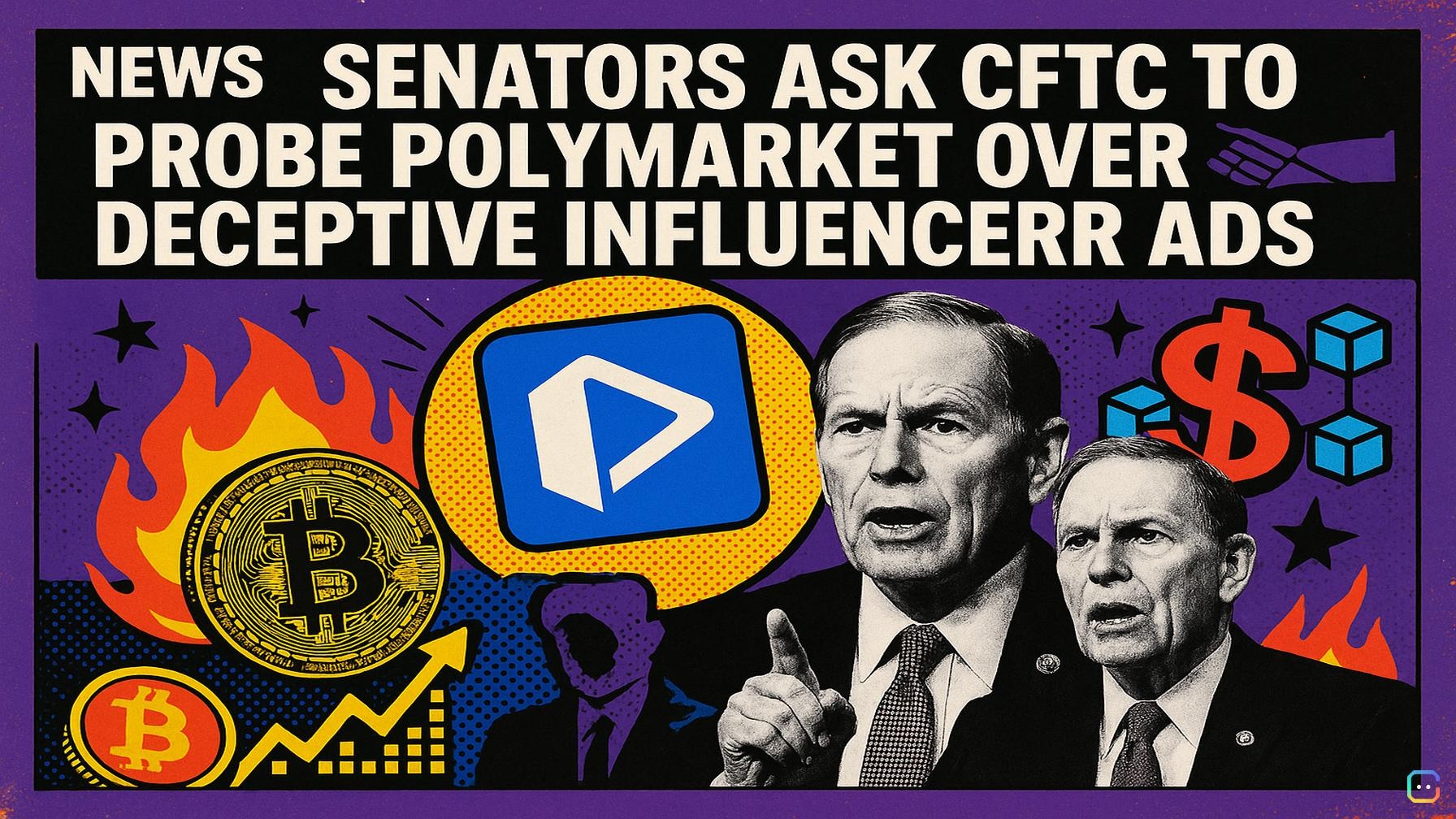
U.S. senators have asked the Commodity Futures Trading Commission to open a probe into Polymarket, amplifying scrutiny of how prediction-market platforms promote themselves to American users.
In a letter obtained by The Wall Street Journal, Senators Adam Schiff (D-CA) and John Curtis (R-UT) urged CFTC Chair Michael Selig to investigate allegations that Polymarket used deceptive advertising tactics to reach U.S. audiences despite formally restricting domestic access. The lawmakers cite a WSJ investigation that reported Polymarket hired content creators to simulate trades using fake interfaces, staged transactions, and run paid influencer campaigns without clear disclosure — tactics that could have given U.S. viewers a misleading impression of potential winnings and availability.
“If the allegations are accurate, they warrant immediate regulatory scrutiny,” the senators wrote, and asked the CFTC to provide a written response by July 10 confirming whether it has opened an investigation or explaining why it has not.
Beyond asking whether the advertising claims will be investigated, Schiff and Curtis pressed the CFTC for details on the consumer protections it expects prediction-market operators to maintain. Their questions covered:
- Advertising standards and disclosure requirements for influencer promotions
- Age verification and affiliate marketing practices
- Responsible gaming tools and addiction warnings
The senators also challenged whether the CFTC has the authority, expertise, and resources to assume consumer-protection and licensing roles typically handled by state and tribal gaming regulators — a point that underpins a wider legal and regulatory fight.
The request lands as the CFTC is actively defending its claim to exclusive oversight of prediction markets in court. Earlier this week the agency sued the state of Kentucky after state authorities moved against operators including Polymarket and Kalshi, with the CFTC arguing federal law vests it with sole jurisdiction over these products.
This dispute comes amid broader tension over how the CFTC is regulating crypto-linked derivatives. Last week, CME Group sued the CFTC and Chair Michael Selig after the agency approved U.S. crypto perpetual futures, arguing those contracts should be classified as swaps under the Dodd-Frank Act and that the approvals bypassed formal rulemaking. CME CEO Terrence Duffy had signaled the exchange would pursue legal action after platforms such as Kalshi and Coinbase gained approvals to list regulated crypto perpetual futures.
Regulatory coordination is also in focus: the CFTC and the Securities and Exchange Commission recently opened a 60-day public consultation on crypto derivatives regulation, seeking input on portfolio margining across securities, swaps, futures and related products while reviewing whether Dodd-Frank definitions still fit today’s markets. SEC Chair Paul Atkins said closer coordination between the agencies could boost market efficiency, strengthen consumer protections, and reduce overlapping responsibilities as crypto derivatives and tokenized financial products expand in the U.S.
The senators’ letter underscores growing concern that promotional practices and jurisdictional ambiguities could leave U.S. consumers exposed — and puts the CFTC on the clock to clarify whether it will investigate Polymarket’s alleged marketing practices and how it plans to police prediction markets going forward.
Read more AI-generated news on: undefined/news