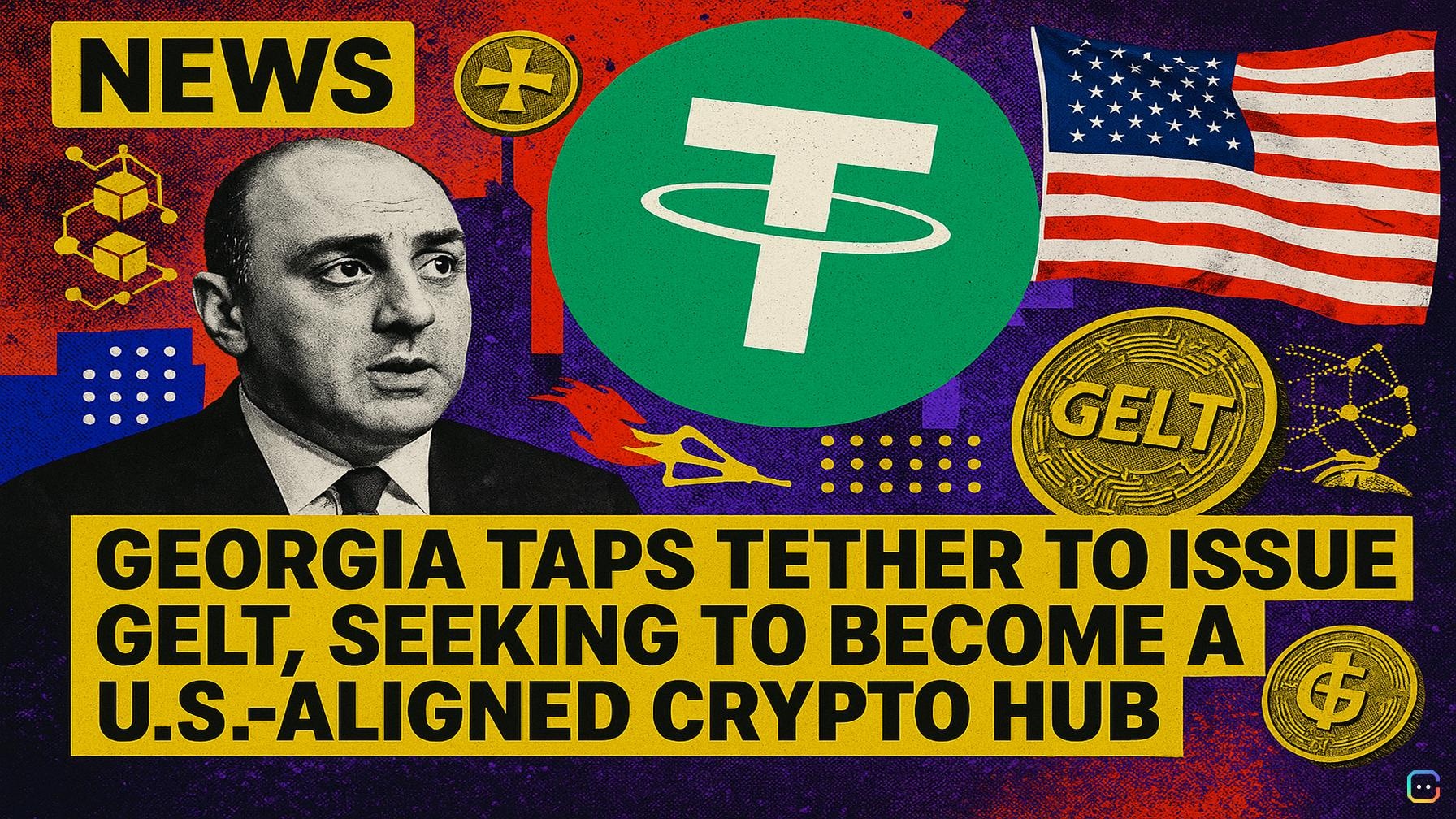
Georgia has tapped Tether to mint a government-backed stablecoin, a move that signals the small Caucasus nation’s bid to become a regulated crypto hub aligned with U.S. standards.
Tether announced Monday it will issue GELT, a stablecoin pegged to the Georgian lari, describing the project as “one of the first joint efforts to place a national currency directly onto digital asset rails” under a purpose-built regulatory framework. The country’s government and the National Bank of Georgia have spent years building rules for digital assets that Tether says mirror key U.S. protections introduced by the GENIUS Act last year — including requirements on reserve management, redemption rights, and issuer oversight.
Georgia’s prime minister, Irakli Kobakhidze, framed GELT as part of a push to create “a more connected, transparent, and digitally empowered financial world.” For a country of roughly 3.9 million people, the stablecoin is being sold as a regional turning point: near-instant settlements, lower transaction costs, and a seamless bridge between traditional banks and Georgia’s nascent digital economy.
Tether’s flagship token, USDT, already dominates the market with a capitalization approaching $190 billion, and the company has issued other tokens pegged to the euro, pound, Mexican peso and even gold. But GELT would be notable for carrying explicit backing from a sovereign government and its central bank — a level of official endorsement those other tokens do not have.
The National Bank of Georgia has publicly welcomed the collaboration. President Natia Turnava said the central bank “welcomes collaboration with global innovators like Tether” as part of efforts to build secure, modern, and internationally aligned digital financial infrastructure. The country has already allowed tax payments in digital assets that are converted into lari, and in 2023 the central bank ran a pilot with Ripple to explore a digital version of the national currency on the Ripple CBDC Platform.
Importantly, Tether’s announcement does not indicate GELT will be a central bank digital currency (CBDC). Stablecoins such as GELT are typically issued by private firms on public blockchains, while CBDCs are government-controlled digital liabilities — a distinction that has fueled debates about privacy and financial surveillance.
What’s next: details remain thin and Tether’s notice hints only at plans. Observers will be watching for technical specifics, how reserves and redemptions will be handled, and whether GELT will be integrated into Georgia’s banking rails at scale. If successful, the initiative could strengthen Georgia’s role as a crypto-friendly jurisdiction and set a precedent for public-private partnerships in national currency tokenization.
Read more AI-generated news on: undefined/news