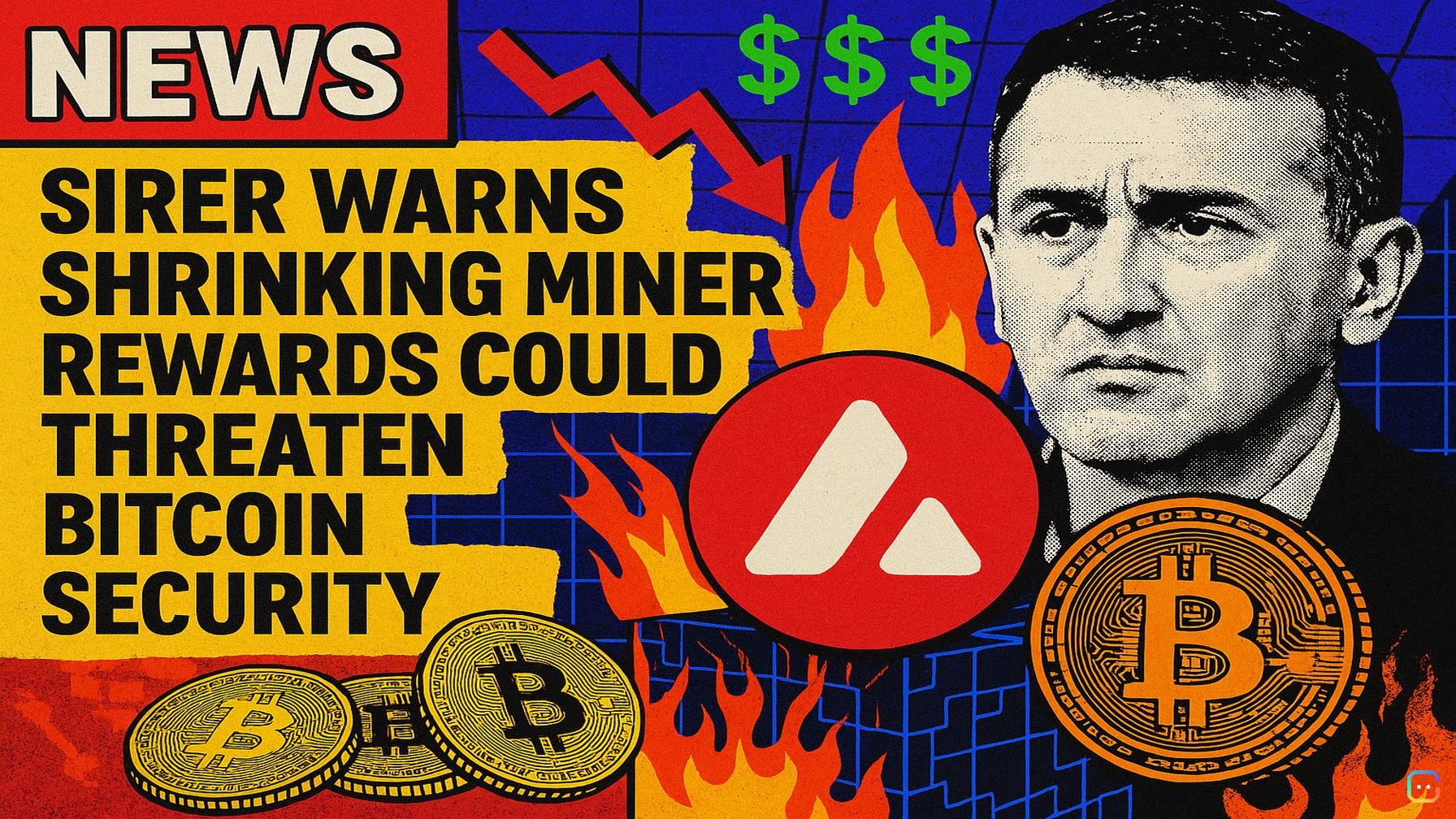
Avalanche founder Emin Gün Sirer has reignited a long-running debate over Bitcoin’s long-term security and the economics of mining. In an X post on May 10, 2026, Sirer warned that shrinking miner incentives could eventually create a serious challenge for BTC’s security model — a discussion that has quickly drawn attention across the crypto world.
What Sirer warned about
- Bitcoin’s network is secured by miners who verify transactions and maintain the blockchain in exchange for newly issued BTC plus transaction fees.
- Because of Bitcoin’s halving mechanism, mining rewards are cut roughly in half every four years. That design enshrines scarcity but steadily reduces miner revenue from block rewards.
- Sirer argued that over time those reduced rewards might not be enough to cover miners’ high operational costs (electricity, hardware, maintenance), potentially squeezing smaller operators out and increasing centralization risk.
Why this matters
- Bitcoin’s security depends on broad miner participation. Lower profitability could reduce competition and concentrate mining power, a weakness critics have warned about for years.
- If transaction fees must shoulder most of miner income, fees could become prohibitively expensive for everyday users — or still be insufficient to sustain robust network security.
A proposed fix: an Avalanche-linked layer
Sirer floated a technical remedy: adding an extra transaction layer that leverages Avalanche technology to handle transactions before they’re fully settled on Bitcoin’s base layer. The idea would be to reduce load and speed verification, easing pressure on Bitcoin’s core consensus model as block rewards decline.
Potential roadblocks
- Even if technically compelling, the proposal faces a political obstacle: many in the Bitcoin community are resistant to major protocol changes, especially those that borrow outside consensus systems or alter long-established design principles.
Industry reaction
- The discussion has split opinion. Some investors and developers believe Bitcoin’s rising price and growing transaction demand could naturally offset declining block rewards. Others see Sirer’s warning as a timely call to explore structural or layer-based solutions before a security problem emerges.
Bottom line
Sirer’s post has amplified a persistent tension in crypto design: preserving Bitcoin’s scarcity and decentralization while ensuring miners remain economically viable as on-chain rewards taper off. Whether the community pursues Avalanche-style layers, other technical innovations, or relies on market dynamics, the debate over mining incentives and long-term security is likely to intensify as halving cycles continue.
Read more AI-generated news on: undefined/news