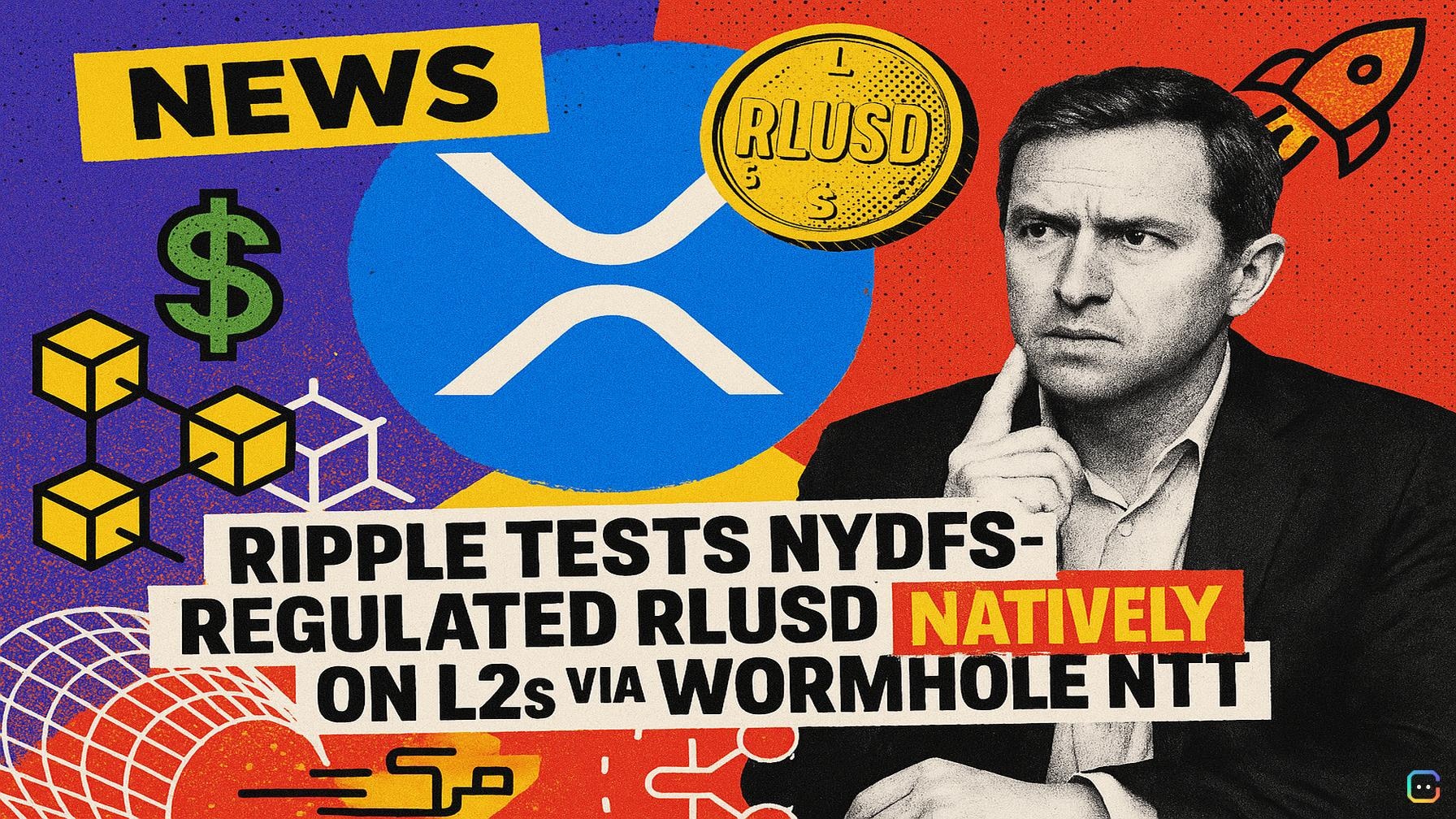
Ripple pushes RLUSD onto L2s with Wormhole’s native transfer tech — a push for multichain, institutional-ready stablecoins
Ripple has begun testing its U.S.-regulated stablecoin, Ripple USD (RLUSD), on Layer 2 networks for the first time, rolling out trials on Optimism, Base, Ink, and Unichain. The move is part of a broader multichain strategy ahead of RLUSD’s planned full launch next year.
Key tech: Wormhole’s NTT, not wrapped bridges
Rather than using wrapped tokens or traditional bridge architectures, Ripple is relying on Wormhole’s Native Token Transfers (NTT) standard. NTT enables native issuance and control of RLUSD across each supported chain, which Ripple says reduces bridge risk, preserves liquidity integrity, and creates a more regulation-friendly path for institutional DeFi.
How the rollout works
- Optimism serves as the initial entry point.
- Base, Ink, and Unichain are connected through the same NTT infrastructure, allowing RLUSD to scale across multiple L2 environments without fragmenting supply or custody models.
- Ripple touts RLUSD as the first U.S. Trust-regulated stablecoin to deploy natively on these Layer 2 ecosystems.
Why it matters
Ripple’s SVP of Stablecoin, Jack McDonald, framed the expansion as a response to institutional demand for compliant, cross-chain stablecoins: “Stablecoins are the gateway to DeFi and institutional adoption. By launching RLUSD on these L2 networks, we are setting the standard where compliance and on-chain efficiency converge.”
Regulatory context
RLUSD was launched under a New York Department of Financial Services (NYDFS) Trust Charter — one of the strictest regulatory regimes in crypto. AMBCrypto also reported last week that Ripple has applied for an OCC charter; if approved, that would put RLUSD under both state and federal oversight — a combination not currently in place for other major stablecoins such as USDC or USDT.
Broader ecosystem and liquidity
- Ripple now holds more than 75 licenses worldwide, with recent approvals in Dubai and Abu Dhabi expanding RLUSD’s international footprint.
- The multichain rollout is intended to strengthen XRP’s role in cross-chain liquidity. To support interoperability, Hex Trust has issued wrapped XRP (wXRP), enabling holders to pair wXRP with RLUSD for swaps, payments, lending, or yield strategies on supported chains.
- DeFiLlama data shows Ethereum holds the bulk of RLUSD liquidity (79.2%), representing over $1 billion, while XRPL accounts for the remaining 20.8%.
Bottom line
This testing phase positions RLUSD as a notable experiment in deploying a regulated stablecoin natively across multiple L2s without traditional bridging — aiming to marry regulatory oversight with the composability and efficiency institutions expect from DeFi.
Sources: AMBCrypto; DeFiLlama.
Disclaimer: This article is informational and not investment advice. Cryptocurrency trading carries high risk; do your own research before making financial decisions. © 2025 AMBCrypto
Read more AI-generated news on: undefined/news