On-chain activity shifted dramatically across major blockchains over the past year, with Nansen data showing 11 chains posting year-over-year declines in active addresses — some far steeper than others. The moves underline how quickly crypto usage can migrate between networks, often driven by airdrops, viral apps and short-lived incentives.
Big losers and standout winners
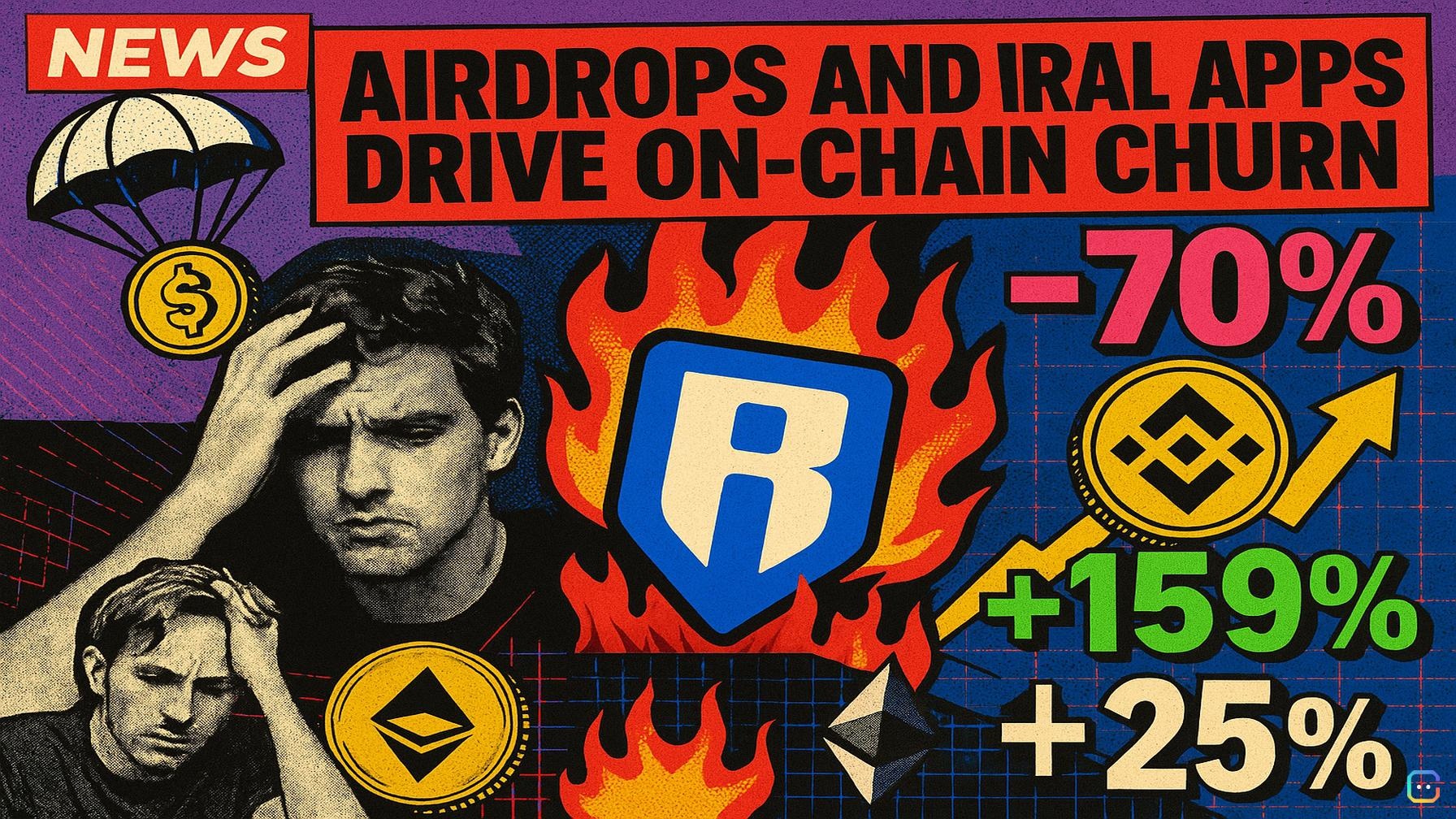
- Ronin suffered the heaviest hit, with active addresses plunging about 70% as engagement tied to headline dapps faded.
- Bitcoin saw a 7.2% drop in active addresses and a roughly 22% fall in transactions, making it the only top-five network by activity to post declines.
- ZKsync recorded one of the steepest transaction collapses — transactions fell about 90% after the initial airdrop momentum faded.
- By contrast, Ethereum’s base layer bucked the downtrend: active addresses rose roughly 25% year-over-year and transactions increased by more than 20%, even as debates persist over Ethereum’s rollup-centric roadmap and concerns about liquidity fragmentation across Layer-2s.
- Solana led the industry in sheer on-chain users with more than 1 billion active addresses over the period, followed by Tron and Ethereum. BNB Chain saw a striking 159% increase in active addresses.
Airdrops, games and the volatility of attention
The data highlights how temporary incentives and viral experiences can create boom-and-bust cycles:
- Pixels, a popular game that migrated from Polygon to Ronin in H2 2023, drove Ronin from roughly 20,000 daily users to a peak surge. DappRadar showed Pixels hit about 300,000 daily active users by December 2024, but the game’s decline since then left Ronin highly exposed and activity has slumped.
- ZKsync’s June 2024 token-claim window — which made nearly 700,000 wallets eligible — drew heavy interest but also scrutiny over Sybil filtering. Nansen found more than 40% of the top airdrop wallets immediately sold allocations, and transaction counts collapsed after the initial rush. Scroll similarly cooled after its October 2024 airdrop.
- Telegram’s Open Network (TON) surged in 2024 thanks to mini-games like Hamster Kombat; Telegram CEO Pavel Durov said Hamster Kombat attracted 239 million users in three months and over 130 million qualified for its airdrop. TON’s active addresses peaked near 2.5 million per day on Sept. 30, but then fell — Nansen shows a 47% drop in active addresses and 51% fall in transactions — illustrating how viral onboarding can be fleeting.
Layer-2 divergence and enduring ecosystems
Not all Layer-2s followed the same path:
- Arbitrum’s active addresses dipped about 3% but it still ranks among the top networks with roughly 31 million users. Its transaction volume rose about 36% to roughly 734.5 million — outpacing Ethereum’s ~507 million transactions — helped by activity in tokenized assets, including 500 US stocks tokenized on-chain by Robinhood.
- Base and Optimism bucked the cooling trend among L2s: both posted increases in active addresses and transaction volumes. Base — which has no native token and has never done an airdrop — benefited from renewed interest in memecoins, AI-related apps and decentralized exchanges.
Prices and usage: not a simple relationship
Nansen’s numbers show there isn’t a straightforward correlation between on-chain usage and token prices. Solana’s price declined despite a roughly 66% rise in active addresses, while BNB’s token price rose in step with its spike in user activity. That divergence reinforces that user counts, liquidity and market sentiment can move independently.
What the swings mean
Year-over-year declines don’t necessarily mean a network is failing. Many drops followed outsized growth periods — driven by hype cycles, airdrops or viral dapps — which naturally unwind. Networks whose activity was concentrated around one or two hit apps saw the sharpest reversals. Others, like Solana, BNB Chain and Base, showed signs of retaining users and liquidity after surges, suggesting more durable usage beyond short-term profit-seeking.
A clear takeaway for builders and investors: on-chain activity is volatile and highly event-driven. Sustained growth appears to come from a mix of sticky applications, diversified use cases and real liquidity, not just single moments of viral interest.
Read more AI-generated news on: undefined/news