A high-profile piece of crypto legislation still awaiting passage is already shaping how regulators and market participants talk about classifying major tokens — and XRP sits squarely in the crosshairs.
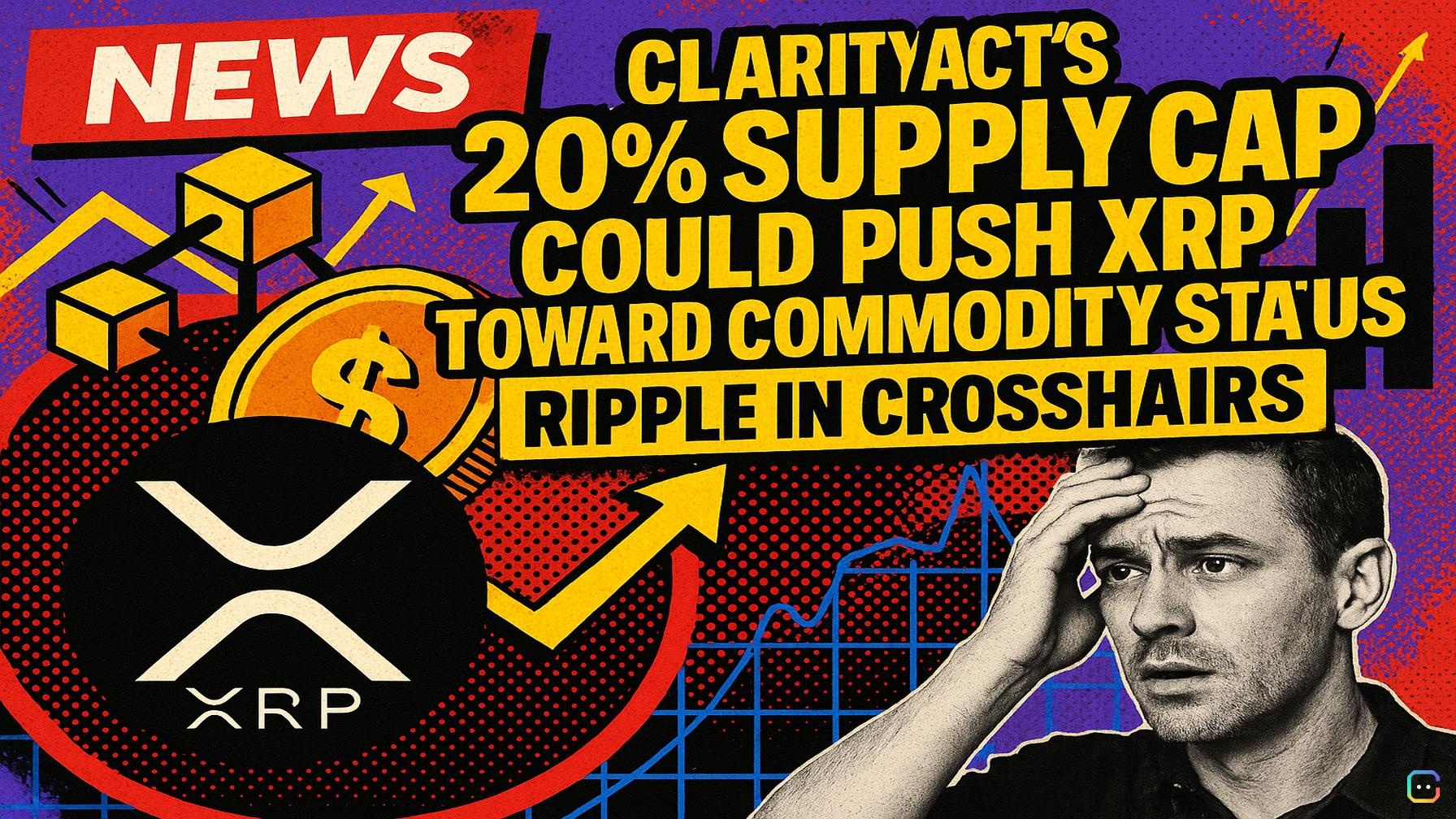
The Digital Asset Market Clarity Act, widely known as the CLARITY Act, aims to move the U.S. away from subjective “decentralization” tests and toward objective criteria for determining whether a digital asset should be treated as a security or a commodity. One headline-grabbing metric in the bill is a supply-concentration threshold: no single entity or coordinated group may control 20% or more of a network’s native token supply if that network is to qualify as a “mature” blockchain under the law.
That threshold matters a great deal for Ripple and XRP. A recent post on X by an XRP community member called Arthur drew attention to the 20% rule, arguing that meeting it could push XRP more clearly into commodity territory — an outcome many in the community see as critical to broader institutional and global adoption. Currently, Ripple’s escrow arrangements mean the company effectively controls roughly 40% of XRP’s total supply, a long-standing flashpoint in debates about XRP’s decentralization and regulatory status.
Under the CLARITY Act’s framework, getting below the 20% cap would be key evidence that XRP is not dominated by a single issuer, strengthening the argument that it functions like a decentralized digital commodity rather than a security tied to corporate behavior. Practically, that would require Ripple to reduce its effective holdings by nearly half. Importantly, the proposed law wouldn’t automatically force Ripple to sell its holdings or transfer them to other parties — it would instead require Ripple to demonstrate it does not exert controlling influence over XRP’s circulating or total supply.
How Ripple could meet that standard is open to strategy. The company could pursue a mix of tactics — from changing escrow mechanics to distributing tokens in ways that don’t concentrate control — and the choice would be tactical, with scope to aim for minimal market disruption. For context on Ripple’s current token flow: the company releases 1 billion XRP from escrow each month, and historically about 70% of those released tokens are returned to escrow.
The CLARITY Act isn’t law yet, but its proposed definitions are already influencing market and policy discussions. For XRP holders, developers and regulators alike, the 20% supply threshold is one of the clearest potential pivots in how the token could be classified under U.S. law — and whether Ripple can adapt its holdings and practices without destabilizing the market will be a key story to watch as the bill moves through Congress.
Read more AI-generated news on: undefined/news