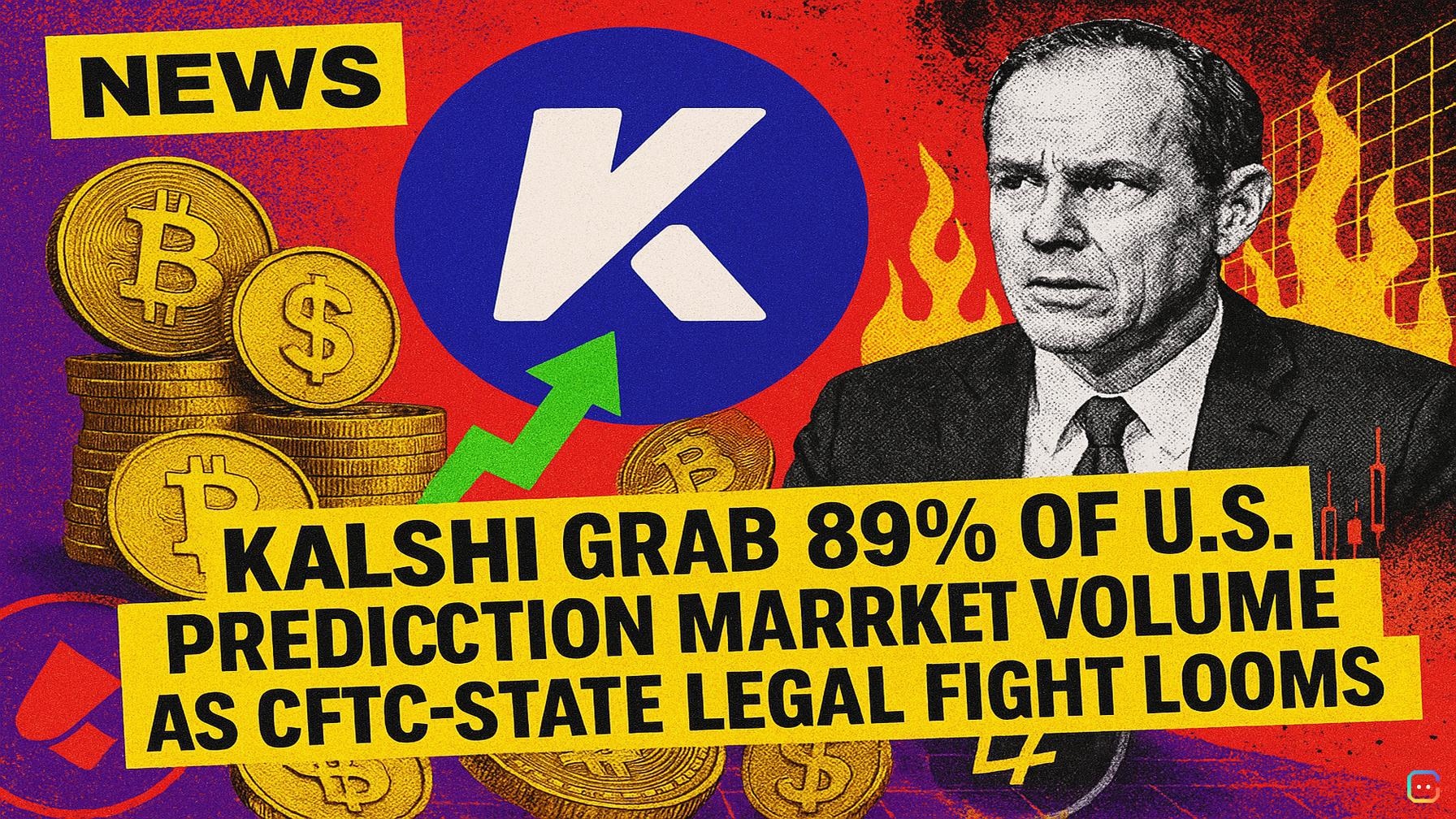
Kalshi has surged to dominate U.S. prediction markets, capturing roughly 89% of measured volume as regulated trading eclipses crypto-native platforms, according to a new Bank of America report. Total weekly volume across prediction markets rose 4% week-over-week — with Kalshi leading the gains at 6%. Crypto.com posted a modest uptick, while Polymarket, the leading blockchain-based platform, saw volumes drop about 16%.
BofA’s numbers paint a market consolidating around platforms with clear regulatory footing: Kalshi sits far ahead with 89% of U.S. volume, Polymarket trails at 7%, and Crypto.com at 4%. That split underscores a core industry tension — are prediction markets financial instruments or gambling? Kalshi operates under Commodity Futures Trading Commission (CFTC) oversight and frames its event contracts, including political and sports outcomes, as derivatives. Polymarket, by contrast, runs on blockchain rails, attracting global liquidity but operating largely outside U.S. regulatory boundaries and facing domestic restrictions.
Regulation is now the decisive battleground. Several states — including Nevada and Massachusetts — have secured preliminary injunctions against Kalshi, while New Jersey recently lost an appeal that would have broadened its ability to apply state gambling laws to the exchange. The CFTC has pushed back aggressively, suing multiple states and arguing federal law preempts state gambling regulation. Agency leadership has also drawn a line between sports betting (treated as entertainment) and event contracts (classified as financial tools for hedging risk).
How courts rule could reshape the industry. A federal victory for the CFTC would let regulated platforms like Kalshi scale nationally under a single regulatory framework. If states prevail, prediction markets could fragment into a state-by-state model similar to U.S. online sports betting, potentially slowing growth and complicating access.
Crypto firms aren’t standing still. Polymarket remains one of the largest global venues and still draws big spikes in activity around major events like elections. Centralized exchanges and crypto firms are experimenting too: Crypto.com and Coinbase have tested prediction-style products, and Binance recently added a prediction markets feature to its wallet. These moves show broad industry interest in blending trading mechanics with event-based markets.
The shifting landscape is also influencing traditional gaming companies. FanDuel recently shut down parts of its fantasy sports business, a move BofA links in part to users migrating toward prediction-market-style products that feel more like trading than betting.
What to watch: upcoming court decisions on CFTC preemption, state-level injunction outcomes, and how major platforms — both regulated exchanges and crypto-native firms — adapt their product and compliance strategies. Those developments will determine whether prediction markets become a federally regulated trading market or a patchwork of state-regulated betting markets.
Read more AI-generated news on: undefined/news