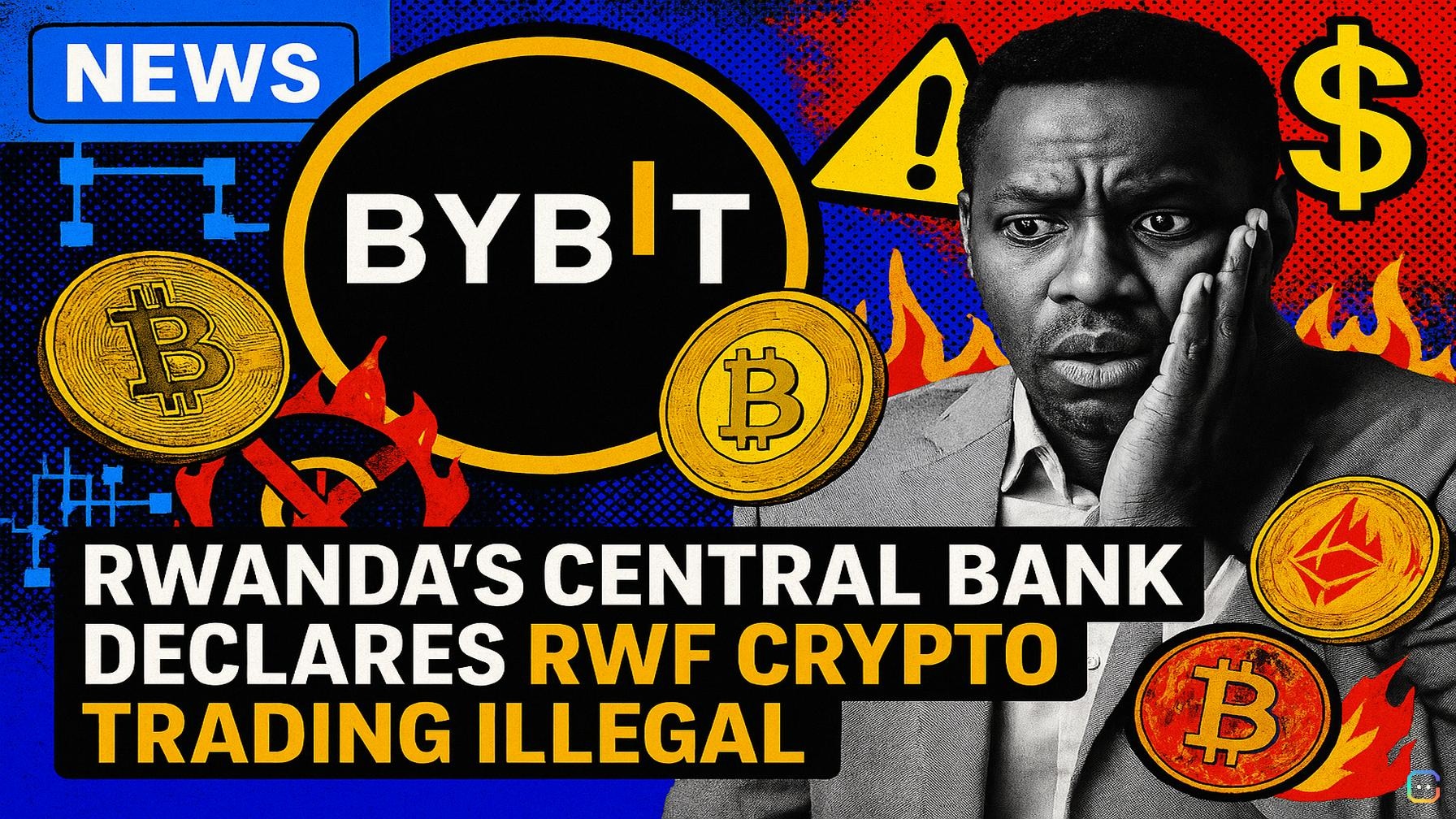
When global crypto exchange Bybit quietly added the Rwandan franc to its peer‑to‑peer (P2P) market on April 3, Kigali’s financial watchdog wasted no time. Two days later the National Bank of Rwanda issued a blunt public warning: using the franc to buy or sell crypto remains illegal.
“Please be reminded that the Rwandan Franc (FRW) is the only legal tender in Rwanda,” the central bank wrote on X, stressing that under current rules crypto-assets are not authorized for payments, FRW conversion, or P2P trading involving FRW. Officials urged citizens to avoid such transactions, citing serious financial risks and noting there is no legal protection if funds are lost.
Bybit had promoted the new option on its own X account, saying RWF was “now live on Bybit P2P” and advertising new‑user rewards and merchant commissions for traders using the franc. As of the central bank’s post, Bybit had not issued a public response to Kigali’s guidance.
A reminder of long‑standing restrictions
Rwanda’s stance isn’t new. Since 2018 the country has limited crypto activity as part of a broader effort to protect its financial system and control currency flows. The National Bank reiterated that licensed financial institutions are barred from converting the franc into crypto — or vice versa — under the current regulatory framework.
At the same time, Rwanda is actively exploring state‑issued digital money. The e‑franc rwandais, a central bank digital currency (CBDC), is in a proof‑of‑concept stage and could move into a pilot phase. That project appears to be one reason regulators are drawing a clear line between a state‑controlled digital currency and private crypto platforms.
A potential opening — but with strict limits
There may be a constrained path for crypto firms to operate legally. In March the Capital Market Authority published a draft bill that would create licensing and supervision rules for virtual asset service providers (VASPs). The proposed law would not allow crypto as legal tender, and would ban certain activities — including mining, mixer services, and any token pegged to the Rwandan franc. However, firms that meet licensing conditions could, for the first time, offer regulated services in Rwanda.
What this episode shows is the tension between global exchanges looking to expand access and a small but determined regulator protecting monetary sovereignty and consumer safety. For now, Rwandans should treat any FRW crypto offers with caution: the central bank’s guidance is clear, and the legal picture is still evolving.
Read more AI-generated news on: undefined/news