Headline: Bitcoin network fees hit 15-year low as on‑chain demand softens — Glassnode
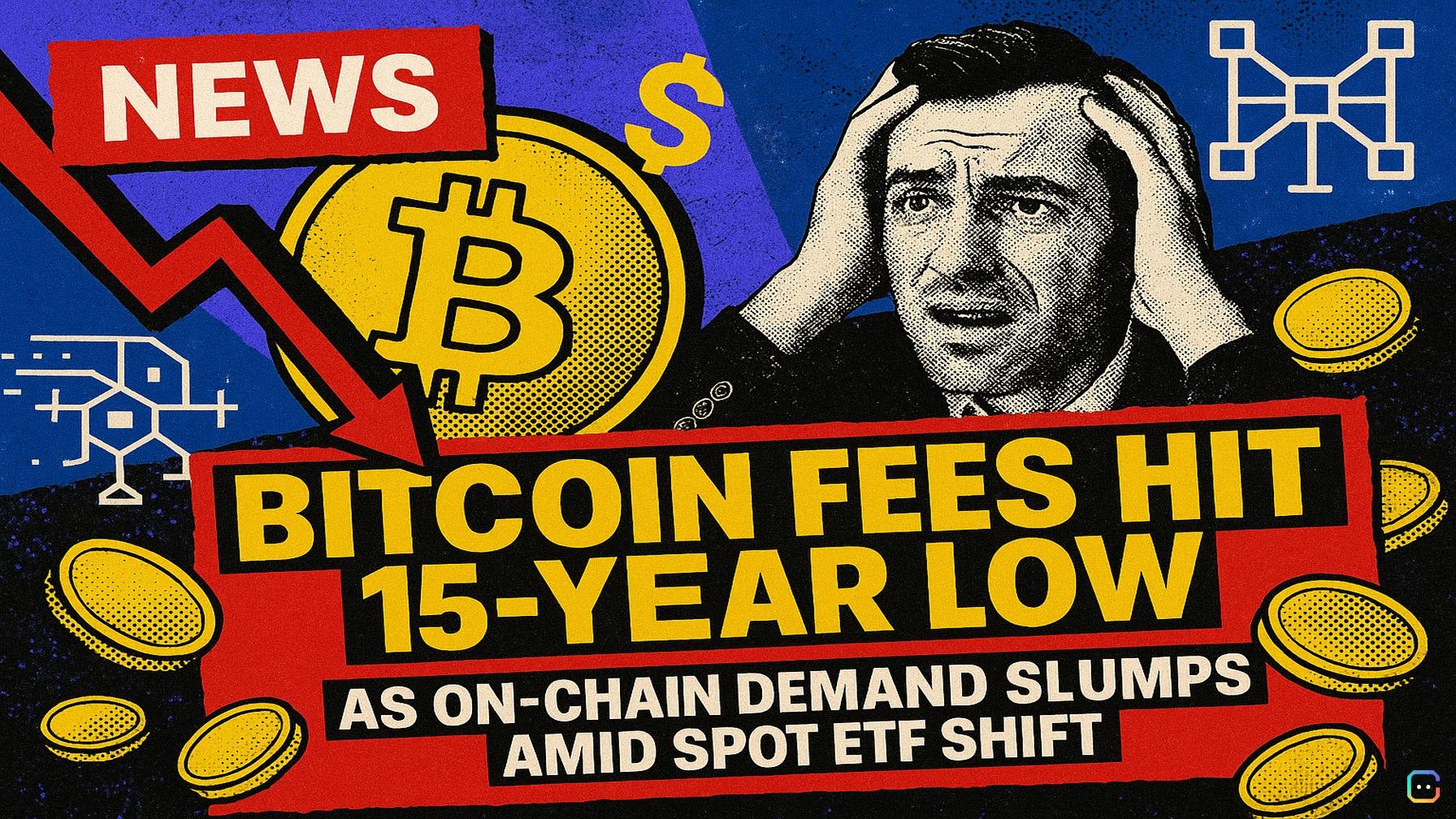
Bitcoin’s network is getting cheaper to use. On-chain analytics firm Glassnode reported on X that the daily total fees paid on the Bitcoin blockchain have fallen to their lowest level in 15 years, a sign of materially reduced demand for block space.
What the metric shows
- The indicator — Bitcoin Total Transaction Fees — tracks how much users collectively pay miners each day to include transactions in blocks. Fees rise when activity and competition for limited block space increase (mempool congestion), and fall when demand is light.
- Miners prioritize higher-fee transactions during congestion, which drives up average fees. When activity is subdued, users can get fast confirmations with minimal fees.
The recent trend
- Glassnode’s chart of the 30‑day simple moving average (SMA) of Total Transaction Fees shows a steady downtrend since the peak at the start of 2024. Crucially, the decline continued even as Bitcoin repeatedly hit new all‑time highs.
- Today the 30‑day SMA sits at just 2.5 BTC per day — the lowest reading since March 2011. “Fee compression of this magnitude reflects a significant reduction in on‑chain demand for block space, consistent with subdued network,” Glassnode noted.
Why this may be happening
- One plausible explanation is the introduction of U.S. spot Bitcoin ETFs. Approved by the SEC in January 2024 — roughly when total fees peaked — these funds give investors an off‑chain route into Bitcoin, potentially diverting trading and capital flows away from on‑chain activity.
- Even amid bullish price action, that shift toward off‑chain investment vehicles appears to have kept on‑chain transaction demand muted.
Market context
- The fee decline comes as Bitcoin has retraced some gains, with the price around $67,900.
Bottom line
Lower daily fees reflect less competition for block space and a quieter Bitcoin network — a pattern that may persist while on‑chain use cases remain subdued and institutional adoption continues off‑chain via products like spot ETFs.
Read more AI-generated news on: undefined/news