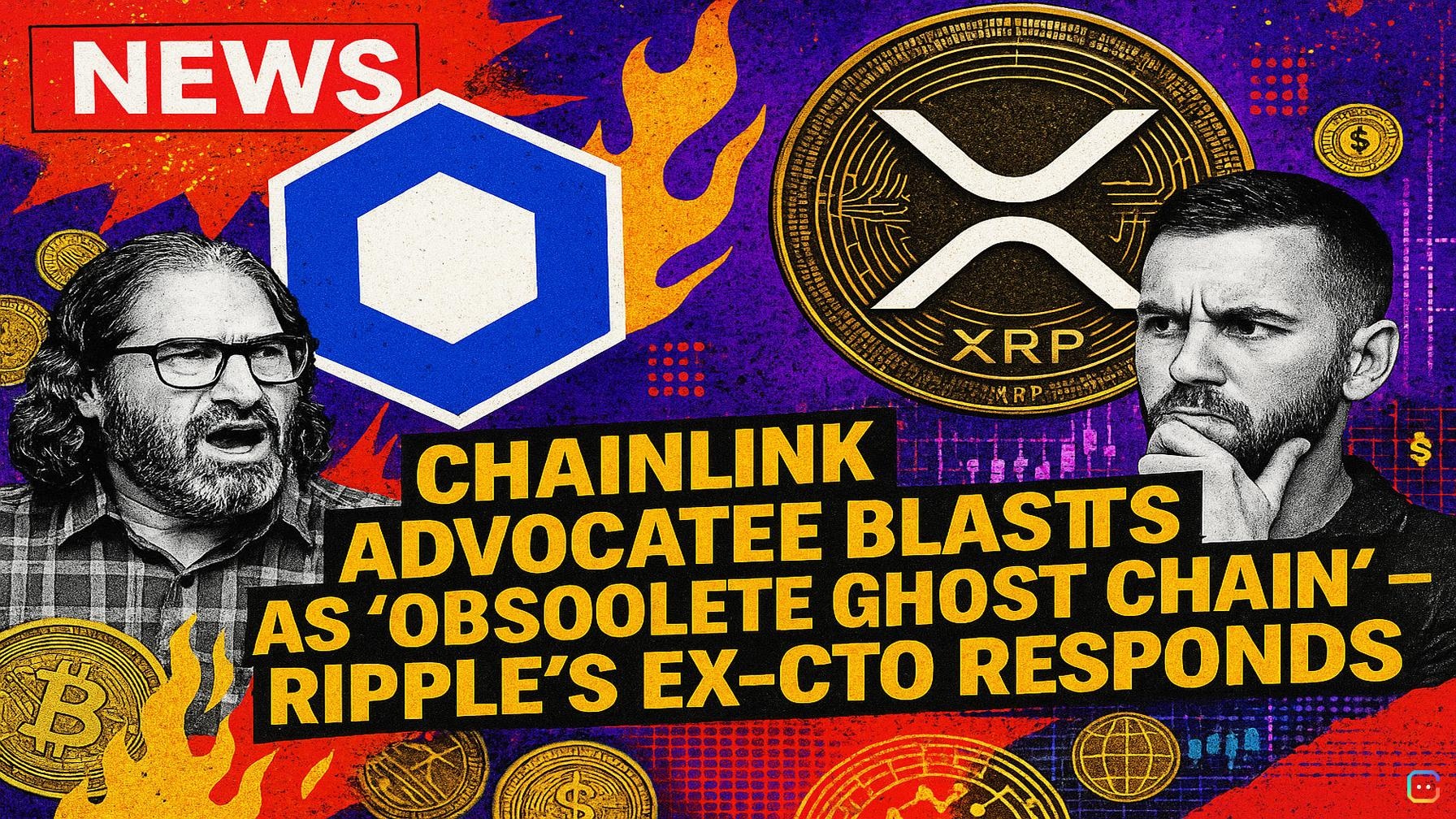
Chainlink advocate Zach Rynes has sparked a heated debate in crypto circles after a blistering critique of Ripple and its XRP token, drawing pushback from Ripple supporters and former executives.
In a post on X, Rynes — known for his strong Chainlink support — argued that LINK offers a cleaner, more institutional-friendly investment case than XRP. He labeled the XRP Ledger (XRPL) an “obsolete ghost chain,” criticized Ripple’s recent share buybacks, and said XRP holders are effectively subsidizing a company that prioritizes equity shareholders over token investors.
Key claims from Rynes’ post
- Token vs. equity conflict: Rynes argued that when a company issues both tokens and equity, the two investor groups end up with competing economic interests. He said equity investors have superior, legally enforceable rights to corporate revenue and value, leaving token holders at a structural disadvantage.
- Use of XRP proceeds: According to Rynes, Ripple sells XRP and uses the proceeds to acquire companies and fund stock buybacks that benefit shareholders — not XRP holders.
- Court filings and bridge use case: He pointed to Ripple’s own statements in court filings, claiming the company admitted XRP’s “bridge currency” use case is demand‑neutral and does not materially affect price.
- XRPL metrics: Rynes dismissed XRPL’s relevance based on usage metrics, saying it sits outside the top 40 chains by usage, controls less than 1% market share in real‑world assets and under 0.01% in stablecoins.
- Cross‑chain activity: He noted Ripple has issued 90% of the RLUSD stablecoin on Ethereum and expanded stablecoin issuance to additional chains, including a private EVM chain launched with BNY Mellon.
- Chainlink’s case: Rynes framed LINK as structurally cleaner because it faces no competing equity claims. He said Chainlink Labs employees receive long‑term incentives in LINK rather than equity and pointed to Chainlink’s reported >70% market share in DeFi with roughly $60 billion in secured TVL (as cited by him). He also cited institutional partnerships — naming SWIFT, the DTCC, Euroclear, and JPMorgan — as evidence of tangible adoption. He concluded LINK is the “best index bet on institutional blockchain adoption,” while calling XRP a “bank‑themed meme coin” Ripple sells to retail to finance corporate deals.
Ripple’s camp pushes back
The thread escalated when Ripple’s former CTO David Schwartz replied. Schwartz argued Ripple’s steady, predictable selling of XRP over the past five years produced downward price pressure but ultimately benefited buyers, who could accumulate tokens at lower entry prices than they otherwise would have paid. Rynes rejected that response as “elite‑tier gaslighting,” questioning whether intentionally suppressing price could be framed as a benefit to holders. Schwartz stood by his point, saying predictable selling is a known market factor that affects buyers and sellers equally.
Why it matters
The exchange highlights broader industry tensions around token issuance economics, corporate governance, and the difference between on‑chain utility narratives and off‑chain corporate incentives. Rynes’ argument underscores concerns some critics have about projects that mix corporate equity and token issuance, while Ripple’s defenders emphasize predictable token distribution and adoption narratives.
As debate continues, both sides are pointing to legal disclosures, on‑chain metrics and institutional partnerships to bolster their positions. For investors and observers, the dispute raises practical questions about how issuance models and corporate behavior can influence token economics and long‑term adoption.
Read more AI-generated news on: undefined/news