Solana just moved into the regulatory spotlight — and in a way that could boost its credibility with mainstream investors and developers.
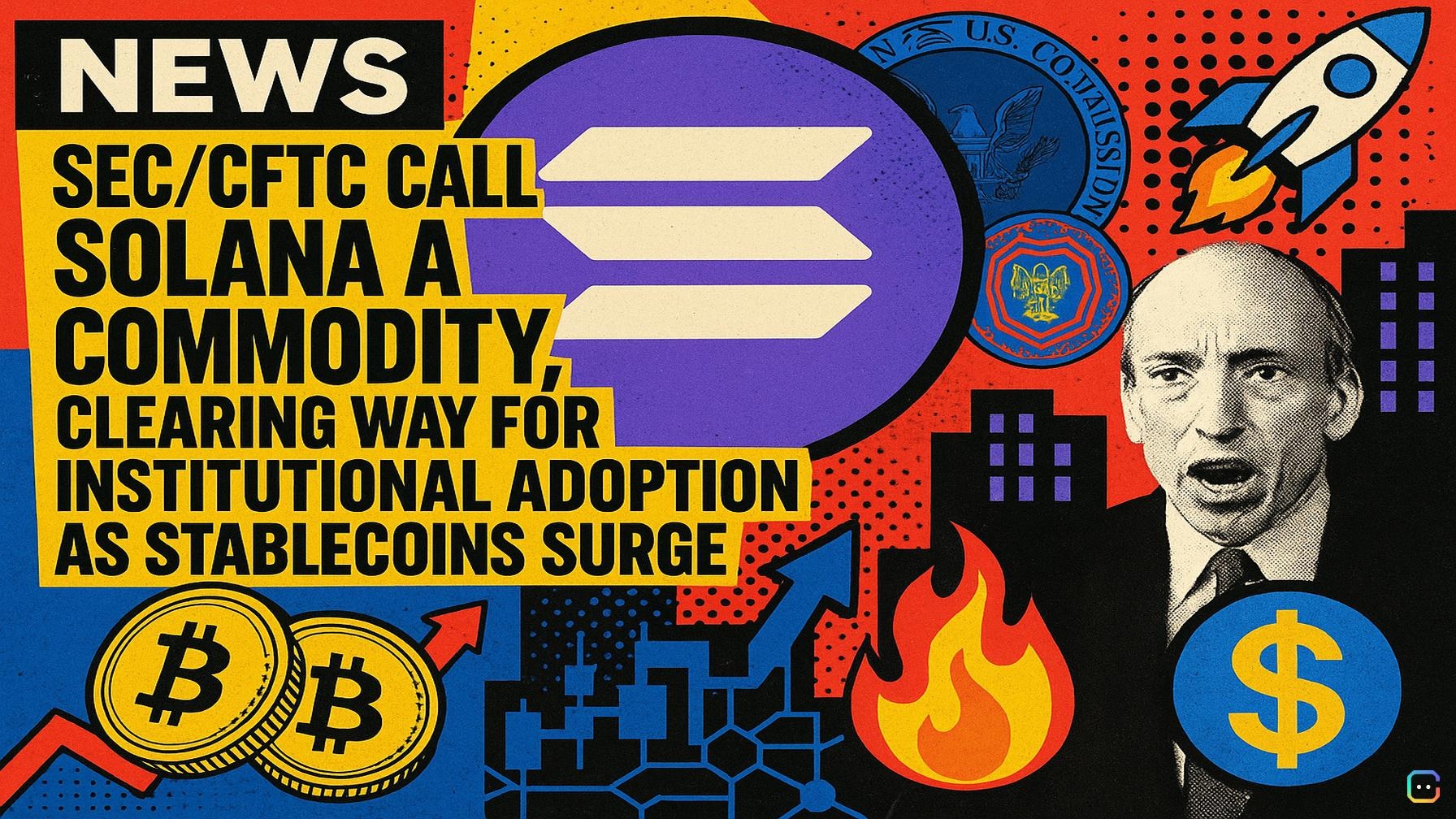
In a joint filing, the US Securities and Exchange Commission (SEC) and the Commodity Futures Trading Commission (CFTC) laid out a new token taxonomy that clarifies how federal securities laws apply to digital assets. The framework divides tokens into five categories — digital commodities, digital collectibles, digital tools, stablecoins and digital securities — and says most crypto assets are not securities. The agencies also specify that activities like staking, mining, airdrops and token wrapping are not, by definition, securities transactions.
Crucially for Solana, the filing lists SOL among digital commodities alongside Bitcoin and Ethereum. That removes the “security” label from SOL under this proposal, which, if the categorization holds, would cut through a lot of the legal uncertainty that has surrounded many tokens and could make SOL easier to trade and integrate into regulated products.
The practical implications could be significant. A clearer commodity designation tends to reduce regulatory risk for exchanges, funds and service providers, which can encourage greater participation from institutional investors and third‑party developers. Given Solana’s low fees and high throughput, many in the market expect renewed momentum for on‑chain apps and payments use cases.
Market data already points to growing activity on Solana’s network. CryptoRank reports that Solana has become the leader in stablecoin transaction volume, taking over 37% of total volume in February — outpacing Ethereum and Tron combined for that month. According to the report cited in the filing, stablecoin market cap on Solana has surged to roughly $316 billion, driven largely by payments and cross‑border transfers that are increasingly moving value onto faster blockchains.
The composition of that stablecoin activity is also shifting: CryptoRank notes a migration from Tether’s USDT toward USDC, with USDC accounting for more than 72% of Solana’s stablecoin volume in February. That trend underscores broader changes in how value is flowing across chains, favoring networks that deliver speed and low transaction costs.
Bottom line: with regulators proposing a clearer classification that places SOL in the commodity bucket and on‑chain metrics showing rising stablecoin and payments activity, Solana looks positioned to attract more capital and development — and to play a larger role in how value moves across blockchains.
Read more AI-generated news on: undefined/news