Today's Cryptocurrency Prices by Market Caps
The global cryptocurrency market cap today i $2.35T
Market Cap
$2.35T
24h Trading Volume
$141.09B
BTC Dominance
56.47%
|
#
|
Name
|
Price
|
1h %
|
24h %
|
7d %
|
Market Cap
|
Volume (24h)
|
Chart (7d) |
|---|---|---|---|---|---|---|---|---|
|
|
—
|
|||||||
|
No cryptocurrencies found Try adjusting your search query |
||||||||
Latest Crypto News
View All News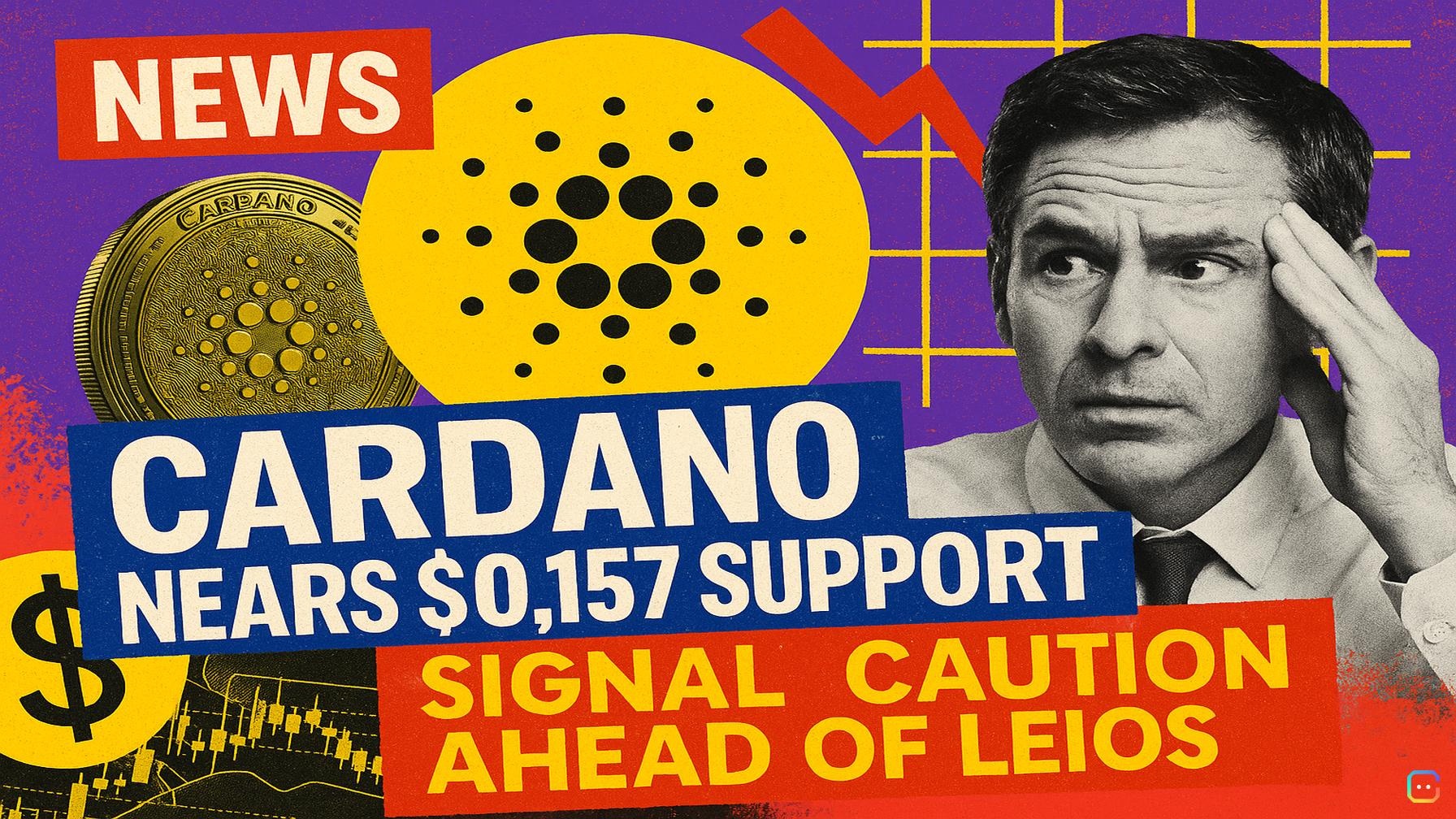
Cardano Nears $0.157 Support as Derivatives and On‑Chain Metrics Signal Caution Ahead of Leios
Cardano (ADA) is trading under pressure, hovering near the lower bound of its recent range as both spot and derivatives markets signal caution ahead of a key protocol testnet. ADA is changing hands at $0.1607, down 3.2% in the past 24 hours. The token’s longer-term performance remains weak: -6.1% over seven days, -35.6% over the past month and -73.2% year‑over‑year. Despite the sell-off, daily turnover stays elevated, with $368.8 million in 24‑hour volume. Derivatives and futures point to fading speculative conviction. The long-to-short ratio sits at 0.96, meaning shorts slightly outnumber longs, and futures open interest has fallen to roughly $348 million — a continuation of the pullback from mid‑May. That decline in open interest suggests traders are trimming exposure rather than placing fresh, directional bets. On‑chain metrics reinforce the cautious picture. Network Realised Profit/Loss (NPL) has plunged, indicating many recent holders are realizing losses — a hallmark of capitulation phases when weaker hands exit under sustained selling pressure. Technicals remain tilted toward the bears. ADA trades below the 50‑, 100‑ and 200‑day exponential moving averages, putting those levels in play as resistance on any recovery attempt. The daily RSI (14) sits around 31, signaling bearish control but stopping short of extreme oversold territory. All eyes are on the Leios scaling upgrade testnet, expected around June 23, which could act as a near‑term catalyst for renewed activity in the Cardano ecosystem. Market structure is fragile but showing early signs of compression: selling momentum is easing and higher‑timeframe oversold readings suggest price may be approaching a decision point. Key levels to watch: immediate support is near $0.157 — if buyers defend that zone, a short‑term bounce toward $0.172 is the most likely recovery path. If $0.157 fails, downside targets become $0.148 and, in a deeper sell‑off, roughly $0.13. Adding to the downside risk narrative, analysts have flagged a bearish flag breakdown in recent technicals, a pattern that often precedes continuation of a downtrend unless bulls can reclaim critical resistance. Bottom line: Cardano’s market mood is subdued, with derivatives, on‑chain losses and technicals pointing to continued vulnerability. The Leios testnet on June 23 represents the clearest potential catalyst for a shift in sentiment — but for now, upside remains contingent on buyers stepping in around current support. Read more AI-generated news on: undefined/news

Schwab and Cboe Launch S&P All-or-Nothing Options with Partial Payouts — Polymarket Rival
Charles Schwab is moving into prediction-style markets, teaming up with Cboe Global Markets to roll out new contracts tied to the S&P 500 — a direct challenge to niche platforms like Kalshi and Polymarket as well as incumbent exchanges such as CME Group and Interactive Brokers. What’s launching - Schwab and Cboe are developing “all-or-nothing” options that let investors wager on where the S&P 500 will close. These contracts are structured as options rather than the futures-based event contracts common on Kalshi and Polymarket. - The products are expected to be available to Schwab customers in the coming months. - Initial offerings will focus on measurable financial outcomes (index closing levels) rather than the broader array of political or cultural events that many prediction markets cover. - Schwab and Cboe have also discussed expanding the lineup to include contracts tied to other market indexes. A twist: partial payouts - In addition to binary payouts, Schwab plans to offer an options product with partial payouts for near-misses using Cboe’s “plus zone” mechanism — so traders who come close to predicting an index level can still receive some compensation. Why this matters - Prediction markets have been broadening from politics and sports into financial markets, and institutional interest is accelerating. Kalshi recently reported an 800% jump in institutional trading volume over six months as it grows its Wall Street footprint. - Crypto-native platforms remain active: DefiLlama data cited Polymarket generating roughly $1.5 million in fees over the prior 24 hours and about $10 million over the last seven days, underlining ongoing demand for decentralized event trading. How this fits Schwab’s strategy - The move complements Schwab’s broader push into digital assets. The firm has already launched Schwab Crypto for retail spot Bitcoin and Ethereum trading in a phased rollout for select U.S. clients. - Schwab also plans to extend direct crypto services to registered financial advisors, targeting 2027 for spot crypto trading, transfers and custody on its advisor platform — integrating crypto servicing into its wealth-management offerings. Bottom line Schwab’s entry — via an options-based, index-focused prediction product and partial-payout mechanics — signals intensifying competition for event-driven trading. By leveraging its brokerage reach and pairing prediction-style contracts with an expanding crypto service roadmap, Schwab is positioning itself to capture both retail and institutional flows that have so far been split between traditional exchanges and crypto-native markets. Read more AI-generated news on: undefined/news
CLARITY Act Stalls: Senators Still Don't Understand Crypto Bill as Ethics Debate Looms
Senate negotiators are back at the table on the CLARITY Act, but progress is being slowed less by hardline policy fights than by a basic problem: many senators still don’t fully understand what’s in the bill. Senate Agriculture Committee Chair John Boozman told reporters after a June 18 meeting — reported by Punchbowl News — that while discussions are moving forward, “most members do not fully understand the bill.” Because much of the CLARITY Act falls under the Agriculture Committee’s jurisdiction, that panel is central to shepherding the measure toward a full Senate vote. Boozman said that the knowledge gap among lawmakers remains one of the biggest obstacles to building broader support. Negotiators are under time pressure. Leaders want to resolve outstanding issues before lawmakers break for the August recess, and a series of last-minute meetings are ongoing to work through contested provisions of the digital-asset market-structure legislation. Inside baseball on the disagreements: industry and some Capitol Hill observers say the split may not be as wide as it looks. David Nage, managing director and portfolio manager at Arca, told crypto.news that conversations with Senate offices left him with the impression that lawmakers and industry are roughly 80%–85% aligned on the bill’s core elements. According to Nage, debate has moved away from stablecoin yield restrictions — which drew high-profile criticism from figures like JPMorgan CEO Jamie Dimon — and toward ethics and conflict-of-interest rules for government officials engaged in crypto-related business. Nage said the remaining disputes are largely about how to craft and enforce those ethics rules, not about whether they should exist. In his base case, negotiators would agree on the ethics language and reconcile competing proposals in the coming weeks, positioning the bill to reach the Senate floor after Congress returns on July 13. But timing is still uncertain. Senator Bill Hagerty told FOX Business he hopes the Senate can finish work before the July 4 recess, saying regulatory clarity would help the U.S. crypto industry grow domestically. White House crypto advisor Patrick Witt has also expressed optimism about an Independence Day timeline. Others expect a longer road: Senator Cynthia Lummis has pushed back expectations, suggesting a floor vote before the August recess is more likely than passage ahead of July 4. Lummis also highlighted that the bill includes $150 million aimed at combating illicit cryptocurrency activity and warned that failure to act in this window could push meaningful reform as far out as 2030. Supporters say the CLARITY Act would clarify the respective responsibilities of the SEC and CFTC and set compliance standards for digital-asset firms — a potential milestone for U.S. crypto regulation. As negotiations continue, the focus for many appears to be education and compromise rather than headline-grabbing policy fights: lawmakers need to get up to speed on the details and agree on enforcement and ethics language before a final push to the floor. Read more AI-generated news on: undefined/news
Base's Beryl Makes Tokens Native with B20, Cuts ETH Withdrawal Time to 5 Days
Base has pushed a major protocol upgrade, Beryl, to the Sepolia testnet and plans to flip it on mainnet on June 25. The release brings a native token standard, shorter withdrawal windows to Ethereum, and several node-level improvements designed to make token issuance faster, cheaper, and more integrated with existing infrastructure. What’s new - B20: a protocol-level token standard that makes tokens first-class citizens in Base’s node software rather than ordinary smart contracts. B20 implements the full ERC‑20 spec plus ERC‑2612 permit functionality, meaning familiar wallets, exchanges, and indexers can support B20 tokens without modification. - Faster withdrawals: the default withdrawal route most bridges use will see the delay to Ethereum cut from seven days to five days. - Reth V2: an updated Rust-based execution client that reduces storage demands for full, minimal, and archive nodes and allows higher block gas targets without overwhelming sequencer or RPC infrastructure. Why B20 matters Unlike ERC‑20 tokens that run as smart contracts on the EVM, B20 runs as precompiled contracts written in Rust and executed directly by the protocol. That makes token operations more efficient and native to the chain. Base also ships an Issuer Toolkit with the upgrade that provides role-based permissions and issuance controls tailored for regulated or institutional issuers: - minting and burning controls - optional supply caps - transfer restrictions - freeze and seizure capabilities - choice between a general-purpose asset model or a stablecoin model with six-decimal precision and customizable currency codes Security and compatibility Base says B20 is built on code audited by its own team and security firm Spearbit. The standard supports ERC‑2612 permits, enabling gasless approval workflows via signatures, and existing ERC‑20-compatible infrastructure should be able to adopt B20 assets without code changes. Base also flagged a planned future enhancement that would let issuers pay transaction fees with their own B20 tokens instead of ETH. Context on withdrawals and Azul Beryl builds on work introduced in Azul, Base’s earlier upgrade that brought Multiproofs — a hybrid verification path combining trusted execution environment proofs and zero-knowledge proofs to speed up withdrawals. Multiproofs can finalize some withdrawals in about a day when both proof systems agree, but high ZK proof costs have limited its use. Beryl instead targets the withdrawal route most users rely on: by narrowing the role of the old seven-day fault-proof delay to monitoring and disabling faulty provers, Base can safely shorten the standard delay to five days. Performance and infrastructure Reth V2 replaces legacy OP Stack clients (a change started with Azul) and trims node storage requirements while enabling higher block gas targets. Base says moving to a unified technology stack—dropping a shared dependency on Optimism’s OP Stack—has sped its release cadence: Beryl landed on Sepolia roughly four weeks after Azul hit mainnet. What’s next Base is already looking ahead: the next upgrade, Cobalt, is targeted for September. Cobalt is expected to introduce native account abstraction with protocol-level smart accounts, gas sponsorship (meta‑transactions), transaction batching, expanded B20 functionality, and a unified node binary that merges consensus and execution clients. Bottom line Beryl makes tokens native to Base, shortens withdrawal waits for the most-used route to Ethereum, and brings client and node optimizations that should improve scalability and issuer onboarding—features likely to appeal to stablecoin issuers, exchanges, and regulated institutions while preserving compatibility with existing ERC‑20 tooling. Read more AI-generated news on: undefined/news
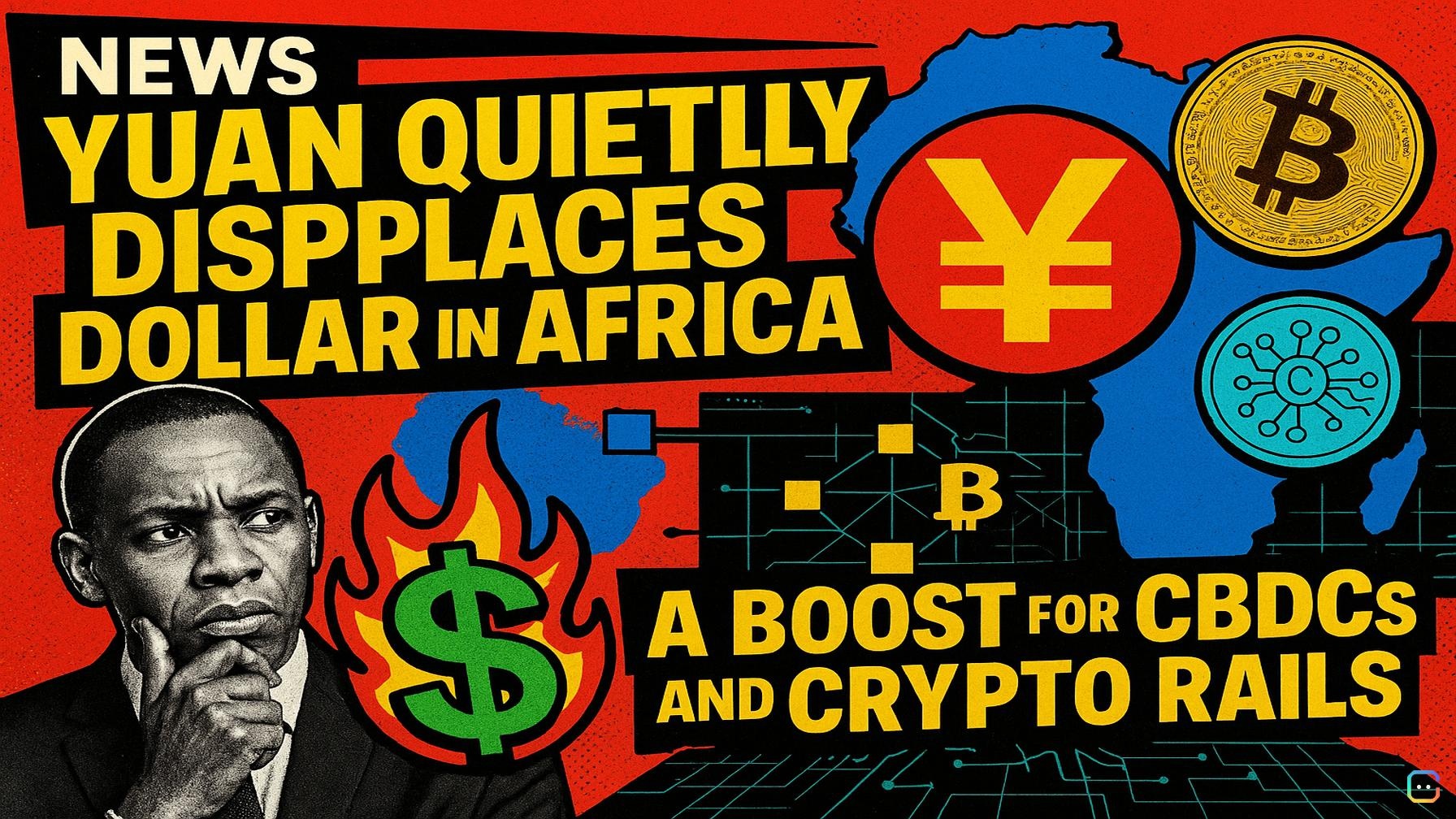
Yuan Quietly Displaces Dollar in Africa — A Boost for CBDCs and Crypto Rails
China’s yuan is quietly but steadily displacing the US dollar across African trade corridors — a shift with growing economic and payments implications. Trade between China and Africa is on track to approach $400 billion as both exports and imports climb. In 2025 alone, bilateral trade rose 17.7% year‑on‑year, with Chinese exports to Africa jumping 25.8% to $225.03 billion and African imports from China increasing 5.4% to $123.02 billion. That momentum is reflecting in how transactions are settled: more African businesses and banks are using the yuan instead of dollar‑denominated instruments. A key enabler is China’s Cross‑Border Interbank Payment System (CIPS), which streamlines yuan settlement for international transactions. Several major African lenders, including Standard Bank, have joined CIPS, making yuan-denominated settlement a practical and growing option. Ives Yang, head of sales for transactional banking at Standard Bank’s corporate and investment banking unit, told Reuters that yuan trade between China and Africa will continue to expand, driven largely by import‑export flows and efforts to broaden participation across the continent. Beyond payments infrastructure, China has reinforced its economic footprint in Africa through local‑currency deals, Belt and Road Initiative financing, reduced tariffs, expanded market access and loans — all measures that make yuan use more attractive. High dollar exchange costs are another factor: lower exchange fees and more favorable local‑currency rates can save African banks and businesses millions, nudging them away from dollar reliance. Politically and strategically, Beijing — led by Xi Jinping — has pushed the yuan as part of a wider effort to internationalize its currency. While the yuan’s role is still far smaller than the US dollar’s, its rate of growth and the infrastructure supporting it suggest considerable expansion potential. For crypto and payments watchers, this trend matters: it highlights rising demand for efficient cross‑border rails, whether centralized systems like CIPS, central bank digital currencies, or blockchain‑based alternatives. As yuan settlement gains traction in Africa, the global payments landscape — and the competitive space for digital payments solutions and stablecoins — will continue to evolve. Read more AI-generated news on: undefined/news
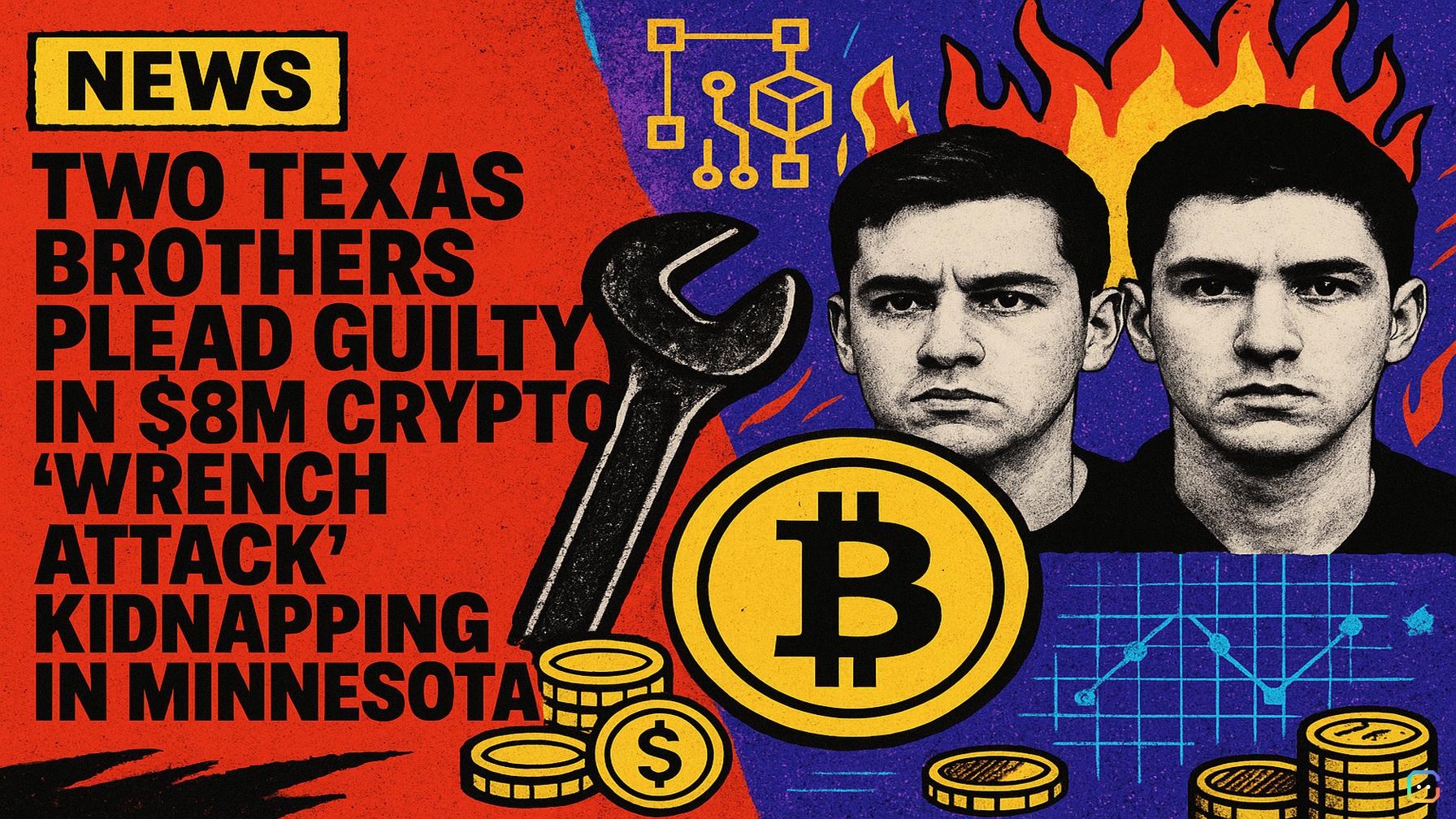
Two Texas Brothers Plead Guilty in $8M Crypto "Wrench Attack" Kidnapping in Minnesota
Two Texas brothers have pleaded guilty in a brazen crypto kidnapping that left a Minnesota family robbed of more than $8 million in digital assets. Isiah Angelo Garcia, 25, and Raymond Christian Garcia, 24, both of Waller, Texas, entered guilty pleas Thursday to one count each of interference with commerce by robbery, the Justice Department said. The pleas were entered before U.S. District Judge Ann Montgomery in Minneapolis. Prosecutors say the brothers flew to Minnesota specifically to carry out the attack. On the morning of September 19, 2025, they forced their way into a home in Grant, a small Minneapolis-area city, held a man and his family at gunpoint for over eight hours, zip-tied them, and coerced access to the victim’s cryptocurrency accounts. Court records state Isiah Garcia even forced the man to drive to the family’s cabin in northern Minnesota to retrieve additional crypto storage devices and to move funds. The brothers ultimately compelled transfers totaling more than $8 million before fleeing after the family’s son managed to call 911. Investigators were able to identify the suspects from items they left at the scene and tracked them to the Houston area, where both men were arrested. According to court filings, the brothers admitted using firearms to threaten the family. “No one should ever feel unsafe in their own home,” said FBI Minneapolis Special Agent in Charge Christopher Dotson, pledging that such “violence and greed” will be aggressively investigated. U.S. Attorney Daniel Rosen said the pleas show a commitment to holding the men “accountable for the choices they made.” Each defendant faces up to 20 years in federal prison and has agreed to pay more than $8 million in restitution. Sentencing dates have not yet been set. The pair were first charged in September, days after the attack, which shook the Grant community and prompted a local high school to cancel a homecoming football game while police searched for the perpetrators. The case joins a growing international trend of so-called “wrench attacks,” in which crypto holders are forced at gunpoint or by other violence to surrender private keys or transfer funds. High-profile U.S. prosecutions include last year’s 47-year federal sentence for Remy St. Felix, convicted in North Carolina for running a violent crypto home-invasion ring. In May, three Tennessee men were indicted over a reported wrench-attack spree in California that allegedly netted $6.5 million. France has also emerged as a hotspot: prosecutors there have charged 88 people, including minors, in dozens of kidnapping investigations, one of which targeted Ledger co-founder David Balland, who was reportedly abducted and mutilated before being rescued. Security experts say many wrench attacks likely go unreported and urge crypto holders to keep holdings and personal security measures out of public view. Law enforcement continues to pursue both violent perpetrators and broader prevention strategies as digital-asset thefts evolve from cyber schemes into dangerous real-world crimes. Read more AI-generated news on: undefined/news