Today's Cryptocurrency Prices by Market Caps
The global cryptocurrency market cap today i $2.35T
Market Cap
$2.35T
24h Trading Volume
$141.09B
BTC Dominance
56.47%
|
#
|
Name
|
Price
|
1h %
|
24h %
|
7d %
|
Market Cap
|
Volume (24h)
|
Chart (7d) |
|---|---|---|---|---|---|---|---|---|
|
|
—
|
|||||||
|
No cryptocurrencies found Try adjusting your search query |
||||||||
Latest Crypto News
View All News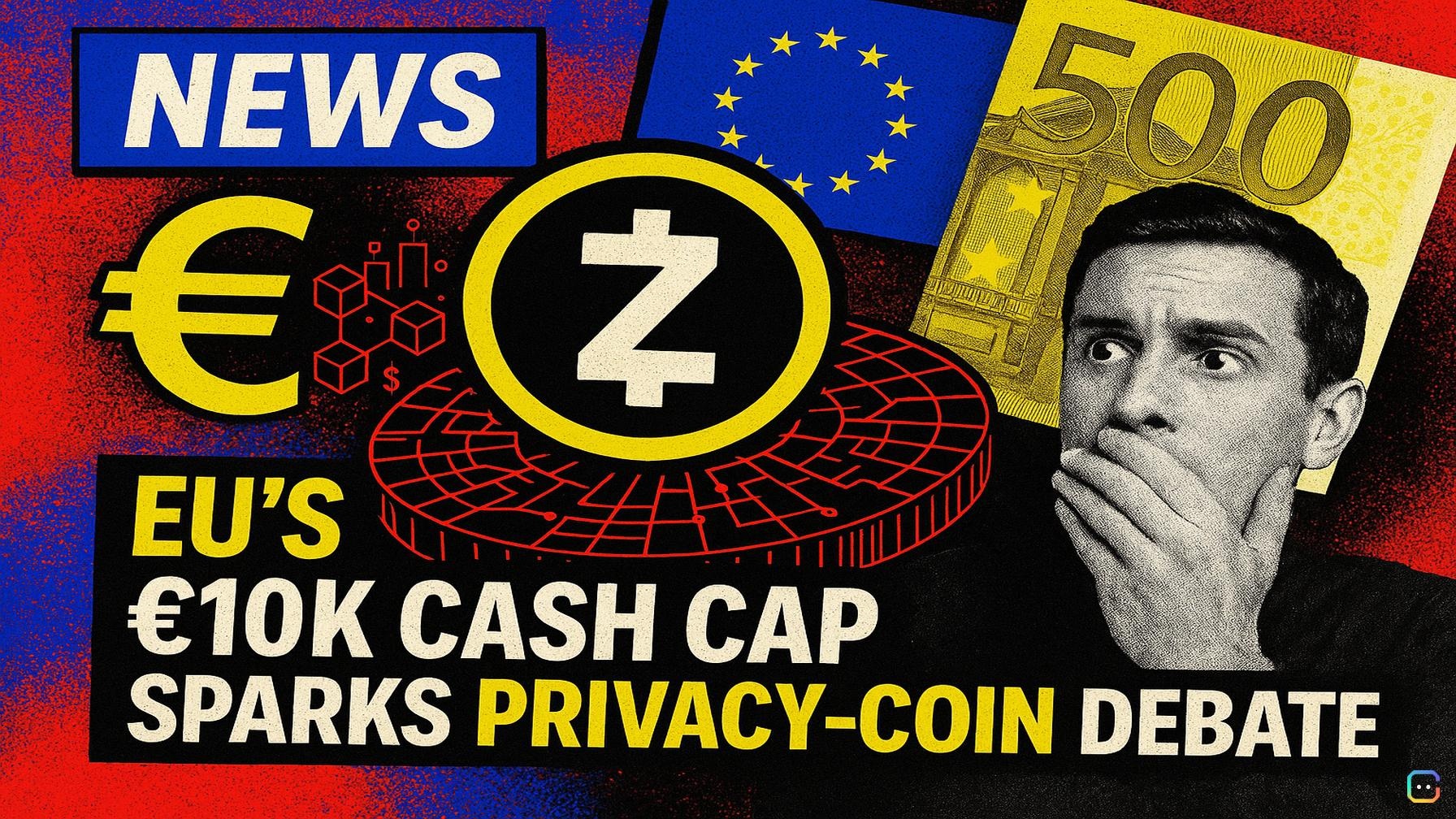
EU's €10K cash cap sparks privacy-coin debate — Zcash takes center stage
Headline: Europe’s compliance debate pushes privacy coins back into the spotlight — Zcash tops the conversation Europe’s push to tighten anti-money-laundering rules and limit cash to €10,000 has reignited debate over financial privacy — and Zcash (ZEC) is one of the biggest beneficiaries of the renewed attention. What sparked it Draft EU measures, due to take effect in 2027, include a €10,000 cap on cash payments and tougher AML requirements. Early reads of the proposals led some commentators to claim every Bitcoin transaction would require identity checks, a view that quickly set off a broader conversation about on-chain privacy. Subsequent analysis clarified that the rules primarily target regulated crypto service providers rather than peer-to-peer transfers, but concerns about erosion of financial privacy still became a hot topic among traders and analysts. Why Zcash is trending Helius CEO Mert drove much of the chatter by naming Zcash as a leading privacy-focused network, and posts from high-visibility accounts like WallStreetBets framed a potential “privacy era” for crypto. Unlike Bitcoin’s fully public ledger, Zcash supports optional shielded transactions that hide wallet addresses and transfer details — a feature advocates say could gain appeal if compliance rules tighten further. Market reaction and price action That narrative, however, hasn’t produced an immediate price surge. ZEC was trading near $451 at reporting, and daily volume dropped about 29% to roughly $365 million. The token’s muted response follows a violent sell-off earlier this month when ZEC plunged more than 40% in a single day amid heavy selling reportedly linked in part to large-holder activity and sales tied to BitMEX co-founder Arthur Hayes. Technical outlook Technical analysts remain split on what comes next. Popular analyst Altcoin Sherpa called the current zone a support region and said he’s still bullish long-term, forecasting ZEC may chop inside a broad $350–$500 range while largely tracking Bitcoin’s moves. Another analyst, Ardi, flagged $440 as a critical level: staying above it and forming a higher low could set the stage for another breakout after ZEC’s prior run to about $520; a drop below $440 would, he said, likely confirm a macro lower-high and open the door to further downside. Bottom line The EU compliance debate has refocused attention on privacy coins, with Zcash emerging as a high-profile candidate if regulatory pressure raises demand for on-chain privacy. For now, however, the market is watching whether renewed interest will translate into stronger price action or if ZEC will remain range-bound while digesting recent volatility. Read more AI-generated news on: undefined/news
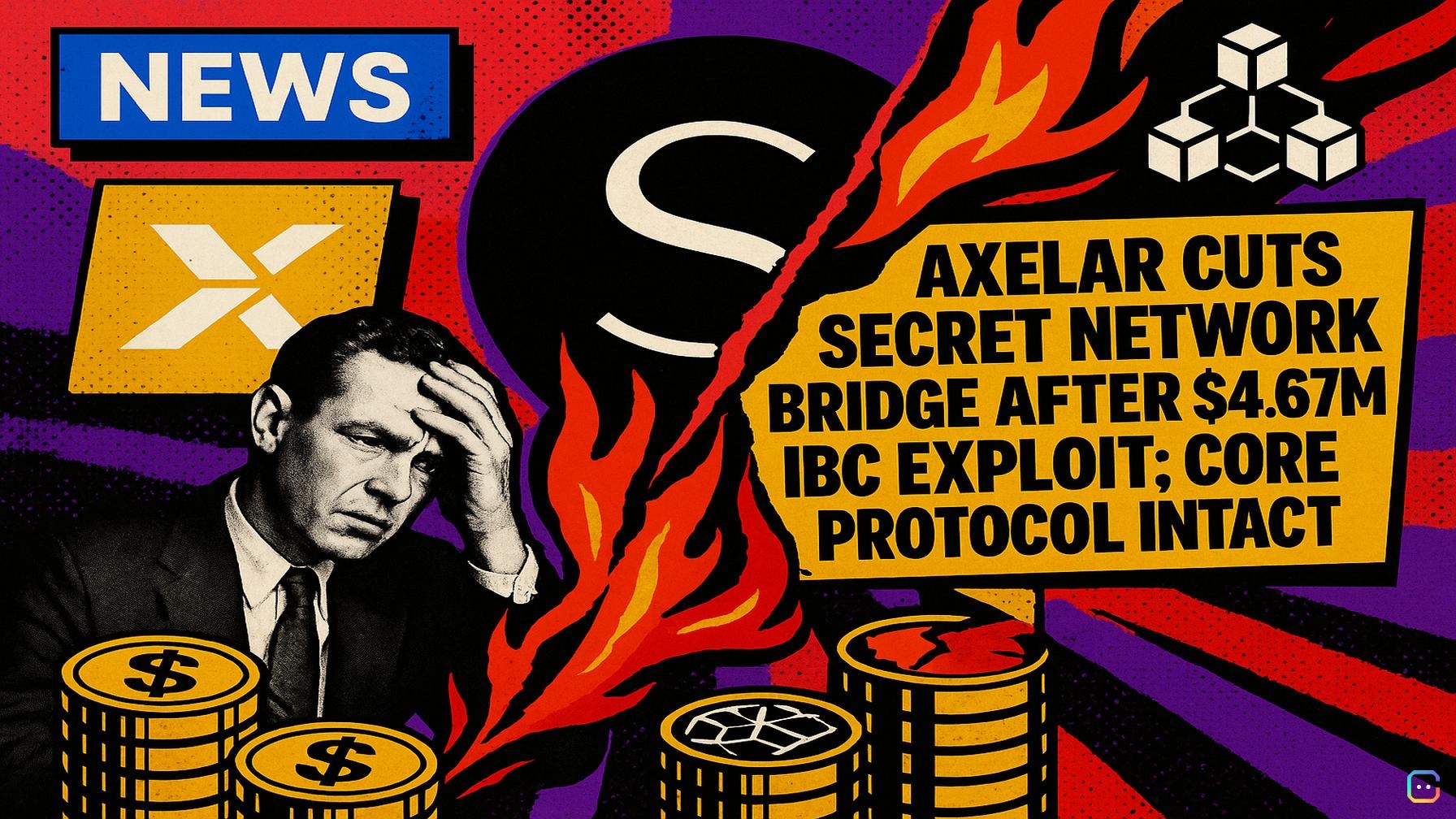
Axelar Cuts Secret Network Bridge After $4.67M IBC Exploit; Core Protocol Intact
Axelar has cut off its bridge connections to Secret Network after a security incident that saw roughly $4.67 million in bridged tokens stolen. What happened - The exploit targeted assets moved from the Axelar chain into Secret Network via the Cosmos Inter-Blockchain Communication (IBC) framework. Early investigation points to a problem in the Secret-side ICS-20 smart contract that handles these IBC transfers — not a failure in Axelar’s core infrastructure. - In response, Axelar’s emergency committee disabled the Secret and Secret-SNIP connections to stop further outflows and said it has alerted relevant exchanges and law enforcement while the probe continues. - Axelar also stressed that its core protocol stayed online during the incident and that, based on current findings, other IBC channels, Secret-native assets, and additional Axelar integrations do not appear to be affected. Why this matters - Secret Network is a privacy-focused blockchain that encrypts transaction data while keeping smart contract code verifiable on-chain. Through Axelar’s integration, developers have been able to build private cross-chain use cases — confidential DeFi, private NFT transfers, and anonymous governance — which are now at least temporarily curtailed for assets bridged from Axelar. - With the bridge routes disabled, developers and users relying on Axelar-to-Secret transfers will be blocked until engineers finish reviewing the attack path and quantify the full extent of losses. Next steps - Axelar expects to publish a full post-mortem when the investigation concludes. For now, affected routes remain offline as teams dig into the vulnerability and recovery options. Wider context - The incident is the latest in a run of hacks and security events that have shaken infrastructure projects and protocols. Earlier this month Humanity Protocol dealt with a June 8 exploit that prompted replacement H tokens via an audited ERC-20 airdrop after stolen credentials — not contract bugs — were blamed. Crypto payments platform Pyra also announced plans to wind down after the Drift exploit left it unable to recover. - Research from Binance Research highlighted the broader impact on the sector: DeFi exploits in April contributed to around $13 billion in TVL outflows, and on-chain leverage rose as liquidity contracted. Axelar says it will provide more details as its investigation progresses. For now, the focus is containment and forensic analysis to prevent similar cross-chain losses. Read more AI-generated news on: undefined/news
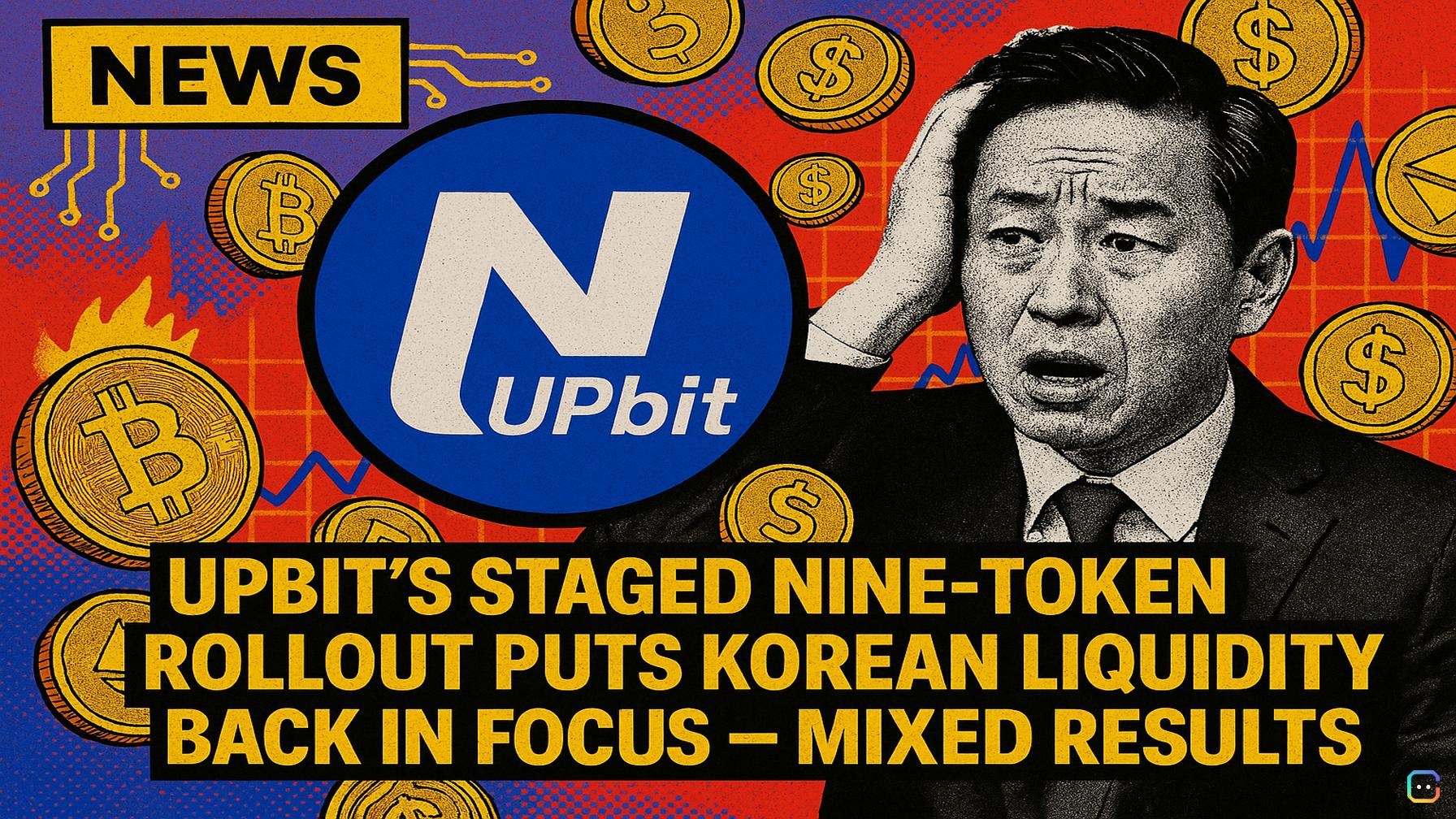
Upbit’s Staged Nine-Token Rollout Puts Korean Liquidity Back in Focus — Mixed Results
Upbit’s latest listing wave has put Korean exchange liquidity back in the spotlight — and shown that exchange listings still matter, but not always in the same way. South Korea’s largest crypto exchange added nine tokens across BTC and USDT trading pairs, according to its notice center and market reports. The new entrants were PEAQ, LIT, KMNO, MORPHO, GRAM, LDO, PAXG, OSMO, and AMP. What made this rollout noteworthy wasn’t just the number of assets, but how Upbit staged trading to tamp down the chaos that often accompanies fresh listings. Why Korea matters Upbit listings pack punch because Korean retail is deep and active. When a token hits the platform, liquidity, visibility, and short-term speculative demand can shift quickly — sometimes dramatically. That dynamic makes Upbit a market-moving venue for small- and mid-cap tokens. Staged controls, not a free-for-all Instead of opening trading fully from the first second, Upbit used a staggered approach. Reports describe hourly trading windows, an initial ban on buy orders, restrictions on low-priced sell orders, and a period limited to limit orders at the outset. The goal: give order books time to form before unleashing unrestricted market orders. That doesn’t remove volatility, but it shapes how it unfolds and reduces the opening-minute scramble that can trap retail traders. Not all listings react the same The market response underscored the point: listings are catalysts, not guaranteed bull signals. PEAQ reportedly saw strong upside after listing, while other tokens on the list experienced muted or negative moves. Traders are increasingly selective — factors such as existing liquidity, narrative strength, and broader altcoin sentiment still drive outcomes more than the mere fact of a new pair. Bigger-picture implications This is as much a market-structure story as a token one. Easier access via a major Korean venue can rapidly change a token’s trading profile, but the early hours after a listing tend to reveal which assets have genuine demand and which are riding headlines. The same logic applies to niche cases (for example, PAXG/tokenized gold): it won’t displace Bitcoin as collateral in crypto lending, but tokenized gold offers a different risk profile — framed more around hedging and preservation than crypto beta — and adds choice for borrowers and lenders. Bottom line Upbit’s rollout illustrates two lessons: exchange listings still matter because they concentrate liquidity and attention, and the way exchanges manage openings can materially affect short-term price dynamics. For traders, that means treating listings as signals to evaluate — not automatic buy triggers. This story was written by the News Desk and edited by Samuel Rae. Report based on information from Upbit. Read more AI-generated news on: undefined/news
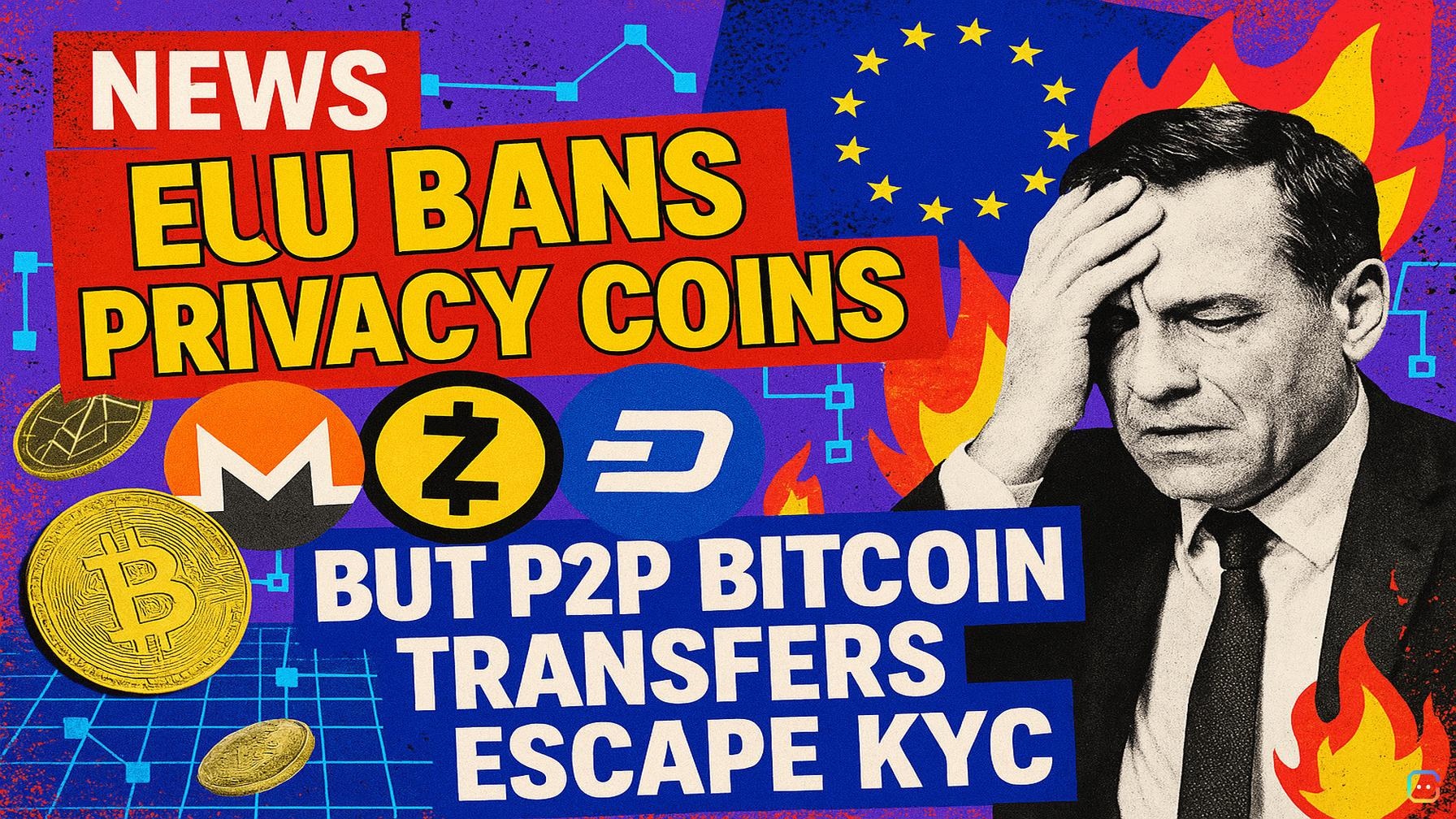
EU Bans Privacy Coins on Regulated Platforms, But P2P Bitcoin Transfers Escape KYC
EU clamps down on privacy coins but leaves peer-to-peer Bitcoin transfers intact The European Union has approved a sweeping anti‑money‑laundering (AML) package that tightens KYC for crypto firms and bans regulated services from supporting privacy‑enhancing tokens — while stopping short of forcing identity checks on direct Bitcoin transfers between self‑custodied wallets. Key points - Regulation (EU) 2024/1624 takes effect July 10, 2027. It raises verification requirements for crypto‑asset service providers (exchanges, custodians, brokers) and outlaws anonymous crypto accounts and services that increase transaction obfuscation — including listing, custody or facilitation of privacy coins on regulated platforms. - Regulated firms must perform full customer‑due‑diligence (CDD) for occasional crypto transactions of €1,000 (~$1,150) or more. For transactions below €1,000 they must still identify customers, but not necessarily apply the same full CDD used for larger transactions or ongoing relationships. - The regulation clarifies that these ID obligations apply to regulated providers, not every on‑chain transfer. Direct transfers between self‑hosted wallets remain outside the provider KYC regime — meaning peer‑to‑peer Bitcoin transactions without an intermediary do not trigger EU‑mandated identity checks. - The Travel Rule (Regulation (EU) 2023/1113) remains in force: regulated providers must pass sender and recipient information when processing transfers. Additional checks kick in when transfers involving self‑hosted wallets reach €1,000 or more and a regulated intermediary is involved. Wider AML measures beyond crypto - The law also harmonizes a €10,000 ceiling for commercial cash payments across the EU (member states can keep lower national limits). Cash transactions of €3,000 (~$3,450) or more require traders and other obliged entities to verify customer identities and conduct due diligence. - Bank deposits and payments through payment institutions or e‑money issuers are not affected by the cash cap; those remain governed by existing monitoring and suspicious activity reporting systems. New sectors and transparency rules - The scope of obliged entities is expanded to include sectors previously outside central AML duties: professional football clubs and agents, crowdfunding platforms, investment migration service providers, luxury goods dealers, and others — all must now run compliance checks and report suspicious activity. - Beneficial ownership transparency is strengthened: legal entities must register ultimate owners in national registries, generally at a 25% ownership threshold and down to 15% for certain higher‑risk structures. Trusts, foundations and certain non‑EU entities involved in EU business or real‑estate activity are also subject to disclosure; trustees must update ownership information within 28 calendar days. What this means for crypto users and businesses - Regulated exchanges and custodians will be unable to list or custody privacy coins or offer services designed to anonymize transactions, effectively cutting those assets off from compliant on‑ramps and custody solutions in the EU. - Individuals remain free to own or use privacy coins privately; however, converting them through regulated channels will be restricted. - Peer‑to‑peer Bitcoin users who transact directly from self‑custody will not face automatic ID verification under the new rules, but any interaction with a regulated intermediary will trigger Travel Rule data transfers and, at thresholds, enhanced checks. Bottom line: The EU’s new AML regime tightens control over regulated crypto infrastructure and shuts down anonymity services within compliant platforms, while preserving the distinction between provider‑based KYC and direct, self‑custodied on‑chain transfers. Read more AI-generated news on: undefined/news
Hawkish Warsh Shift Sparks Net Outflow From US Spot Bitcoin ETFs, Flows Vary
US spot Bitcoin ETF flows snapped back into the spotlight after a shift in the macro outlook appeared to spook some investors. Farside Investors’ flow data showed a reported net outflow from US spot Bitcoin ETFs on June 18. That reading arrived as market commentary around new Federal Reserve Chair Kevin Warsh tilted hawkish — Axios and Reuters noted a shorter Fed communication style and renewed talk that rate hikes could re-enter the conversation. The takeaway: ETF demand can pivot fast when macro expectations change. Spot Bitcoin ETFs remain one of the cleanest real-time proxies for institutional appetite in BTC. Positive flows typically mean allocators are buying regulated exposure; negative flows can matter even if the dollar amounts are modest, because ETF selling can dent sentiment and amplify short-term price moves. Bitcoin’s sensitivity to liquidity and macro shocks is why this matters. If yields rise and markets price in tighter policy, risk assets — including BTC — can come under pressure even if the long-term bull case for crypto is intact. But the headline outflow shouldn’t be overread. The aggregated net figure masks dispersion across issuers: not every fund bled assets. That pattern suggests some allocators may be rotating between ETFs or pausing new buys, rather than exiting the category wholesale. Large outflows from a single fund can skew daily totals, while smaller inflows elsewhere show that some buyers remain active. That nuance is important for coverage. The headline number grabs attention, but the distribution of flows across issuers often tells the deeper story. One down day can be noise — especially after a macro event — while a sustained run of outflows would be a clearer sign institutions are pulling back. Traders will be watching how ETF flows line up with spot price action. If BTC holds key technical levels while ETF demand weakens, it implies other sources of demand are absorbing the pressure. If price drops alongside persistent outflows, the macro link becomes harder to ignore. Bottom line: ETFs are a major barometer for Bitcoin demand, but they don’t trade in a vacuum. Fed policy, yields, dollar moves and broader risk appetite all feed into allocation decisions — and can rapidly reshuffle ETF flows. This article was written by the News Desk and edited by Samuel Rae. Report based on information from Farside Investors. Read more AI-generated news on: undefined/news

Binance’s EU Passport in Jeopardy as Greek MiCA License Faces Uncertainty
Binance faces fresh regulatory pressure in Europe as the MiCA transition deadline approaches Reuters has reported — citing people familiar with the matter — that Binance may be at risk of losing the ability to offer services across the European Union if its Greek licensing route does not secure the necessary authorization under the EU’s Markets in Crypto-Assets (MiCA) framework. The case centers on Binance’s application via Greece and comes ahead of a July deadline by which many crypto firms must complete their MiCA transition arrangements. Why the Greek route matters MiCA was designed to create a single, clearer authorization path for crypto-asset service providers across the EU. In practice, a firm licensed in one member state can “passport” those permissions to serve customers across the bloc. That passporting mechanism is why Binance’s Greek application is so consequential: if it cannot secure the appropriate authorization, offering services to EU users could become far more complicated once the transition period ends. What’s at stake For large exchanges like Binance, MiCA is more than a compliance box to tick. The regime affects where products can be listed, which stablecoins can be supported, how customer disclosures and governance must work, and whether a platform can operate region-wide. Binance has already adjusted its European business around evolving stablecoin and compliance expectations — but failure to satisfy EU requirements could mean access restrictions, product curbs, or the need to restructure service lines. Treat this as uncertainty, not a ruling It’s important to stress that Reuters’ report is based on sources; a regulator’s final public rejection would be a different, definitive outcome. Until the Hellenic Capital Market Commission (HCMC) or Binance issues a formal statement, the most accurate description is licensing uncertainty rather than a confirmed ban. Market implications Regulatory uncertainty tends to have direct market effects. BNB — Binance’s native token — is sensitive to perceptions of the exchange’s global standing, even if the legal links are complex. Traders and investors often react to licensing headlines before processes are resolved, particularly with a hard deadline looming. What to watch next - Any formal decision or public comment from the Hellenic Capital Market Commission. - A company update from Binance clarifying its Greek application and contingency plans. - Further guidance from European authorities or ESMA on MiCA enforcement timing. - Market moves in BNB and related EU trading volumes. Until authorities or Binance issue clear confirmations, treat the story as an active licensing risk with potentially wide implications for how one of the world’s largest exchanges operates in Europe. (Reporting based on the Reuters story; edited for crypto readers.) Read more AI-generated news on: undefined/news